AI Powered Mobile App Development
Introduction to Mobile AI
AI in Your Pocket
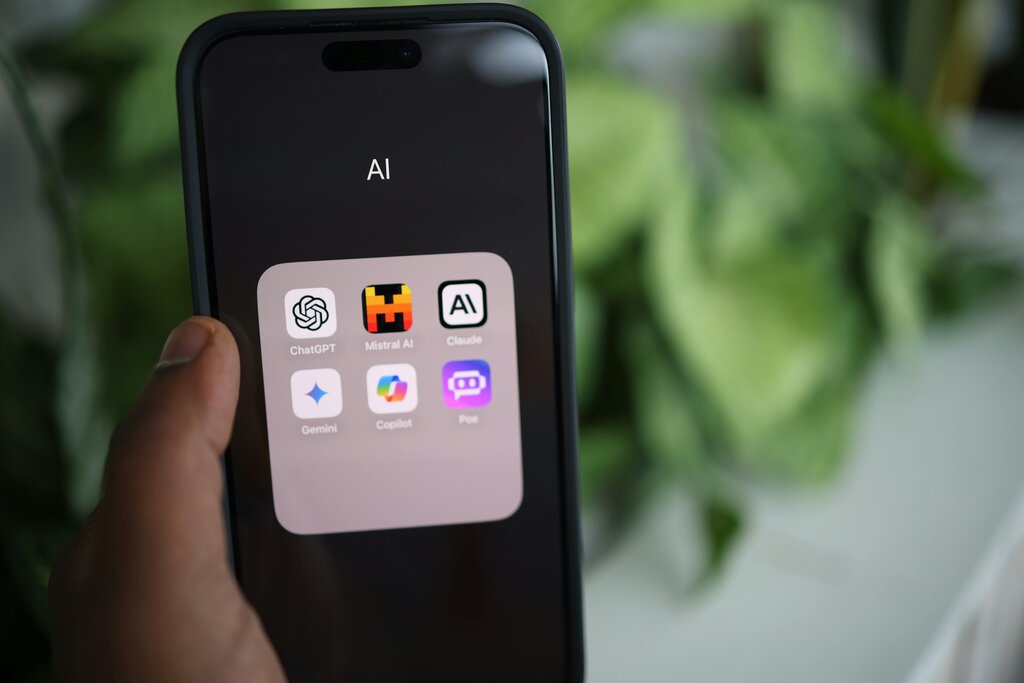
Artificial intelligence is no longer confined to powerful servers in the cloud. It's now running directly on the device you hold in your hand. Mobile AI is the engine behind many of the smart features you use daily, from the camera app that automatically adjusts for low light to the keyboard that predicts your next word. By bringing AI directly onto the phone, apps become faster, more private, and more reliable.
The Case for On-Device AI
Why run complex AI tasks on a phone instead of a powerful server? Processing data directly on the device—known as on-device AI or edge AI—has several key advantages over cloud-based approaches.
On-device AI keeps your personal data on your phone, enhancing privacy and security.
First, it's fast. There's no delay, or latency, from sending data to a server and waiting for a response. Think of an app that applies a filter to a live video. For the effect to be seamless, the processing has to happen instantly. That’s only possible when the AI model is running locally on the device.
Second, it’s private. When data is processed on-device, sensitive information like your photos, messages, and location doesn't need to leave your phone. This is a major benefit for privacy-conscious users.
Finally, it works anywhere. Because on-device AI doesn't require an internet connection, AI-powered features can work reliably whether you're on a plane, in a subway, or simply in an area with spotty service. This makes apps more robust and accessible.
| Benefit | Why It Matters |
|---|---|
| Low Latency | Instantaneous results for real-time applications like live video effects or translation. |
| Enhanced Privacy | Sensitive user data is processed locally and never leaves the device. |
| Offline Access | Core AI features work without an internet connection. |
| Reduced Cost | Less reliance on expensive cloud servers for data processing. |
Tools of the Trade
Developers don't build these mobile AI systems from scratch. They rely on specialized frameworks that make it possible to run large, complex AI models efficiently on a phone's hardware. These frameworks provide tools to convert, optimize, and run models within a mobile app.
Two of the most popular frameworks for mobile AI development are TensorFlow Lite and PyTorch Mobile.
framework
noun
A set of tools, libraries, and conventions that provide a structure for developing software applications.
TensorFlow Lite, developed by Google, is specifically designed for deploying models on mobile and embedded devices. It takes a standard TensorFlow model and converts it into a compressed, efficient format (.tflite) that's optimized for speed and a small memory footprint. It's a core component of AI development for Android.
PyTorch Mobile, from Meta, offers a similar path for developers using the PyTorch framework. It allows them to transition a model from research and training directly into a production-ready format that can be integrated into mobile apps on both Android and iOS.
These frameworks handle the heavy lifting of optimization, ensuring that the AI model runs smoothly without draining the battery or slowing down the phone. By using these tools, developers can embed sophisticated AI features directly into their applications, creating the intelligent mobile experiences we use every day.
What is the primary advantage of on-device AI when it comes to speed?
How does on-device AI enhance user privacy?