AI-Powered Marketing Fundamentals
Marketing Fundamentals
What is Marketing, Really?
Marketing is often mistaken for just advertising or selling. While those are parts of it, they aren't the whole story. At its heart, marketing is the process of understanding people's needs and creating a valuable solution for them. It’s about building a connection between a business and its customers.
Marketing fundamentals are the essential principles that help businesses connect the right product with the right audience at the right time — and do it in a way that consistently drives growth.
Think of it as a conversation. A business identifies a problem a group of people has, develops a product or service to solve it, and then communicates how that solution can help. When done well, it doesn't feel like a sales pitch; it feels like a discovery.
The Marketer's Toolkit
To manage this process, marketers use a framework called the marketing mix. The most famous version is the 4 Ps: Product, Price, Place, and Promotion. These are the four key levers a business can pull to influence demand for its offering.
Product: This is what you sell. It isn't just a physical item; it could be a service, an experience, or an idea. The key is that it must solve a customer's problem or satisfy a need. A great product is the foundation of all good marketing.
Price: This is what the customer pays for the product. Setting a price is a delicate balance. It needs to reflect the product's value, cover costs, and be competitive, all while matching what customers are willing to pay. Price sends a strong signal about quality and brand positioning.
Place: This refers to where and how customers can buy the product. It's about distribution. Is it sold in a physical store, online, or through a mobile app? The goal is to make it as easy as possible for customers to find and purchase your offering.
Promotion: This is how you communicate with your customers. It includes all the activities that raise awareness about your product and persuade people to buy it, such as advertising, social media, public relations, and content marketing.
| P | Focus | Question to Ask |
|---|---|---|
| Product | The Offering | What problem does this solve for the customer? |
| Price | The Cost | What is the customer willing to pay for this value? |
| Place | The Access | Where will customers look for this product? |
| Promotion | The Communication | How will we tell our audience about this product? |
Finding Your People
A common mistake is trying to appeal to everyone. If you try to be everything to everybody, you end up being nothing to anybody. Successful marketing starts with identifying the specific group of people you can serve best. This process involves three steps: Segmentation, Targeting, and Positioning (STP).
Market Segmentation
noun
The process of dividing a broad consumer or business market into sub-groups of consumers based on some type of shared characteristics.
You can segment a market in many ways. For example, a sneaker company might divide its market by demographics (age, gender), geography (urban vs. rural), or psychographics (lifestyle, interests like running or basketball).
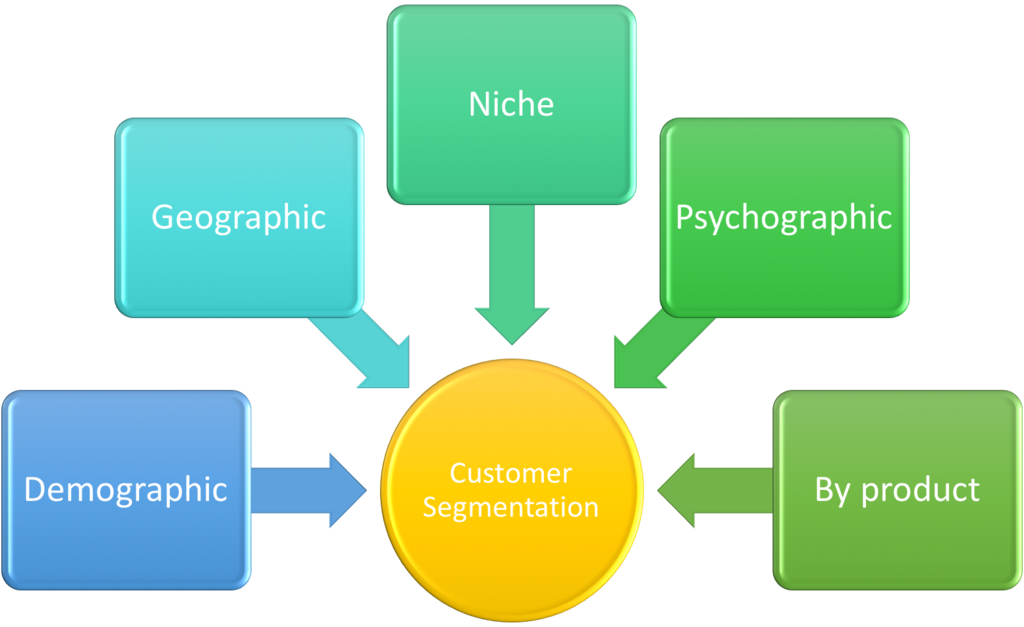
Once you've segmented the market, you move to Targeting. This is where you choose which segment (or segments) to focus on. Your choice should be based on factors like the segment's size, its growth potential, and how well your product fits its needs.
Finally, Positioning is about how you want your target audience to perceive your brand and product relative to the competition. It's the unique space you want to occupy in the customer's mind. Are you the budget-friendly option, the luxury choice, or the most innovative solution?
In short: Divide the entire market (Segmentation), choose your slice of the pie (Targeting), and then decide how to make your brand stand out within that slice (Positioning).
The Customer's Path
People don't just wake up and decide to buy a product they've never heard of. They go on a journey. The customer journey maps out the full experience a customer has with a business, from the very first point of contact to becoming a loyal advocate.
To better understand the people on this journey, marketers create buyer personas. These are semi-fictional profiles of your ideal customers based on market research and real data. A persona might have a name, a job title, goals, and challenges. For example, a software company might create "Marketing Mary," a 35-year-old marketing manager at a mid-sized company who struggles with tracking campaign results.
Personas help make your target audience feel less like an abstract concept and more like real people, which enables you to create more relevant and empathetic marketing messages.
Finally, all of these elements come together to build a brand. A brand is more than a logo or a name. It's the overall perception and feeling that people have about a company or product. It’s a promise of what they can expect.
Your value proposition is a clear statement that explains the benefit you offer, how you solve a customer's problem, and what distinguishes you from the competition. It's the core of your brand's promise.
Now that you understand these core concepts, you have a solid foundation for thinking about any marketing strategy.