AI-Powered Low-Code App Development
Introduction to Low-Code and No-Code Development
Building Without Code
Traditionally, creating a software application required writing lines and lines of code. This meant you either had to be a developer or hire one. Low-code and no-code platforms are changing that. They offer a visual approach to building applications, using drag-and-drop interfaces and pre-built components instead of complex programming languages.
Think of it like building with LEGOs. Instead of creating each plastic brick from scratch, you're given a set of ready-made blocks that you can snap together to build almost anything you can imagine.
The main goal is to make development faster and more accessible. This allows professional developers to work more efficiently and empowers people without a technical background to create their own tools. These users are often called "citizen developers"—people who can build applications for their own needs without formal coding training.
Low-Code vs. No-Code
While often grouped together, low-code and no-code aren't the same. The difference lies in who they're for and how much flexibility they offer.
No-code platforms eliminate the need for programming skills, making software development accessible to entrepreneurs, business professionals, and small teams.
No-code platforms are designed for business users, marketers, and anyone with an idea but no coding knowledge. They are entirely visual. You can build websites, mobile apps, and automated workflows using simple drag-and-drop tools. The trade-off is that you're limited to the platform's built-in features.
Low-code platforms, on the other hand, are aimed at professional developers as a way to speed up their work. They provide the same visual building blocks but also allow developers to write custom code for unique features, complex integrations, or specific business logic. This approach offers more power and flexibility than no-code, acting as a bridge between visual development and traditional programming.
| Feature | No-Code | Low-Code |
|---|---|---|
| Target User | Non-technical users | Professional developers |
| Flexibility | Limited to platform features | High, allows custom code |
| Goal | Empower anyone to build | Accelerate professional development |
| Use Case | Simple web apps, internal tools | Complex business applications |
Key Benefits
Why is this approach becoming so popular? There are a few major advantages.
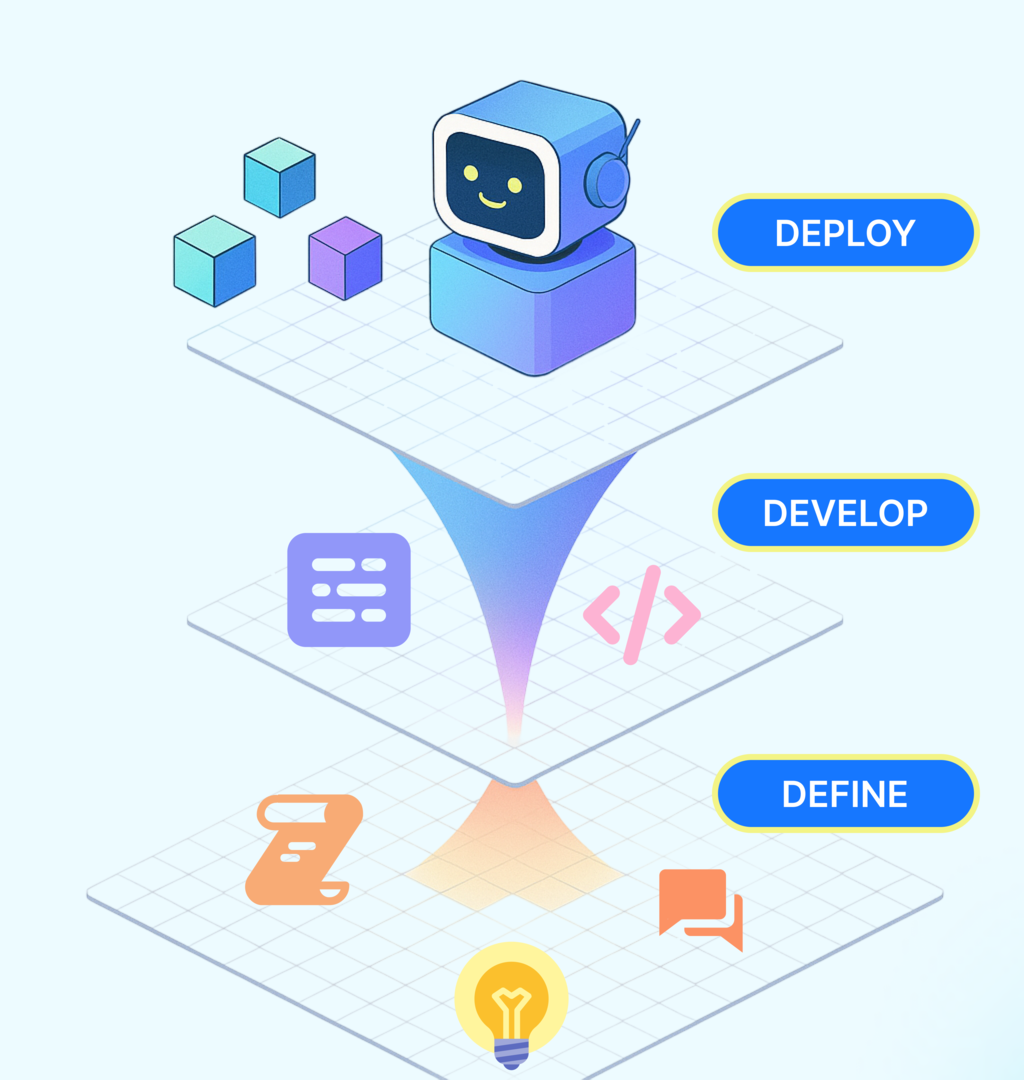
First, there's speed. Building visually is much faster than writing code from scratch. Teams can create and launch prototypes in days or weeks, not months. This allows businesses to respond quickly to new opportunities or changing market needs.
Second is accessibility. By lowering the technical barrier, more people within an organization can solve their own problems. An HR manager could build a tool to streamline employee onboarding, or a marketing team could create a custom app for a new campaign, all without waiting for the IT department.
Finally, it can be more cost-effective. Faster development cycles and less reliance on specialized developers can significantly reduce the cost of building and maintaining applications, especially for smaller projects or internal tools.
The Impact on Development
The rise of low-code and no-code doesn't mean traditional software development is going away. Instead, it’s changing the landscape. These platforms are becoming widely adopted across industries, from small startups to large corporations, for building everything from customer-facing portals to internal process automation tools.
The biggest impact is on efficiency. By handling more straightforward development tasks, low-code and no-code platforms free up professional developers to focus on the most complex, mission-critical projects that require deep technical expertise. This creates a more collaborative environment where technical and non-technical teams can work together to bring ideas to life.