AI-Powered Chip Design Mastery
AI in Chip Design
A New Era in Chip Design
For decades, Electronic Design Automation (EDA) tools have been the standard for designing complex integrated circuits. These tools automated many tedious tasks, but as chips grew exponentially more complex, hitting billions of transistors, even traditional EDA started to struggle. The design process became a massive puzzle with near-infinite possible solutions.
Enter artificial intelligence. AI is not just another tool; it's a fundamental shift in how chips are designed. By applying machine learning and other AI techniques, engineers can explore the vast design space more intelligently and efficiently, pushing the boundaries of what's possible in terms of performance, power, and area (PPA).
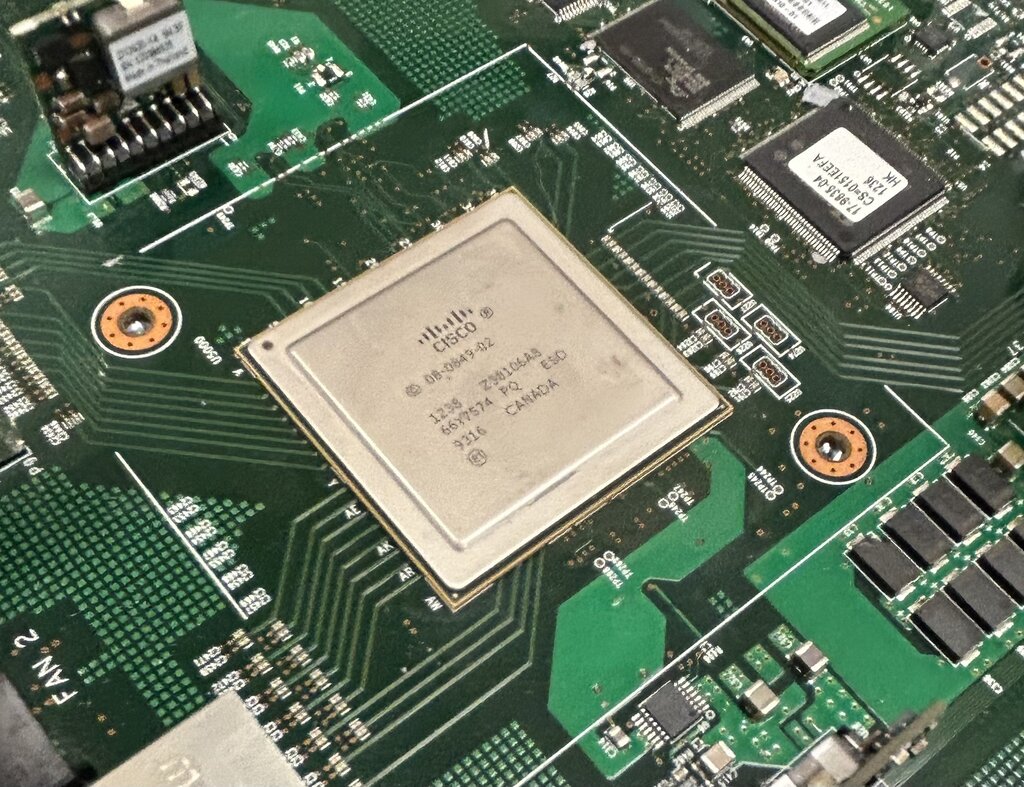
AI-Driven Automation
AI integrates into several key stages of the chip design flow, augmenting the capabilities of human designers and existing EDA tools. Instead of relying solely on predefined algorithms, AI models learn from past designs to make smarter decisions.
The core goal is to optimize the trade-offs between performance, power consumption, and the physical area the chip occupies. AI provides a powerful new way to navigate these competing priorities.
Let's look at how this works in practice.
Machine Learning in Logic Synthesis Logic synthesis is the process of translating a high-level description of a chip's behavior (written in a language like Verilog or VHDL) into a specific implementation using logic gates. There are countless ways to arrange these gates. Machine learning models can be trained on vast libraries of past designs to predict the PPA impact of different synthesis choices. This allows them to generate a gate-level design that is much closer to optimal from the start.
Reinforcement Learning in Placement and Routing After synthesis, the individual components must be physically placed on the silicon die, and the wires connecting them must be routed. This is one of the most computationally intensive parts of chip design. Reinforcement learning (RL) is particularly well-suited for this task. An RL agent can be trained to place components, treating the chip layout like a game board. The agent makes a series of moves (placements), and after each complete layout, it receives a reward based on metrics like chip performance and wire length. Over millions of iterations, it learns placement strategies that outperform both human designers and many traditional algorithms.
AI in Design Verification Verification, the process of finding and fixing bugs, can consume up to 70% of the total design cycle time. AI can make this process smarter. Machine learning models can analyze a design and predict which areas are most likely to contain errors based on historical bug data and design complexity metrics. This allows verification teams to focus their efforts where they're needed most, catching critical bugs earlier and faster.
Benefits and Hurdles
Integrating AI into the chip design workflow offers significant advantages, but it also introduces new challenges that organizations must navigate.
| Benefits | Challenges |
|---|---|
| Reduced Time-to-Market | High-Quality Data Required |
| AI automates complex tasks, drastically cutting down design time. | AI models need vast amounts of clean, labeled data from previous designs to learn effectively. |
| Improved PPA | Computational Cost |
| AI algorithms can explore a wider range of solutions to find designs with better performance and efficiency. | Training complex reinforcement learning models requires immense computing power. |
| Enhanced Design Quality | Interpretability |
| By identifying potential bugs early, AI helps create more robust and reliable chips. | Understanding why an AI made a particular design choice can be difficult, complicating debugging. |
Despite the challenges, the adoption of AI in chip design is accelerating. Major players like NVIDIA, Google, and Synopsys are pioneering these techniques, demonstrating real-world success in producing smaller, faster, and more power-efficient chips in record time. As AI models and computational resources continue to improve, AI is set to become an indispensable partner in creating the next generation of semiconductors.