AI Powered Autonomous Systems
Introduction to Autonomous Systems
What Are Autonomous Systems?
An autonomous system can perform complex tasks and achieve goals in the real world without direct, moment-to-moment human control. Think of NASA's Mars rovers. They navigate alien terrain, analyze rock samples, and decide which way to turn, all on their own. Mission control sets the high-level goals, but the rover handles the details.
These systems have three key characteristics:
- Goal-Oriented: They have a specific objective, whether it's driving from point A to B or exploring a planet.
- Adaptive: They can sense their environment and adjust their actions in response to unexpected changes. A pothole, a sudden dust storm, or a curious Martian rock won't stop them.
- Self-Governing: They make their own decisions to achieve their goal. They don't need a human operator with a joystick guiding every move.
Autonomous vs. Automated
These two terms are often confused, but the difference is crucial. An automated system follows a set of pre-programmed instructions. A classic example is a factory assembly line robot that welds the same spot on a car door thousands of times a day. It does its job perfectly, but if the car door is misaligned, the robot will still weld the empty air. It can't adapt.
An autonomous system, on the other hand, can handle variability. It's more like a skilled human welder who can see the door is out of place, adjust their position, and complete the weld correctly. It makes decisions based on real-time information.
| Feature | Automated System | Autonomous System |
|---|---|---|
| Operation | Follows pre-programmed rules | Makes decisions based on data |
| Environment | Performs best in predictable settings | Adapts to changing, unpredictable settings |
| Decision Making | Limited to its programming | Can make independent choices |
| Example | A timed coffee maker | A self-driving car in traffic |
A Spectrum of Autonomy
Autonomy isn't an on-or-off switch; it's a scale. The most widely used framework for this is the Society of Automotive Engineers (SAE) levels of driving automation. While specific to cars, it's a great way to understand the different degrees of independence a system can have.
The levels range from 0 (a completely manual car) to 5 (a vehicle that can handle any driving situation on its own without a human driver).
As a system moves up the levels, its responsibility for monitoring the environment and making decisions increases, while the need for human intervention decreases. A car with cruise control is at Level 1, while a fully autonomous taxi with no steering wheel would be Level 5.
How They Work
At their core, autonomous systems operate in a continuous loop. This cycle, often called the perception-action loop, has three main parts. They don't rely on advanced AI algorithms alone; they need a way to connect their digital intelligence to the physical world.
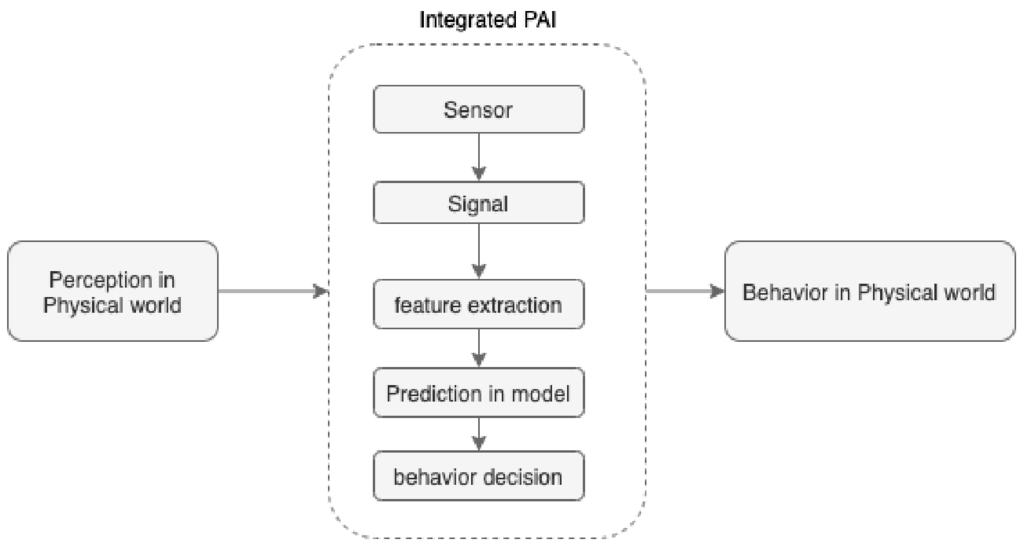
- Perception: The system uses sensors—like cameras, lidar, or microphones—to gather data about its surroundings. This is how it "sees" and "hears" the world.
- Reasoning: This is the brain of the operation. The system processes the sensor data, understands the context, and decides on the best course of action to achieve its goal. This is where AI plays a pivotal role, enabling the system to interpret complex situations.
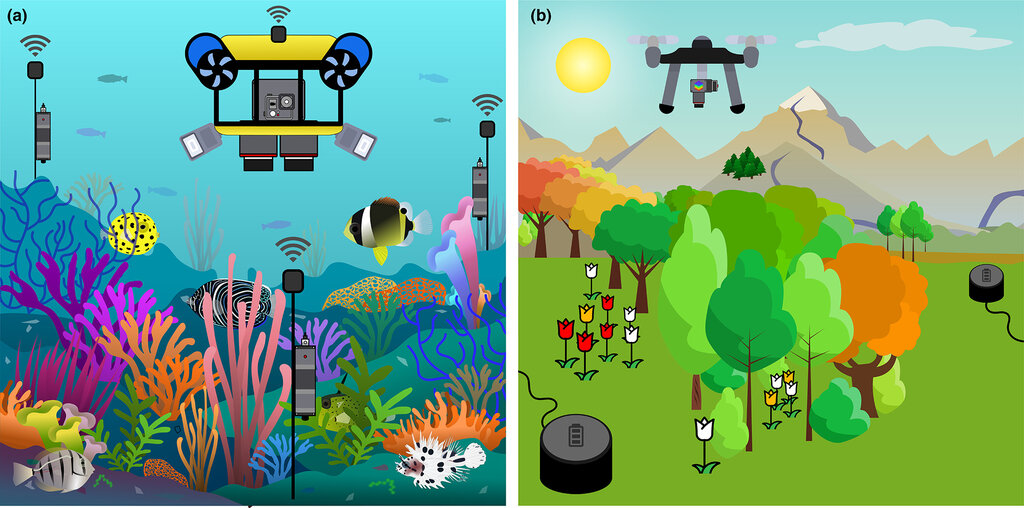
- Action: The system executes the decision through actuators like motors, thrusters, or robotic arms. It steers the car, moves the robot, or flies the drone.
This loop runs constantly, allowing the system to react dynamically to its environment. From transportation and logistics to healthcare and exploration, this fundamental cycle powers the next wave of technology.
Now let's test your understanding of these core concepts.
What is the primary characteristic that distinguishes an autonomous system from an automated system?
A factory robot is programmed to paint a car door. If the door is misaligned on the conveyor belt, the robot still sprays paint in the exact same pre-programmed spot, missing the door. According to the SAE framework analogy, this robot is exhibiting a high level of autonomy.