AI-Powered Automation Without Code
Introduction to No-Code and Low-Code Automation
Building Without Code
Think about building a piece of furniture. You could start with raw lumber, measuring, cutting, and joining every piece from scratch. That’s like traditional programming. It's powerful and completely custom, but it requires specialized skills and tools.
Now, imagine getting a flat-pack kit from IKEA. The pieces are pre-cut, the instructions are visual, and you just need to fit them together. This is the world of no-code automation. You don't need to be a carpenter to build the bookcase; you just follow the steps.
No-code platforms allow you to create software applications and automate repetitive tasks using visual tools. Instead of writing lines of code, you connect pre-built blocks in a drag-and-drop interface. If you can make a flowchart, you can build a no-code automation.
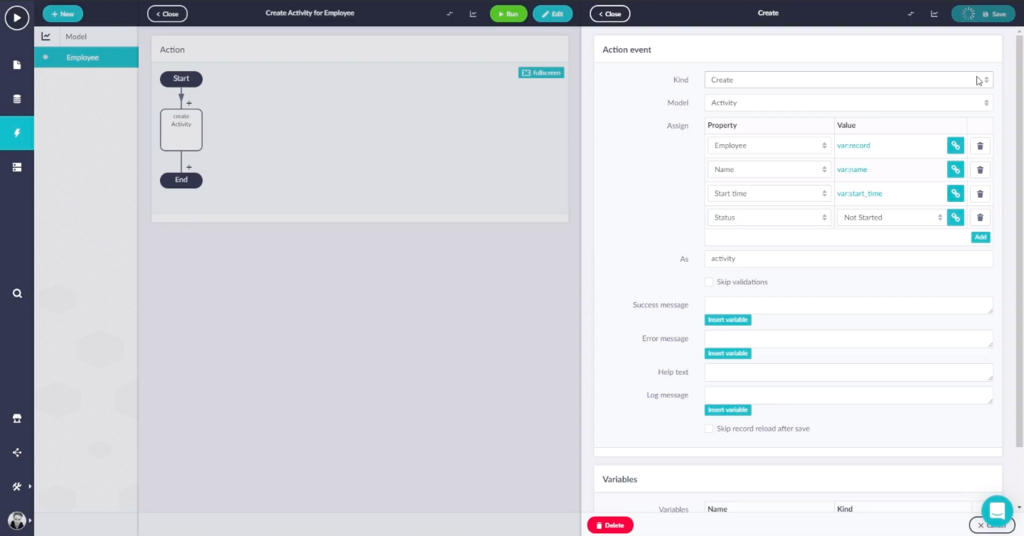
These platforms handle the complex programming in the background. You just focus on the logic of what you want to achieve. Want to save email attachments to a cloud drive automatically? Or get a notification whenever a customer fills out a form? No-code makes this possible for anyone, regardless of their technical background.
No-code automation platforms empower both technical and non-technical users to automate processes using graphical user interfaces, rather than relying on conventional computer programming.
Low-Code vs No-Code
Low-code is a close relative of no-code. It also uses a visual, drag-and-drop approach to speed up development. The key difference is that low-code platforms are designed for developers. They offer a “low-code” escape hatch, allowing programmers to write custom code for complex features or integrations that the visual builder doesn't support.
If no-code is the IKEA kit, low-code is a kit that also gives you the option to build a custom extension or modify a piece. It accelerates the work for people who already know how to code.
Here’s a simple breakdown of the differences:
| Feature | No-Code | Low-Code |
|---|---|---|
| Target User | Non-programmers | Developers |
| Coding Skill | None required | Basic to advanced |
| Flexibility | Limited to platform's features | Highly extensible with code |
| Speed | Very fast for simple tasks | Fast for complex applications |
For our purposes, we'll focus on no-code automation. The goal is to empower you to solve problems without needing to learn a programming language.
Democratizing Automation
For decades, the power to create software and build automated systems belonged exclusively to programmers. If you had a great idea for a tool to make your job easier, you had to hire a developer or convince your IT department to build it. This created a huge bottleneck.
No-code platforms change that. They put the power to create directly into the hands of the people who best understand the problems: the marketers, accountants, project managers, and small business owners. This shift is often called the 'democratization of technology'. It means making powerful tools accessible to everyone.
The main benefit is speed. Automating a workflow that used to take weeks of development can now be done in an afternoon. This frees up people to focus on creative, strategic work instead of repetitive, manual tasks.
By lowering the barrier to entry, no-code tools unlock innovation across entire organizations. The person closest to the problem is now empowered to build the solution.
Ready to test your understanding? Let's review what we've covered.
Based on the provided analogy, a no-code platform is most like...
What is the primary difference between no-code and low-code platforms?
Now that you understand the core ideas behind no-code and low-code, you're ready to explore how these platforms actually work.