AI Origins
Introduction to Artificial Intelligence
What Is Artificial Intelligence?
Artificial intelligence, or AI, is the science of making machines that can think and act like humans. The goal is to create systems that can perform tasks that normally require human intelligence. This includes things like learning from experience, solving problems, understanding language, and recognizing objects in an image.
Think of it this way: we don't program an AI with every possible answer. Instead, we create a system that can figure out the answers on its own.
AI is no longer just science fiction. It's a fundamental part of modern technology that works behind the scenes in many tools we use daily. When a streaming service recommends a movie you might like, that's AI. When your navigation app finds the fastest route, that's AI. And when you talk to a voice assistant on your phone, you're interacting with AI.
The Building Blocks of AI
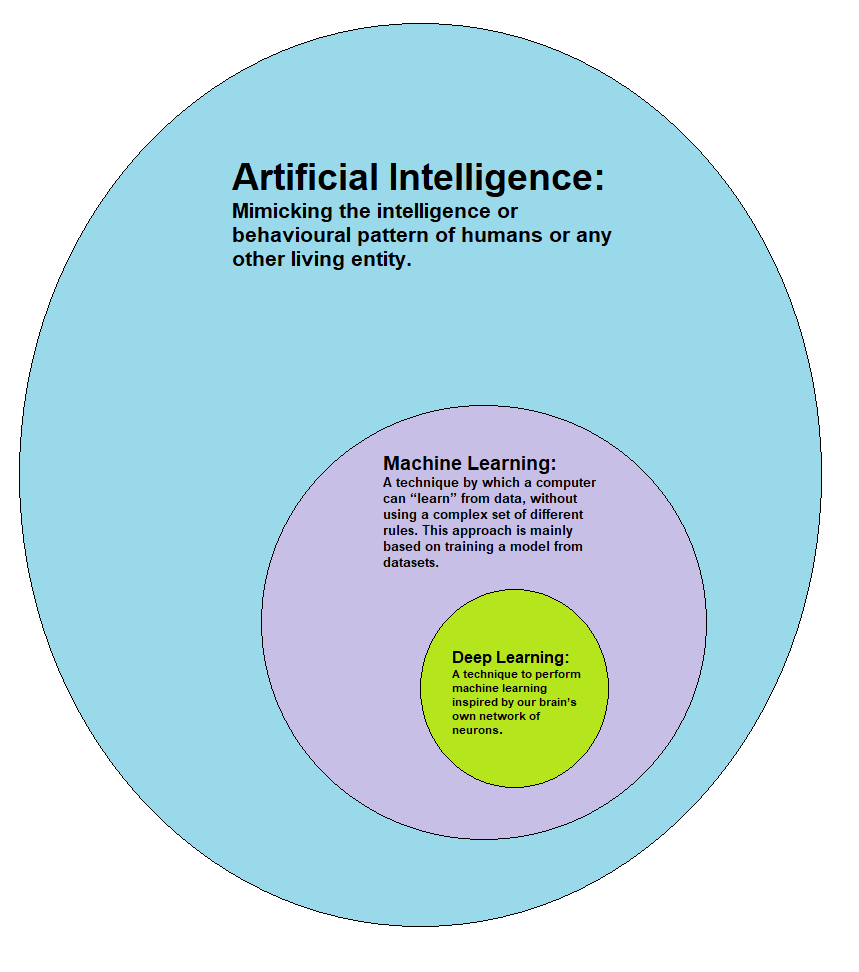
AI is a broad field with several key branches. To understand AI, you need to know about a few core concepts that power these intelligent systems.
Machine Learning
noun
A subset of AI where systems learn and improve from data without being explicitly programmed for every task.
Machine learning (ML) is one of the most common ways to achieve AI. Instead of writing step-by-step instructions, developers feed a huge amount of data into an ML model. The model then learns to recognize patterns in that data. For example, by analyzing thousands of pictures of cats, an ML model can learn to identify a cat in a new photo it has never seen before.
Another core concept is the neural network, which is a key part of a more advanced type of machine learning called deep learning.
Neural Network
noun
A computational model inspired by the structure of the human brain, consisting of interconnected nodes or 'neurons' in layered structures.
Imagine a team of experts working together. The first expert looks at a small piece of a problem and passes their conclusion to the next. This continues through many layers of experts, each building on the work of the previous one, until a final decision is made. Neural networks work in a similar way, processing information through layers to handle complex tasks like recognizing speech or driving a car.
Finally, there's Natural Language Processing, or NLP. This is the part of AI that focuses on the interaction between computers and human language.
Natural Language Processing
noun
A field of AI that gives computers the ability to read, understand, and interpret human language.
NLP makes it possible for you to ask your phone for the weather, for a website to translate a paragraph from Spanish to English, or for software to analyze the sentiment of customer reviews. It's the bridge that allows us to communicate with machines in a more natural, human way.
What is the primary goal of Artificial Intelligence (AI)?
When a streaming service suggests a new movie based on your viewing history, which AI concept is primarily at work?
These three concepts—machine learning, neural networks, and natural language processing—are the engine behind many of the AI applications we see today. Understanding them is the first step to understanding the world of artificial intelligence.