AI Models Explained
Introduction to Artificial Intelligence
What Is Artificial Intelligence?
Artificial intelligence, or AI, is the science of making computers do things that normally require human intelligence. This includes tasks like learning from experience, solving problems, understanding language, and recognizing objects in an image.
At its core, AI is about creating systems that can perceive their environment, reason about what they see, and take actions to achieve a specific goal. Think of it like teaching a robot to navigate a room. It needs to "see" obstacles with sensors, "understand" that it shouldn't bump into them, and "decide" on a path to walk.
The goal isn't just to mimic human actions, but to replicate the intelligent processes behind them.
A Quick Trip Through Time
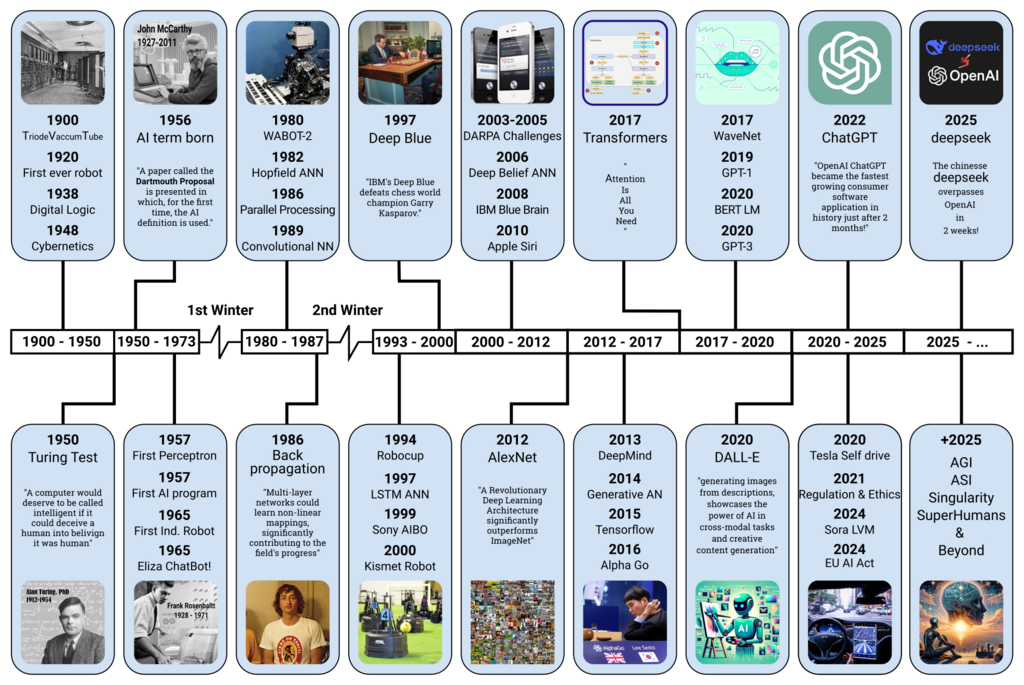
The dream of intelligent machines has been around for centuries, but the actual field of AI officially kicked off in the summer of 1956 at a workshop at Dartmouth College. It was there that the term "artificial intelligence" was coined. Early researchers were incredibly optimistic, believing that a machine as intelligent as a human was just a few decades away.
Progress wasn't always a straight line. The initial excitement was followed by periods of reduced funding and interest, known as "AI winters." However, the last couple of decades have seen an explosion in AI development. This boom was fueled by two key ingredients: the availability of massive amounts of data and the development of powerful computers that can process it all.
The Building Blocks of AI
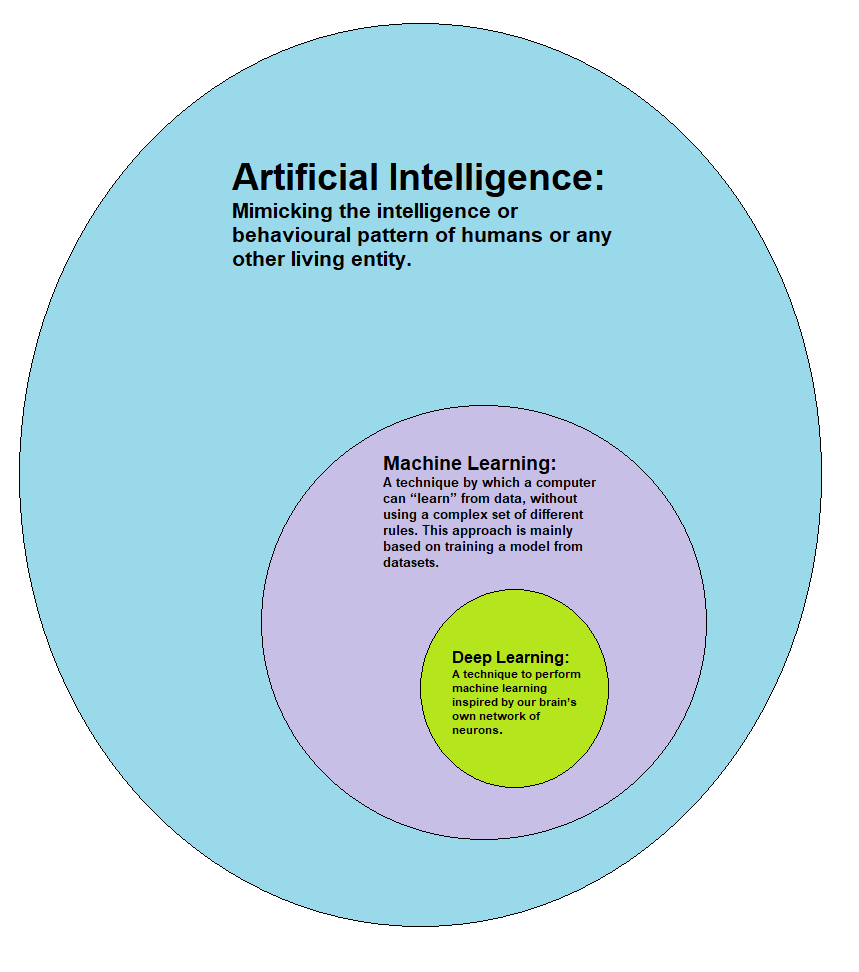
AI is a broad field with many different branches. To understand modern AI, you need to know about a few key concepts that are often used interchangeably, even though they have distinct meanings.
Machine Learning
noun
A subset of AI where systems learn patterns from data without being explicitly programmed. Instead of writing rules, developers feed an algorithm data, and it learns the rules itself.
Next, we have neural networks, which are a key component of many machine learning models.
Neural Networks
noun
Computing systems inspired by the structure of the human brain. They consist of interconnected layers of nodes, or "neurons," that process information and pass it to the next layer. Each connection has a weight that gets adjusted as the network learns.
When these networks get very large and complex, we enter the realm of deep learning.
Deep Learning
noun
A subfield of machine learning that uses neural networks with many layers (hence, "deep"). These deep networks are particularly good at finding complex and subtle patterns in huge datasets, like the millions of images or videos on the internet.
These concepts are nested within each other. Deep Learning is a type of Machine Learning, which is a specific approach to achieving Artificial Intelligence.
AI in the Real World
AI is no longer just a futuristic concept; it's a part of our daily lives. You interact with AI systems constantly, often without realizing it. They recommend movies on streaming services, suggest replies to your emails, and provide driving directions that avoid traffic.
Beyond personal convenience, AI is transforming entire industries. In healthcare, it helps doctors detect diseases like cancer from medical images with greater accuracy. Financial institutions use AI to spot fraudulent transactions in real-time, protecting customers from theft. In agriculture, AI-powered systems can monitor crop health and optimize water usage, helping farmers produce more food with fewer resources.
| Industry | AI Application |
|---|---|
| Entertainment | Recommending songs, movies, and shows based on your history. |
| Transportation | Powering navigation apps and developing self-driving cars. |
| Finance | Detecting fraudulent credit card transactions. |
| Healthcare | Analyzing medical scans to identify diseases early. |
| Customer Service | Using chatbots to answer common questions instantly. |
| Manufacturing | Using robots to automate assembly lines and predict maintenance needs. |
These examples are just the beginning. As technology continues to advance, AI will likely play an even larger role in shaping how we work, live, and interact with the world around us. Now that you have a grasp of the basic concepts, let's review them before testing your knowledge.
Ready to check your understanding?
What is the fundamental goal of Artificial Intelligence (AI)?
Which statement best describes the relationship between Artificial Intelligence (AI), Machine Learning (ML), and Deep Learning (DL)?