AI Model Comparison Beyond ChatGPT
Introduction to AI Model Evaluation
How Do We Grade an AI?
Once an AI model is built, how do we know if it's any good? We can't just ask it. Instead, we need to test it, much like a teacher tests a student. This process is called evaluation, and it's about more than just a pass or fail grade. It’s about understanding a model’s strengths, weaknesses, and exactly how well it performs its specific job.
Evaluating an AI isn't about judging its intelligence. It's about measuring its performance on a clearly defined task.
Imagine you've trained two different AI models to identify spam emails. Model A catches 90% of spam but also incorrectly flags 15% of your important emails as junk. Model B only catches 80% of spam, but it almost never misflags a real email. Which one is better? The answer depends on what you care about more: catching every last piece of spam or making sure you don't miss an important message. Evaluation gives us the tools to make that decision.
Measuring Performance
To measure how well a model performs, we use performance metrics. These are standardized scores that tell us how the model is doing. Just like different school subjects have different kinds of tests, different AI tasks have different metrics.
| Metric | What It Measures | Good For... |
|---|---|---|
| Accuracy | The percentage of correct predictions. | Balanced tasks, like identifying cats vs. dogs. |
| Precision | Of the positive predictions made, how many were actually correct? | When false positives are costly (e.g., a spam filter). |
| Recall | Of all the actual positive cases, how many did the model find? | When false negatives are costly (e.g., medical diagnoses). |
| F1 Score | A weighted average of Precision and Recall. | Finding a balance between precision and recall. |
Accuracy is the most straightforward metric. If a model is designed to identify cats in 100 photos and it gets 95 right, its accuracy is 95%. But accuracy can be misleading, especially when one outcome is much rarer than another.
That's where precision and recall come in. They help us understand the types of mistakes a model is making. For a spam filter, high precision is crucial. We want to be sure that when an email is flagged as spam, it really is spam. For a medical AI that detects disease, high recall is vital. We'd rather it occasionally flag a healthy patient for a follow-up (a false positive) than miss a real case of the disease (a false negative).
Current AI evaluation methodologies, which mainly focus on performance and accuracy, are insufficient to address these multifaceted issues.
Understanding the 'Why'
Great scores are good, but we also need to know why a model is making its decisions. This is where feature analysis comes in. A 'feature' is just a piece of input data the model uses, like the pixels in an image or the words in a sentence.
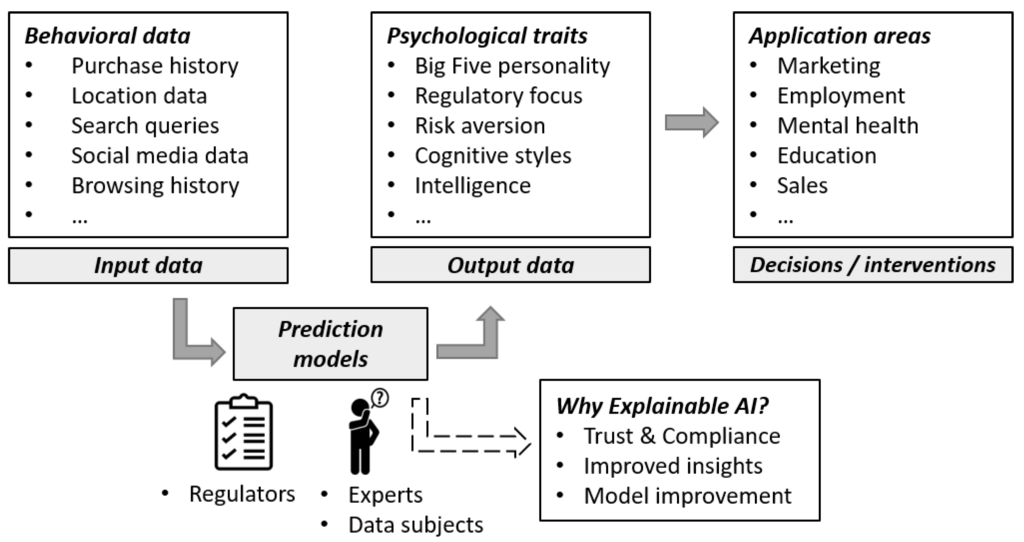
Feature analysis helps us peek inside the model's 'brain'. For example, if we're evaluating an AI that predicts house prices, feature analysis might tell us that it puts the most weight on square footage and the number of bedrooms, but very little on the color of the paint. This confirms the model is focusing on relevant information.
If the analysis showed the model was heavily influenced by the number of trees in the front yard, we might suspect something is wrong. Maybe our training data had a weird quirk where expensive houses just happened to have more trees. Feature analysis helps us catch these kinds of problems and build more trustworthy AI.
The Model's Blueprint
Finally, evaluation often involves considering the model's architecture, which is like its fundamental design or blueprint. Different architectures are suited for different tasks. It's like choosing between a sports car and a pickup truck; you pick the one designed for the job you need to do.
Some common architectures include:
- Neural Networks: Inspired by the human brain, these are powerful and flexible, great for finding complex patterns in data like images or sounds.
- Decision Trees: These models make decisions by following a series of simple 'if-then' rules, making them easy to understand and interpret.
- Transformers: A more recent architecture that has revolutionized natural language processing. It's exceptionally good at understanding the context and relationships in sequential data, like the words in this sentence.
Knowing the architecture helps us understand a model's inherent capabilities and limitations. You wouldn't evaluate a pickup truck on its lap time at a racetrack, and you wouldn't evaluate a simple decision tree on its ability to write a poem. The architecture sets the stage for what a model can realistically achieve.
With these foundational concepts—performance metrics, feature analysis, and architecture—we have a solid framework for judging any AI model. This allows us to move beyond simple questions like 'Does it work?' and ask more important ones like 'How well does it work, why does it work that way, and is it the right tool for the job?'