AI Model Architectures Explained
Introduction to Neural Networks
The Brain as a Blueprint
Neural networks are inspired by the human brain. Our brains are made of billions of cells called neurons, which are connected in a vast network. They receive signals, process them, and pass them on. Artificial neural networks mimic this structure to learn from data.
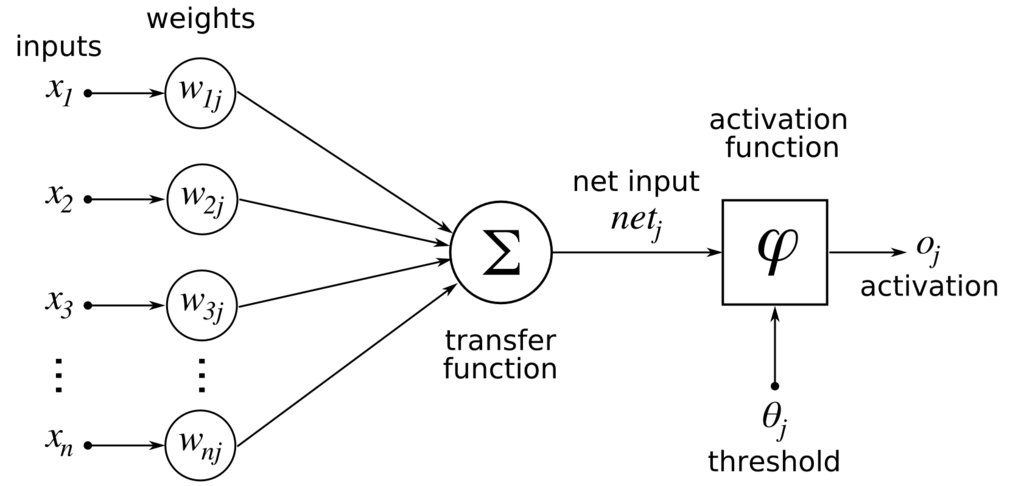
The fundamental building block is the artificial neuron, also known as a perceptron. It's a simple computational unit that takes in multiple inputs, processes them, and produces a single output. Each input is assigned a weight, which signifies its importance. The neuron sums up all the weighted inputs, adds a bias, and then passes the result through an activation function to produce the final output.
Individual neurons don't have much power on their own. Their strength comes from being organized into layers. A typical neural network has at least three types of layers:
- Input Layer: Receives the initial data. The number of neurons in this layer corresponds to the number of features in the input data (e.g., for an image that is 28x28 pixels, you might have 784 input neurons).
- Hidden Layers: These are the layers between the input and output. This is where most of the computation happens. A network can have zero, one, or many hidden layers. The more hidden layers, the "deeper" the network.
- Output Layer: Produces the final result. The number of neurons here depends on the task. For a simple yes/no classification, it might be just one neuron. For classifying handwritten digits from 0-9, it would be ten neurons.
Making the Call
After a neuron sums its weighted inputs, it needs to decide what to do with that information. Should it "fire" and pass a signal to the next layer? This decision is made by an activation function. It takes the neuron's raw output and transforms it into a more useful format.
Activation functions are crucial because they introduce non-linearity into the network. Without them, a neural network, no matter how many layers it has, would behave just like a simple linear model. This non-linearity allows the network to learn complex patterns and relationships in the data.
Two of the most common activation functions are the Sigmoid and the Rectified Linear Unit (ReLU).
The Sigmoid function squashes any input value into a range between 0 and 1. This is useful for the output layer when you need to predict a probability.
The ReLU function is simpler. It outputs the input directly if it's positive, and outputs zero otherwise. It's the most widely used activation function in hidden layers because it's computationally efficient.
Learning from Mistakes
So how does a neural network actually learn? It's a two-part process of guessing and then correcting. It starts by making a prediction, comparing that prediction to the actual outcome, and then adjusting its internal weights and biases to make a better prediction next time.
First is forward propagation. This is the process of data flowing through the network. The input data enters the input layer and travels through the hidden layers, with each neuron performing its calculation and passing the result forward, until it reaches the output layer and a prediction is made.
Once the network makes a prediction, we need to know how wrong it was. This is measured by a loss function (or cost function). It calculates the difference between the network's prediction and the true target value. The goal of training is to minimize this loss. A common loss function for regression problems is Mean Squared Error (MSE).
The final step is backward propagation, or backpropagation. This is the magic behind how the network learns. The loss value is used to calculate the gradient, which essentially tells us how much each weight and bias in the network contributed to the error. The network then works backward from the output layer, adjusting each weight and bias slightly in the direction that will reduce the loss. This optimization process, often guided by an algorithm like Gradient Descent, is repeated thousands or millions of times until the network's predictions are as accurate as possible.
In short: Forward propagation makes a guess. The loss function scores how bad the guess is. Backpropagation figures out who to blame and tells them how to fix it.
This cycle of forward propagation, calculating loss, and backward propagation is the essence of training a neural network. Through countless iterations, the network fine-tunes its parameters to recognize complex patterns in data.
Now, let's test your understanding of these core concepts.
What is the primary role of an activation function in a neural network?
Arrange the core processes of a single training iteration in a neural network in the correct order.
Understanding these building blocks is the first step to mastering the powerful world of neural networks.