AI ML and DL Explained
Introduction to AI
What Is AI Anyway?
At its core, Artificial Intelligence is about making computers smart. It’s a branch of computer science focused on creating systems that can perform tasks that normally require human intelligence. This includes things like learning from experience, understanding language, recognizing objects, solving problems, and making decisions.
Think of it this way: We're trying to build machines that can think, reason, and learn, much like we do.
Artificial Intelligence
noun
A field of computer science dedicated to creating systems capable of performing tasks that typically require human intelligence.
The idea isn't new. Philosophers have pondered the concept of artificial minds for centuries. But the modern field of AI officially kicked off in the summer of 1956 at a workshop at Dartmouth College. A small group of scientists gathered to explore the idea that "every aspect of learning or any other feature of intelligence can in principle be so precisely described that a machine can be made to simulate it." That conference gave the field its name and its mission. Since then, AI has gone through periods of rapid progress and quiet lulls, known as "AI winters," as technology and understanding evolved.
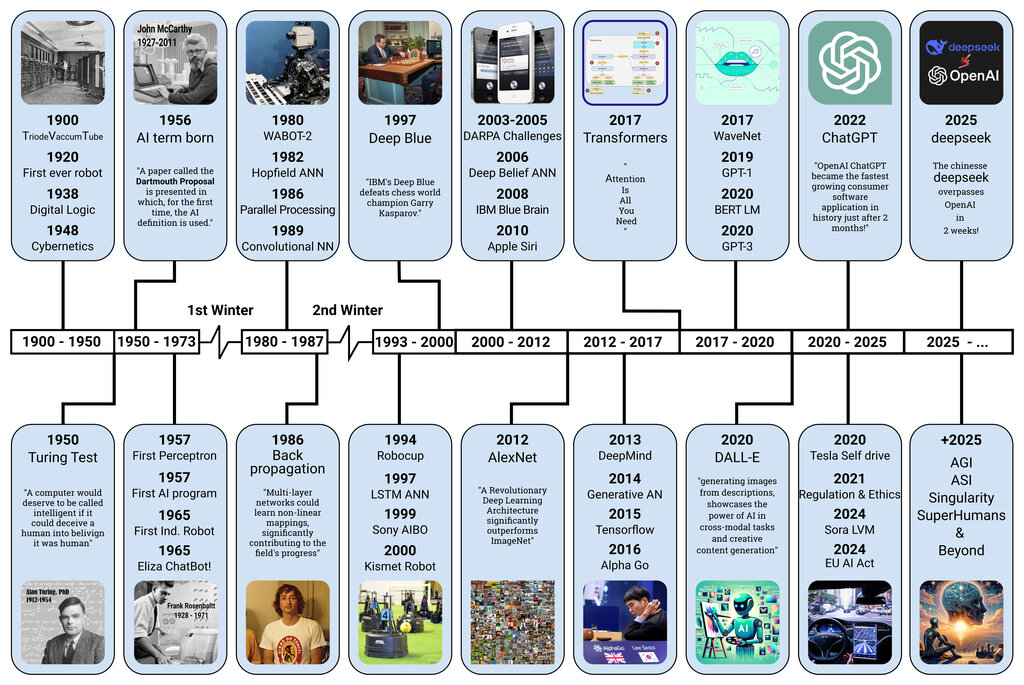
Two Flavors of AI
When people talk about AI, they're usually referring to one of two types: Narrow AI or General AI. Understanding the difference is key.
Artificial Narrow Intelligence (ANI) is what we have today. It's an AI that's trained to perform a single, specific task. It might be incredibly good at that one thing, even better than a human, but it can't operate outside its designated function. The spam filter in your email, the recommendation engine on a streaming service, and the voice assistant on your phone are all examples of Narrow AI. They're specialists.
On the other hand, Artificial General Intelligence (AGI) is the stuff of science fiction... for now. This is a type of AI that possesses the ability to understand, learn, and apply its intelligence to solve any problem, just like a human being. An AGI could switch from composing music to solving complex physics problems without being reprogrammed. It would have consciousness, self-awareness, and the ability to think abstractly across various domains. Building an AGI remains one of the biggest challenges in computer science.
The main takeaway is that all the AI we interact with daily is Narrow AI. AGI is a long-term goal that continues to inspire researchers.
The AI Family Tree
AI isn't just one thing; it's a broad field with many specialized branches, or subfields. Each one focuses on a different aspect of intelligence.
| Subfield | Focus |
|---|---|
| Computer Vision | Enabling machines to see and interpret the visual world. |
| Natural Language Processing (NLP) | Helping computers understand and generate human language. |
| Robotics | Designing and building robots that can perform physical tasks. |
| Knowledge Representation | Structuring information about the world in a way a computer can use for reasoning. |
These subfields often overlap. For instance, a self-driving car uses computer vision to see obstacles, knowledge representation to understand traffic laws, and robotics to control the vehicle.
Thinking About Ethics
As AI becomes more powerful and integrated into our lives, it raises important ethical questions. These aren't just for scientists and engineers to ponder; they affect everyone.
One major concern is bias. If an AI is trained on biased data, its decisions will also be biased. For example, an AI hiring tool trained on historical company data might unfairly favor male candidates if men have historically held most of the positions. This can perpetuate harmful stereotypes and create inequality.
Another issue is privacy. AI systems often require vast amounts of data to learn, and this data can be personal. How do we ensure this information is used responsibly and kept secure? Then there's the question of accountability. When an AI system makes a mistake, who is responsible? The programmer, the user, or the company that deployed it? These are complex problems with no easy answers, but they are at the forefront of conversations about developing AI responsibly.

Now, let's test your understanding of these foundational AI concepts.
What is the primary goal of Artificial Intelligence?
The AI that powers your email's spam filter is an example of:
You've now learned about what AI is, its history, its different types, and the important ethical questions it raises. This foundation will help you understand the more advanced topics to come.