AI, ML, and Agentic AI Fundamentals
Introduction to AI
What Is Artificial Intelligence?
Artificial intelligence, or AI, is a broad field of computer science focused on creating machines that can perform tasks that typically require human intelligence. This includes things like learning from experience, solving problems, understanding language, and recognizing objects.
At its core, AI is about building smart systems that can think, learn, and adapt.
You'll often hear a few key terms used alongside AI. They aren't all the same thing, but they are related. Think of them as nested concepts, where one is a specific type of the other.
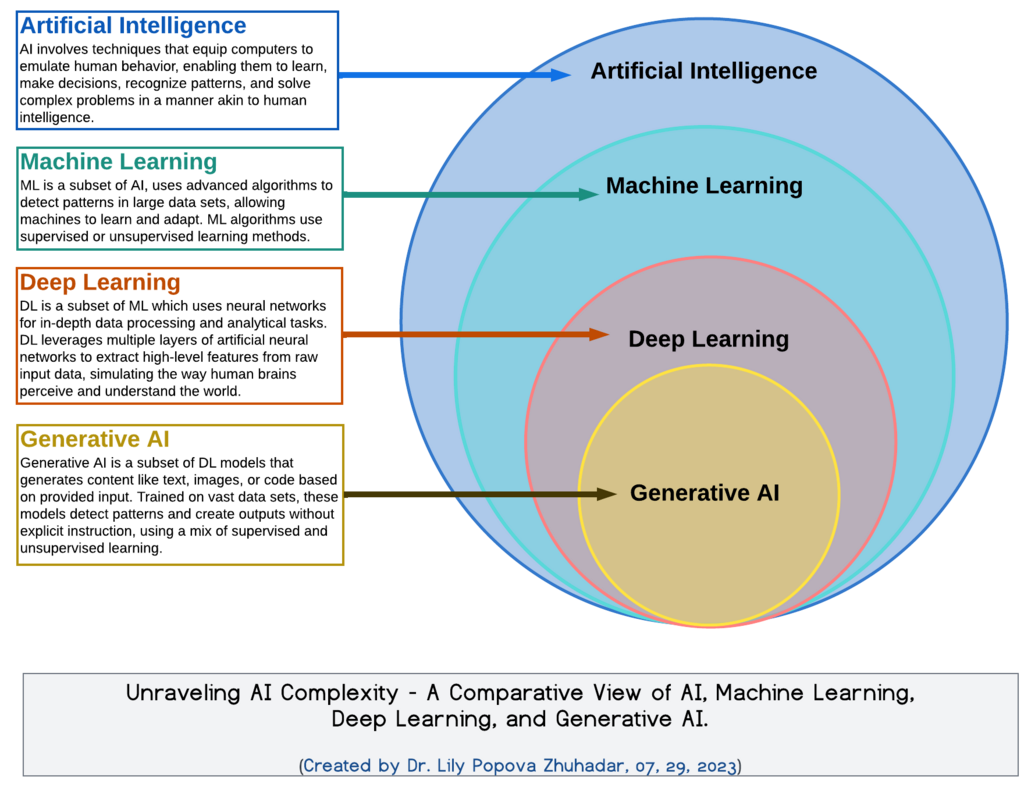
As you can see, AI is the big picture. Within AI, there are many different approaches. One of the most important is Machine Learning.
Machine Learning (ML) is a subset of AI where systems learn directly from data without being explicitly programmed. Instead of writing rules for the computer to follow, developers feed it large amounts of data and let it identify patterns and make predictions on its own. For example, your email spam filter is a classic example of machine learning. It learns which emails are junk based on the ones you've marked as spam in the past.
Deep Learning is a specialized type of machine learning that uses structures inspired by the human brain called artificial neural networks. These networks have many layers, allowing them to learn very complex patterns from huge datasets. Deep learning is the technology behind self-driving cars recognizing pedestrians and voice assistants understanding your commands.
More Flavors of AI
Beyond machine learning and deep learning, AI includes several other important subfields.
Natural Language Processing (NLP) gives computers the ability to understand, interpret, and generate human language. If you've ever used a translation app, asked a smart speaker for the weather, or seen auto-complete finish your sentence, you've used NLP.
Computer Vision is another area that aims to replicate human sight. It involves training computers to interpret and understand the visual world. Computer vision powers everything from the face ID on your phone to systems that can detect tumors in medical scans.
A Quick History
The idea of artificial intelligence isn't new. The term was first coined in 1956 at a conference at Dartmouth College. Early AI research was exciting, with pioneers creating programs that could solve algebra problems and prove theorems. The famous Turing Test, proposed by Alan Turing in 1950, suggested a way to measure a machine's intelligence: could it hold a conversation that was indistinguishable from a human's?
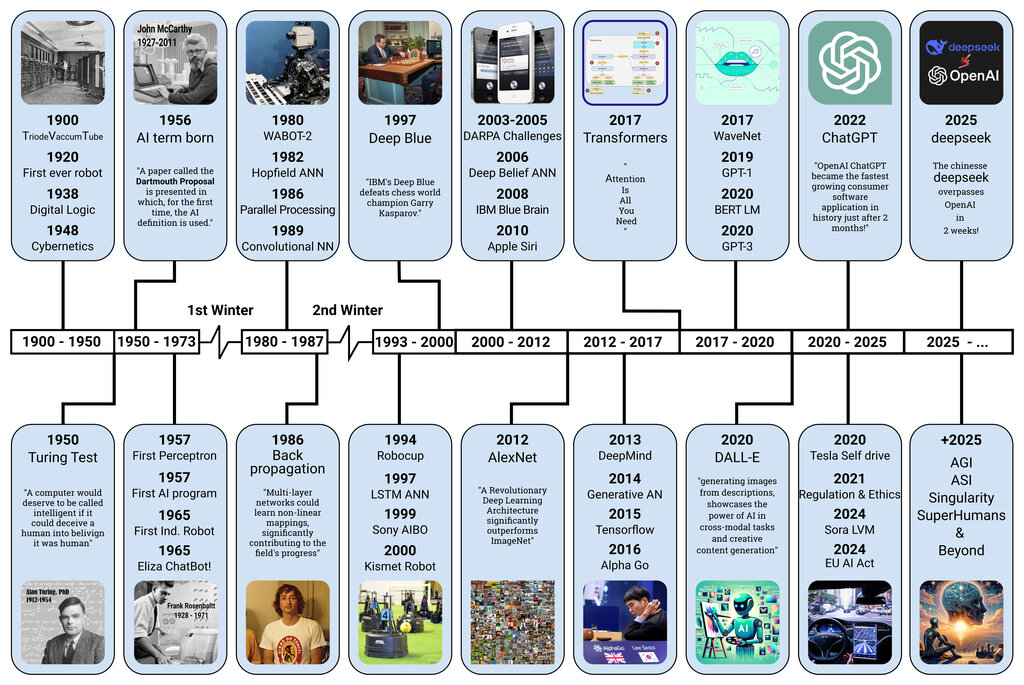
Progress wasn't always a straight line. The field went through several “AI winters,” periods where funding and interest dried up because the technology couldn't live up to the hype. But in recent decades, two things changed: the availability of massive amounts of data and the development of much more powerful computers. This combination fueled the deep learning revolution and led to the AI boom we're experiencing today.
AI in the Real World
Today, AI is no longer just a subject of science fiction. It's woven into our daily lives and is transforming industries.
- Healthcare: AI helps doctors diagnose diseases like cancer earlier and more accurately by analyzing medical images.
- Finance: Banks use AI to detect fraudulent transactions in real time, protecting your accounts.
- Entertainment: Recommendation engines on streaming services use AI to learn your tastes and suggest movies or music you might like.
- Transportation: AI is the brain behind self-driving cars, helping them navigate roads and react to their surroundings.
From simple app features to complex scientific research, AI is a powerful tool with a vast range of applications.
Let's check your understanding of these foundational ideas.
Which statement best describes the relationship between Artificial Intelligence (AI), Machine Learning (ML), and Deep Learning?
A streaming service suggests a new TV show based on your viewing history. Which AI subfield is primarily responsible for this kind of recommendation?
Understanding these core concepts is the first step. Now you have a framework for exploring the more advanced and powerful aspects of artificial intelligence.