AI Memory Systems Explained
Introduction to AI Memory Systems
The Mind of the Machine
Imagine having the same conversation with a friend every single day, with them having no memory of what you talked about yesterday. Frustrating, right? For a long time, this was the reality for most interactions with artificial intelligence. An AI could answer a question, but the moment you asked another, the context from the first was gone. It was like talking to someone with no memory.
AI memory systems are changing that. They give AI the ability to store, recall, and use information from past interactions. This simple addition transforms AI from a simple tool that responds to one-off commands into a partner that can learn, adapt, and maintain context over time.
AI memory is the ability of an AI agent to store, recall and use information from past interactions to make better decisions in the present and future.
Without memory, an AI is stateless. It treats every interaction as its first. With memory, it becomes stateful, building a history that informs its present and future actions. This is the key to creating AI that feels more intelligent, personal, and genuinely helpful.
Short-Term vs. Long-Term
Just like humans, AI has different kinds of memory for different purposes. The two most fundamental types are short-term and long-term memory.
Short-term memory is the AI's working memory. It holds information relevant to the immediate task or conversation. Think of it as a mental scratchpad. When you're in a chat with an AI assistant and it remembers what you said three messages ago, that's its short-term memory at work. It's essential for maintaining the flow of a conversation and understanding immediate context. However, once the conversation ends, this memory is typically wiped clean.
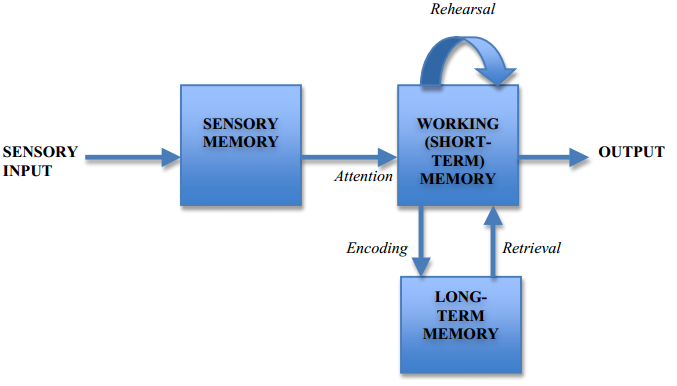
Long-term memory, on the other hand, is about persistence. This is where an AI stores information across multiple sessions and interactions. If you tell your AI assistant your favorite pizza toppings, and it remembers that a month later, it has stored that fact in its long-term memory. This capability allows the AI to learn your preferences, recall past projects, and build a continuous relationship with you over time. It's what enables true personalization and learning.
How Memory Changes Everything
Integrating memory makes AI systems dramatically more powerful and useful. The benefits are clear:
-
Deeper Personalization: An AI that remembers your past interactions can tailor its responses and suggestions specifically to you. A music app can learn your tastes beyond just one genre, and a coding assistant can remember your preferred programming style.
-
Smarter Context: Memory provides the context needed for coherent, multi-step tasks. An AI agent can help you plan a trip over several days, remembering all the details you've discussed without you needing to repeat them.
-
Continuous Learning: An AI can learn from its experiences. If a strategy to solve a problem didn't work last time, an AI with memory can try a different approach next time. This ability to learn from feedback is a cornerstone of creating more capable and autonomous systems.
Memory and context are the backbone of intelligent agent architecture in AI.
Companies and open-source projects are building the tools to make this possible. LangChain provides frameworks for developers to build memory into their AI applications. Startups like Mem0 are creating APIs focused on building a personalized memory layer for AI, while services like Zep offer ready-made long-term memory storage for AI chatbots.
These tools are making it easier for developers to build AI that doesn't just process information, but remembers it. By giving AI a past, we're unlocking a future where it can be a far more effective partner in our daily lives.
What is the key distinction between a 'stateless' and a 'stateful' AI?
During a single conversation with a chatbot, it recalls a detail you mentioned a few messages earlier. This is an example of its...