AI Meets Excel
Introduction to AI
What Is Artificial Intelligence?
Artificial Intelligence, or AI, is a broad field of computer science focused on creating machines that can perform tasks that typically require human intelligence. This includes things like learning from experience, solving problems, understanding language, and recognizing patterns.
Think of it this way: AI doesn't just follow a fixed set of pre-programmed instructions. It's designed to adapt and make decisions on its own.
The ultimate goal is to build systems that can reason, perceive, and act autonomously, much like a person would. This doesn't mean creating a conscious robot from a sci-fi movie. More often, it means developing specialized tools that can handle complex tasks with greater speed and accuracy than a human ever could.
A Brief History
The idea of intelligent machines has been around for centuries, but the modern field of AI officially began in the summer of 1956 at a conference at Dartmouth College. It was there that the term "Artificial Intelligence" was coined.
Progress wasn't always a straight line. The field went through periods of great excitement followed by "AI winters," where funding and interest dried up due to unmet expectations. However, recent breakthroughs in computing power and the availability of massive datasets have fueled the rapid advancements we see today.

The Main Branches of AI
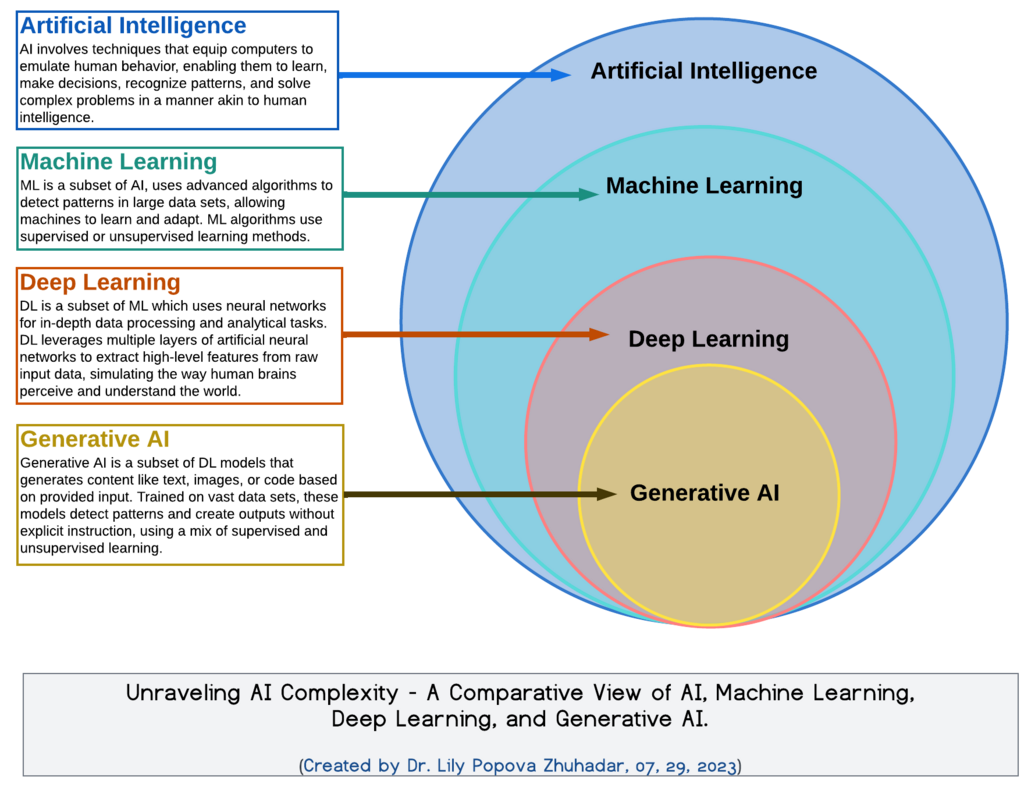
AI isn't a single technology. It's an umbrella term that covers several related fields. To understand how AI works, it helps to know its most important subfields: Machine Learning, Deep Learning, and Natural Language Processing.
Machine Learning
noun
A subset of AI where systems are trained on large amounts of data to find patterns and make predictions without being explicitly programmed for that specific task.
Instead of writing rules by hand, developers feed an algorithm thousands of examples. The algorithm learns the patterns and then uses that knowledge to make decisions about new, unseen data.
Deep Learning
noun
A specialized type of machine learning that uses multi-layered neural networks, inspired by the structure of the human brain, to learn from vast amounts of data.
Deep learning is what powers many of the most impressive AI advancements, from self-driving cars to advanced medical diagnoses. The "deep" part refers to the many layers in its neural network, which allow it to learn very complex patterns.
Natural Language Processing
noun
A field of AI focused on enabling computers to understand, interpret, and generate human language.
NLP, often shortened to, bridges the gap between human communication and computer understanding. It's the technology behind translation apps, chatbots, and tools that can summarize long documents.
AI in the Wild
You probably interact with AI every day without even realizing it. It's not just a futuristic concept; it's a practical tool that's transforming industries.
| Industry | Common Application | How It Works |
|---|---|---|
| E-commerce | Product Recommendations | ML algorithms analyze your browsing history to suggest items you might like. |
| Finance | Fraud Detection | AI systems spot unusual transaction patterns that could indicate fraud. |
| Healthcare | Medical Image Analysis | Deep learning models help doctors identify diseases in X-rays and MRIs. |
| Transportation | Route Optimization | GPS apps use AI to analyze traffic data in real-time to find the fastest route. |
| Entertainment | Content Streaming | Services like Netflix use ML to personalize your homepage with shows and movies. |
These are just a few examples. From agriculture to manufacturing, AI is helping businesses become more efficient, make smarter decisions, and create new products and services.
Now that you have a solid grasp of what AI is and its core components, let's test your knowledge.
What is the primary goal of Artificial Intelligence as a field of computer science?
The term "Artificial Intelligence" was first coined at a 1956 conference held at which institution?