AI Machine Learning and Deep Learning Explained
Introduction to Artificial Intelligence
What Is Artificial Intelligence?
Artificial intelligence, or AI, is a broad field of computer science focused on creating machines that can perform tasks that typically require human intelligence. Think about things like learning from experience, solving problems, understanding language, and recognizing objects.
At its core, AI is the science and engineering of making intelligent machines.
The ultimate goal isn't just to mimic human actions, but to create systems that can reason, learn, and adapt on their own. This field brings together ideas from computer science, psychology, linguistics, and many other disciplines to build these smart systems.
A Brief History
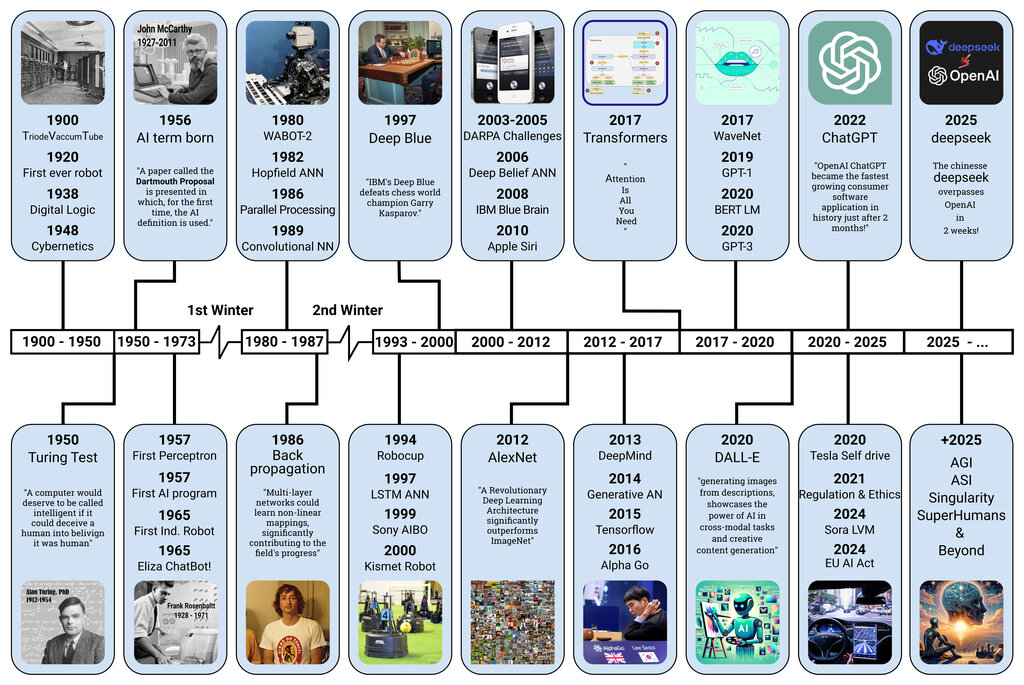
The idea of intelligent machines has been around for centuries in myths and stories, but the formal field of AI research began in the mid-20th century. A key moment was the Dartmouth Workshop in 1956, where the term "artificial intelligence" was officially coined. Early researchers were incredibly optimistic, believing that machines with human-like intelligence were just a few decades away.
Progress wasn't always a straight line. The field experienced periods of high funding and excitement followed by "AI winters," when progress stalled and funding dried up. However, recent breakthroughs in computing power and the availability of massive amounts of data have led to a new era of rapid advancement.
The Branches of AI
AI isn't just one single technology; it's a collection of different subfields, each focused on a specific aspect of intelligence. You've likely interacted with several of these without even realizing it. Some of the major branches include:
- Natural Language Processing (NLP): This branch helps computers understand, interpret, and generate human language. It's the technology behind virtual assistants like Siri and Alexa, as well as translation services.
- Computer Vision: This field enables machines to interpret and understand visual information from the world. It's used in facial recognition, self-driving cars, and medical image analysis.
- Robotics: This involves the design, construction, and operation of robots. AI gives robots the ability to perform tasks in the physical world, from manufacturing cars to exploring other planets.
- Expert Systems: These are early AI programs designed to mimic the decision-making ability of a human expert in a specific domain, like diagnosing diseases or identifying mechanical failures.
Goals and Applications
The goals of AI research are diverse. Some researchers focus on creating systems that can solve specific, narrow problems, like playing chess or recommending movies. This is often called Narrow AI or Weak AI. It's the type of AI we see all around us today.
The loftier goal is Artificial General Intelligence (AGI), or Strong AI. This refers to a machine with the ability to understand or learn any intellectual task that a human being can. While AGI remains theoretical, it's the long-term vision that drives much of the field's research.
From the spam filter in your email to the navigation app on your phone, AI is already an integrated part of modern life.
Applications of AI are transforming entire industries. In healthcare, AI helps doctors diagnose diseases earlier and more accurately. In finance, it detects fraudulent transactions and manages investments. In entertainment, it powers the recommendation engines on streaming services that suggest what you should watch next. Understanding these foundational concepts is the first step to seeing how these powerful tools work.
What is the primary goal of Artificial Intelligence (AI)?
The technology that allows self-driving cars to interpret and understand visual information from their surroundings is a part of which AI subfield?
This gives you a solid starting point for understanding what AI is and where it came from. Next, we'll dive into one of its most important subfields: Machine Learning.