AI Language Understanding
Introduction to AI Language Models
The Brains Behind the Words
At its core, an AI language model is a system trained to understand and generate human language. Think of it as a sophisticated pattern-matcher for words. Its main purpose is to process text, figure out the relationships between words, and use that knowledge to create new, coherent text.
AI language models learn the grammar, style, and facts of our world by analyzing massive amounts of text data.
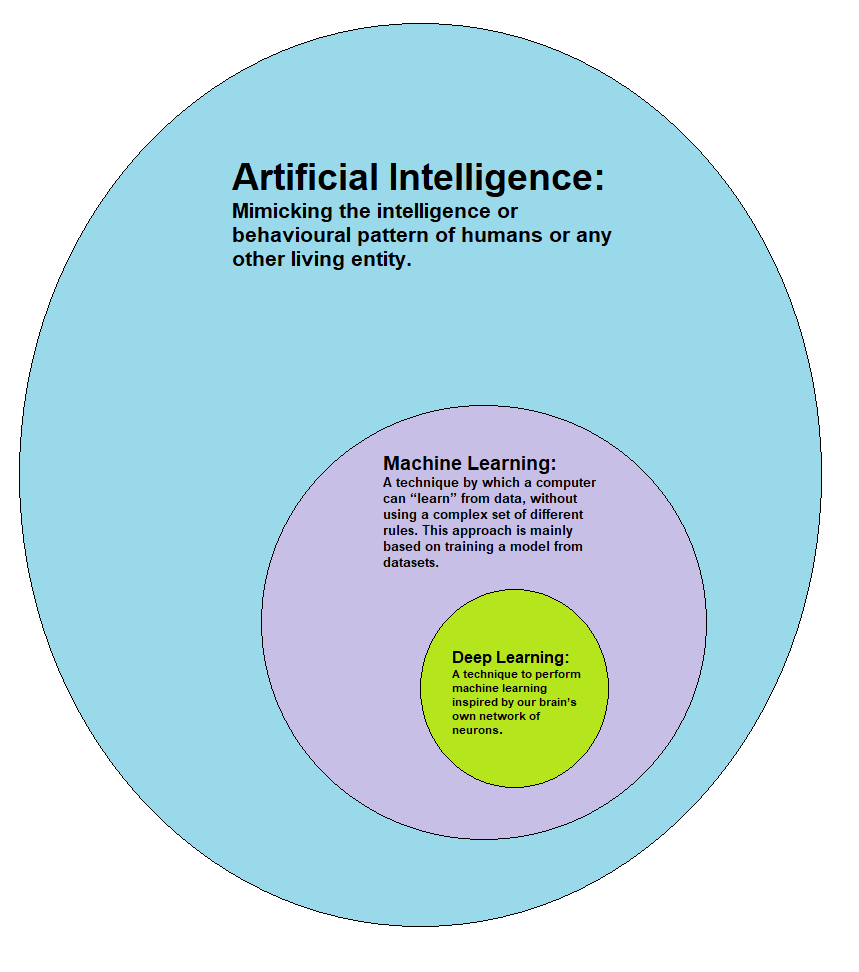
These models are a part of the broader field of Artificial Intelligence. Specifically, they fall under Machine Learning and are often built using a technique called Deep Learning. This approach uses structures inspired by the human brain to find complex patterns.
How Models Learn Language
The foundation of a modern language model is a neural network. A neural network is a computing system loosely modeled on the interconnected neurons in a human brain. It learns by processing examples, each one helping it to slightly adjust its internal connections to make better predictions over time.
For language, this process is part of a field called Natural Language Processing, or NLP. NLP gives computers the ability to read, understand, and interpret human language.
Neural Network
noun
A series of algorithms that endeavors to recognize underlying relationships in a set of data through a process that mimics the way the human brain operates.
Training a language model involves feeding its neural network an enormous amount of text data—we're talking about the equivalent of millions of books, articles, and websites. During this training, the model's single task is simple: predict the next word in a sentence. It looks at a sequence of words, makes a guess, and then compares its guess to the actual next word. If it's wrong, it adjusts its internal parameters to improve its prediction for the next time.
Through billions of these tiny predictions and corrections, the model gradually builds a complex understanding of language. It learns grammar, facts, reasoning abilities, and even different styles of writing.
What Can Language Models Do?
Once a language model is trained, it can apply its word-prediction ability to a wide range of tasks. Because it understands how words fit together, it can handle many different kinds of requests.
Its general capabilities include:
- Generating Text: Creating original text, from emails and essays to poetry and code.
- Answering Questions: Providing direct answers to factual queries by synthesizing information it learned during training.
- Summarization: Condensing long documents or articles into short, easy-to-read summaries.
- Translation: Translating text from one language to another.
All these abilities stem from one core skill: predicting the next most likely word in a sequence.
Let's review the key concepts we've covered.
Now, check your understanding with a few questions.
What is the fundamental task a language model performs repeatedly during its training process?
AI language models are a specific application within which broader field of study?
By understanding these fundamentals, you have a solid base for seeing how AI is changing the way we interact with information and technology.