AI Language Model Capabilities
Introduction to AI Language Models
What Are Language Models?
At their core, AI language models are prediction engines. Their main job is to guess the next word in a sequence. If you've ever used predictive text on your phone, you've seen a very basic version of this in action.
But modern language models take this to an entirely new level. Instead of just guessing the next word, they can generate entire paragraphs, translate languages, answer complex questions, and even write code. They learn these skills by analyzing enormous amounts of text data from the internet, books, and other sources. Think of them as incredibly well-read students who have absorbed a significant portion of human knowledge and can now use it to communicate.
The goal is to create a system that doesn't just string words together, but understands context, nuance, and meaning to produce coherent, human-like text.
A Quick History Lesson
The journey to today's powerful models was a long one. Early attempts were much simpler and relied on statistics. These were called n-gram models.
An n-gram model would look at a short sequence of words (an "n-gram") and calculate the probability of the next word. For example, after seeing "the cat sat on the," it might determine that "mat" is a highly probable next word based on how often that phrase appears in its training data. This worked for short, predictable phrases, but it couldn't grasp long-range context. It wouldn't remember the beginning of a paragraph by the time it got to the end.
| Model Type | Key Idea | Limitation |
|---|---|---|
| N-gram Models | Predicts next word based on the previous few words (e.g., 2 or 3). | Lacks long-term context and understanding of meaning. |
| Recurrent Neural Networks (RNNs) | Processes words sequentially, carrying a 'memory' of previous words. | Struggles to remember information over long sentences (vanishing gradient problem). |
| Transformer Models | Processes all words at once and weighs their importance to each other. | Computationally intensive, but excellent at handling long-range dependencies. |
Later, neural networks like Recurrent Neural Networks (RNNs) improved on this by creating a kind of memory, allowing them to remember information from earlier in a sentence. This was a big step forward, but even they struggled with long paragraphs. The critical information from the start would often get lost by the end.
The Transformer Revolution
In 2017, everything changed with the introduction of the transformer architecture. This new design solved the memory problem with a clever mechanism called "attention."
Instead of processing a sentence word by word in order, the attention mechanism allows the model to look at all the words in the input at once. It can then determine which words are most important for understanding the context of any given word. For example, in the sentence "The robot picked up the ball, but it was too heavy," the attention mechanism helps the model understand that "it" refers to the "ball," not the "robot."
This ability to weigh the importance of different words, no matter how far apart they are, was a massive breakthrough. It allowed models to understand complex relationships in text and maintain context over thousands of words, paving the way for the powerful AI we see today.
Since the inception of the Transformer architecture in 2017, Large Language Models (LLMs) such as GPT and BERT have evolved significantly, impacting various industries with their advanced capabilities in language understanding and generation.
Meet the Models
The transformer architecture is the foundation for most modern language models. One of the most famous examples is the GPT series developed by OpenAI.
GPT stands for Generative Pre-trained Transformer.
- Generative: It's designed to generate new text.
- Pre-trained: It's trained on a vast corpus of text data before being fine-tuned for specific tasks.
- Transformer: It uses the transformer architecture.
OpenAI has released several versions, from GPT-2 to GPT-4 and beyond, each significantly more capable than the last. But they aren't the only players. Google developed BERT, a model that's particularly good at understanding the context of a word in a sentence, and other major models include Llama (Meta) and Claude (Anthropic).
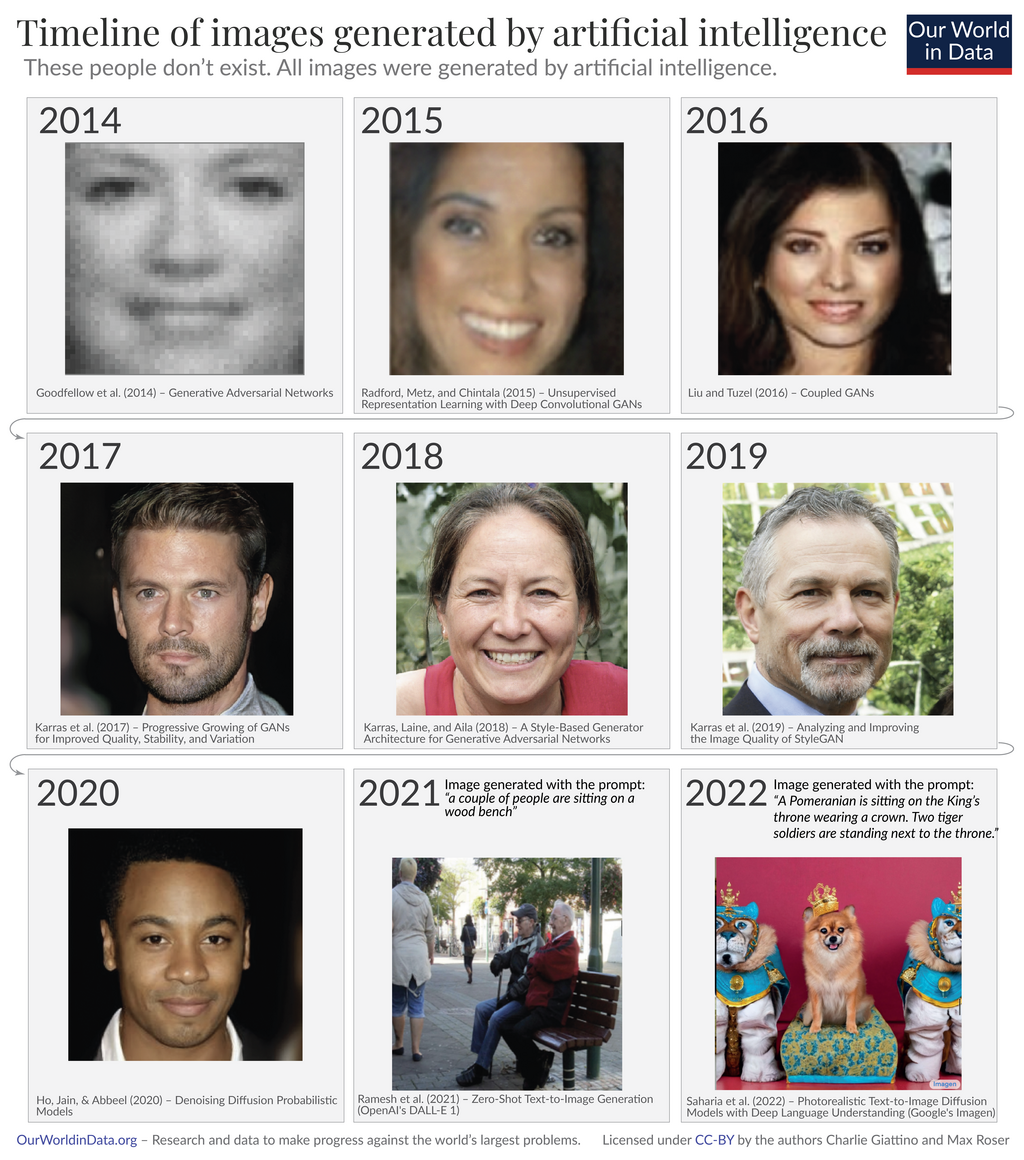
These models power a huge range of applications. They're behind chatbots that can hold startlingly human-like conversations. They help developers write and debug code. They summarize long documents, compose emails, and even create poetry. As these models continue to evolve, their ability to understand and generate language will find its way into even more parts of our daily lives.
Let's test your understanding of these core concepts.
What is the most fundamental task of an AI language model?
What was the main limitation of early statistical models like n-grams?
By understanding these building blocks, you're better equipped to see how AI is changing the way we interact with information and technology.