AI Language Model API Showdown
Introduction to Large Language Models
What Is a Large Language Model?
A Large Language Model, or LLM, is a type of artificial intelligence trained on massive amounts of text data. Its primary goal is to understand, generate, and interact with human language in a way that feels natural and coherent.
Large Language Models (LLMs) are machine learning models trained on vast amount of textual data to generate and understand human-like language.
Think of it like a super-powered autocomplete. A basic autocomplete suggests the next word based on the last few you've typed. An LLM, on the other hand, considers the entire context of a conversation or document to predict not just the next word, but the next sentence or even an entire paragraph. This allows them to perform a wide range of tasks, from answering questions and summarizing long articles to translating languages and writing code.
The Engine Inside an LLM
Most modern LLMs are built on an architecture called the Transformer. Introduced in 2017, the Transformer revolutionized how machines process language. Its key innovation is a mechanism called "attention."
Attention allows the model to weigh the importance of different words in the input text when processing and generating language. It can understand that in the sentence, "The cat, which had chased the mouse all day, was finally tired," the word "it" in a follow-up sentence likely refers to the "cat," not the "mouse," even though "mouse" is closer. This ability to handle long-range dependencies is what makes LLM-generated text so coherent.
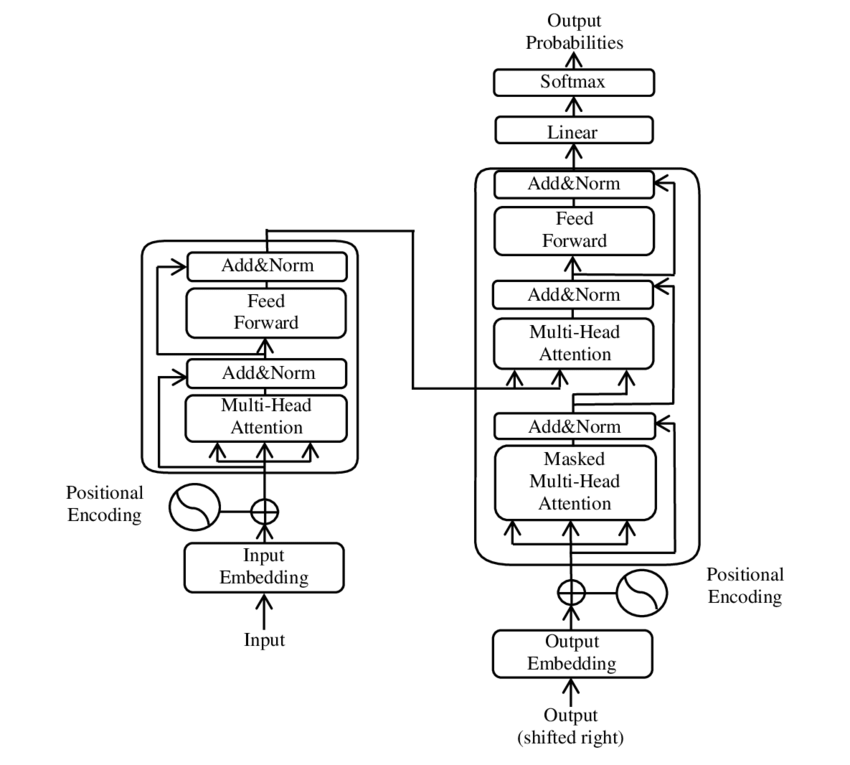
The Transformer architecture is typically split into two main parts:
- The Encoder: This part reads and processes the entire input text (like a question you ask) to build a numerical representation that captures its meaning and context.
- The Decoder: This part takes the encoder's representation and generates the output, word by word, paying attention to different parts of the original input as needed to create a relevant response.
How LLMs Learn
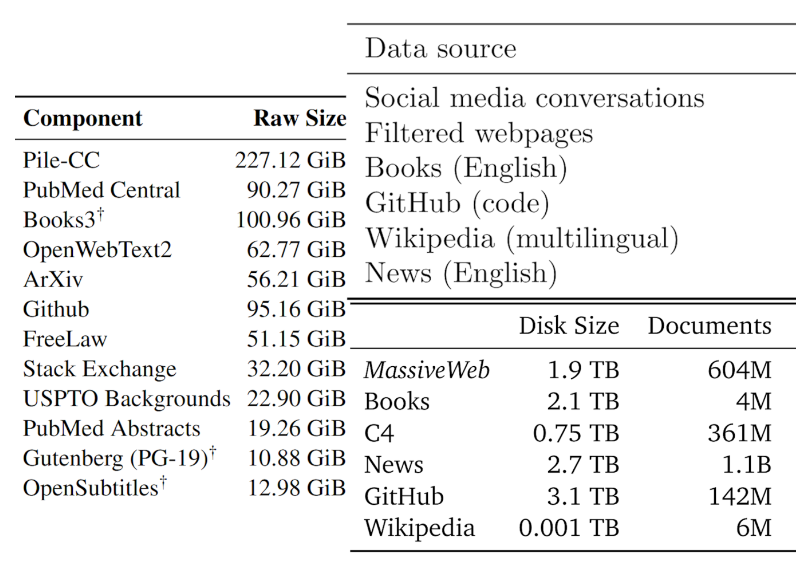
Training an LLM is a massive undertaking. The process begins with a huge collection of text and code, often scraped from the internet. This dataset can contain billions or even trillions of words from books, articles, websites, and more.
The fundamental training task is simple: predict the next word. The model is given a sequence of words and asked to guess what comes next. For example, if it sees "The quick brown fox jumps over the lazy ___," it should predict "dog."
When the model guesses correctly, its internal parameters are reinforced. When it's wrong, it adjusts its parameters to make a better guess next time. This process is repeated billions of times across the entire dataset. This first phase is called pre-training, and it's where the model acquires its general knowledge about language, grammar, facts, and reasoning abilities.
After pre-training, many models undergo a second phase called fine-tuning. Here, the model is trained on a smaller, more specific dataset to optimize it for a particular task, such as carrying on a conversation or following instructions.
Measuring Performance
How do we know if one LLM is better than another? Researchers use various metrics to evaluate their performance. These metrics often test the model's ability on standardized benchmarks that cover tasks like question answering, logical reasoning, and language understanding.
One common technical metric is perplexity. In simple terms, perplexity measures how "surprised" a model is by a sequence of text. A lower perplexity score means the model is better at predicting the next word, indicating a stronger grasp of the language. For example, a model with low perplexity would confidently predict "mat" after "The cat sat on the..." and would be very surprised if the next word was "banana."
| Metric | What It Measures | Ideal Score |
|---|---|---|
| Perplexity | How well the model predicts a sample of text. | Lower is better. |
| Accuracy | How often the model is correct on specific tasks (e.g., classification). | Higher is better. |
| BLEU | How similar the model's generated text is to human-written text (used in translation). | Higher is better. |
While these quantitative metrics are useful, LLMs are also frequently evaluated by humans who rate the quality, relevance, and coherence of their responses. This combination of automated and human evaluation helps provide a complete picture of a model's capabilities.
What is the primary goal of a Large Language Model (LLM)?
Which part of the Transformer architecture is responsible for reading the input text and creating a numerical representation of its meaning?
With these fundamentals in place, we can begin to explore and compare the specific LLMs that are shaping the world of AI today.