AI Language Capabilities
Introduction to AI Translation
From Rules to Reasoning
The idea of a universal translator has been a dream for centuries. Early attempts to build one were straightforward. Programmers tried to teach computers language the way we learn in school: with dictionaries and grammar rules. This created what's known as Rule-Based Machine Translation (RBMT).
Think of it like building a translation machine from a bilingual dictionary and a grammar textbook. For every word in one language, you provide a match in another. Then, you add a long list of grammatical rules to arrange those words correctly.
For a simple sentence, this works reasonably well. But language is messy and full of exceptions. Idioms are a classic problem. A rule-based system might translate the English phrase "it's raining cats and dogs" literally, creating a bizarre and confusing sentence in another language. These systems were rigid and broke easily when faced with the creative, nuanced ways humans actually speak.
Learning from Data
The next big step was to stop telling computers the rules and instead let them figure out the patterns themselves. This led to Statistical Machine Translation (SMT). SMT systems are fed enormous amounts of text that has already been translated by humans, like United Nations proceedings or multilingual websites.
By analyzing this data, the model learns probabilities. It calculates the most likely translation of a phrase based on how often it appeared in the training texts. It's less about grammar and more about statistical guesswork. This was a huge improvement. Translations became more natural and handled idioms better because the model could learn that "raining cats and dogs" often corresponds to a phrase meaning "heavy rain".
| Method | Approach | Strength | Weakness |
|---|---|---|---|
| Rule-Based (RBMT) | Uses human-made dictionaries and grammar rules. | Predictable and consistent. | Brittle, poor with idioms and nuance. |
| Statistical (SMT) | Learns from vast amounts of translated text. | More fluent and natural than RBMT. | Can be clunky and context-deaf. |
SMT was the dominant technology for years, powering many online translation tools. However, it still had a major flaw. It translated text in chunks, phrase by phrase, often losing the meaning and flow of the full sentence.
The Neural Revolution
The current state-of-the-art is Neural Machine Translation (NMT). This approach uses a type of AI inspired by the structure of the human brain. Instead of looking at phrases in isolation, an NMT model processes the entire sentence at once, capturing its full context and meaning.
This holistic view allows for remarkably fluid and accurate translations that preserve the original tone and intent. It's the difference between translating words and translating ideas. This is the technology that powers the most advanced translation apps today, making real-time conversation across languages a reality.
The latest evolution in this field involves Large Language Models (LLMs), the same technology behind advanced chatbots. LLMs are trained on an immense dataset of text and code, giving them an unprecedented grasp of grammar, nuance, context, and even cultural subtleties. When applied to translation, they don't just convert words; they can adapt the style, summarize, or explain the translated text, making them incredibly powerful tools.
AI Translation in Action
AI-powered translation is no longer a futuristic concept; it's a part of daily life and a driver of global business.
- Global Business: Companies use AI translation to localize their websites, market their products globally, and provide multilingual customer support without needing a massive team of human translators.
- Communication: Tourists use mobile apps to read menus and ask for directions. Friends and families separated by language barriers can communicate instantly.
- Information Access: AI can translate scientific papers, news articles, and educational content, breaking down knowledge silos and making information accessible to a worldwide audience.
- Media: Streaming services offer automatically generated subtitles for movies and shows in dozens of languages, bringing entertainment to a global market.
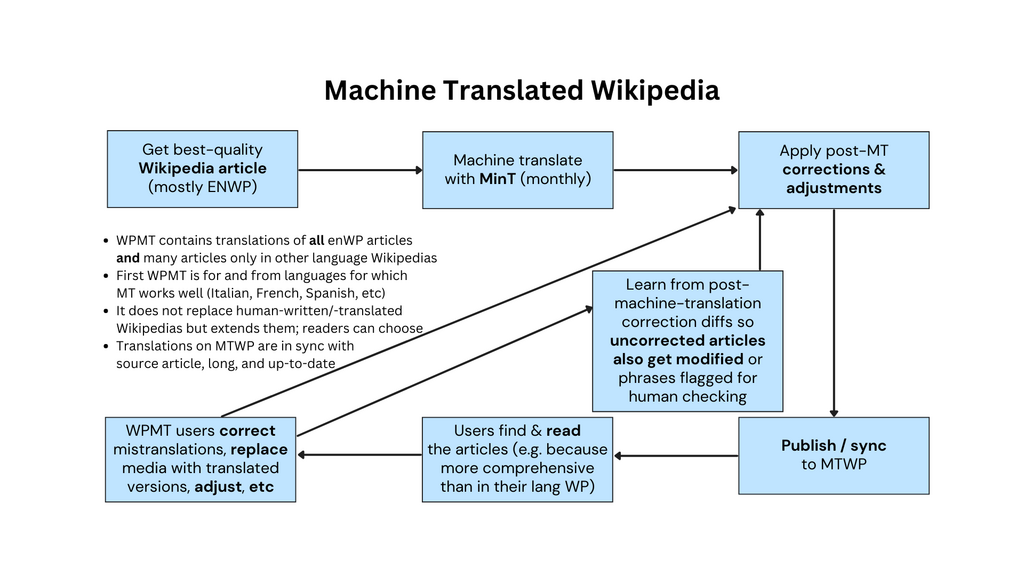
From clumsy, rule-based systems to fluent, context-aware neural networks, the journey of machine translation shows the incredible progress of artificial intelligence. It's a technology that is quietly and profoundly reshaping how we connect and communicate across cultures.
Ready to check your understanding?
What was the main drawback of early Rule-Based Machine Translation (RBMT) systems?
How did Statistical Machine Translation (SMT) determine the best translation for a phrase?