AI Integration for Aerospace Advancement
Introduction to Computational Intelligence
What is Computational Intelligence?
Computational intelligence (CI) is a field of study that focuses on creating computer systems that can solve complex problems in a way that mimics biological processes. Instead of following a rigid set of pre-programmed instructions, CI systems learn, adapt, and evolve. Think of it less like a calculator executing a formula and more like a flock of birds finding the most efficient route during migration. It's about finding approximate, but very effective, solutions to problems that are too messy or dynamic for traditional methods.
This approach is particularly powerful in environments where data is incomplete or constantly changing, which is common in advanced manufacturing. The goal isn't always to find the single perfect answer, but to develop robust, adaptable systems that get the job done efficiently.
A Quick History
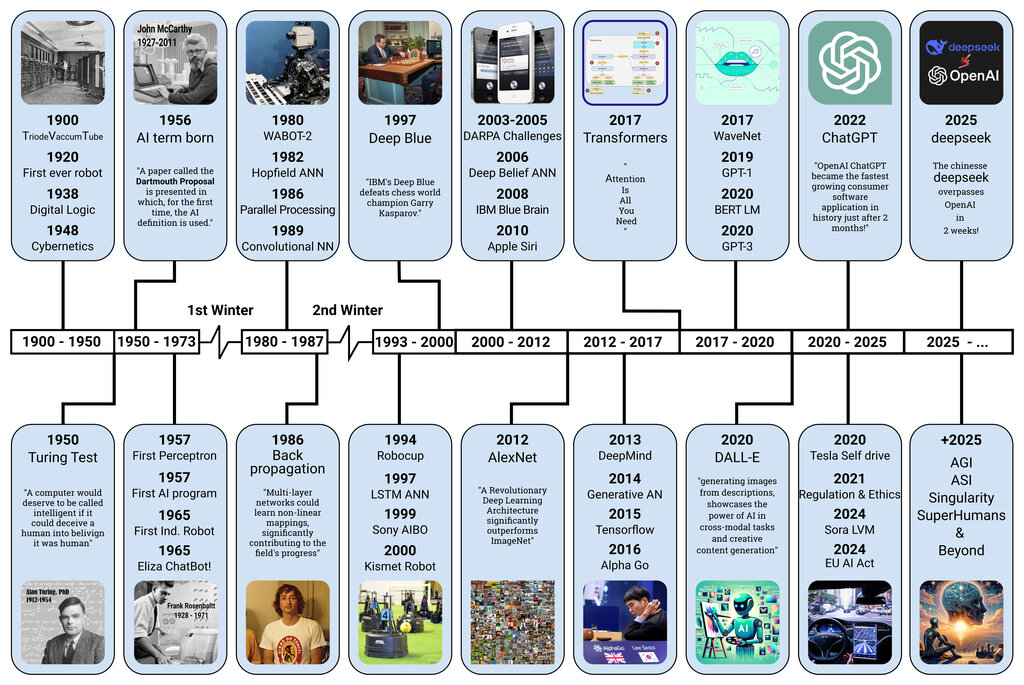
The ideas behind computational intelligence aren't brand new. They began to take shape in the mid-20th century, alongside the birth of artificial intelligence itself. Early pioneers were inspired by the human brain, leading to the first artificial neural networks in the 1940s and 50s. Around the same time, others explored ideas based on evolution, developing algorithms that could "evolve" solutions to problems.
For decades, these concepts were mostly theoretical, limited by the available computing power. But as technology advanced, these nature-inspired methods became practical, leading to breakthroughs that now power many modern technologies. This timeline shows some of the key milestones in the broader field of AI that paved the way for CI's growth.
The Core Components
Computational intelligence is not a single technology, but a collection of methods. Three of the most important components are machine learning, neural networks, and expert systems.
Machine Learning
noun
A type of artificial intelligence that enables computer systems to learn from and make predictions or decisions based on data, without being explicitly programmed for the task.
Machine learning (ML) is the workhorse of modern CI. It's the process of training a computer model on a large dataset so it can recognize patterns and make decisions on its own. For example, in aerospace manufacturing, an ML model could be trained on thousands of images of turbine blades. It would learn to identify tiny, microscopic cracks that a human inspector might miss, improving safety and quality control.
Neural networks are a key part of machine learning, inspired by the structure of the human brain. They consist of layers of interconnected nodes, or "neurons," that process information.
Each connection has a weight that gets adjusted during training, allowing the network to learn. When a neural network has many hidden layers, it's called "deep learning," which is capable of solving extremely complex problems like controlling autonomous drones or designing new composite materials.
Expert systems are a more traditional form of AI but are still a key part of the CI toolkit. An expert system is a computer program that emulates the decision-making ability of a human expert. It uses a knowledge base of rules and facts to solve problems. In a defense context, an expert system could guide a technician through a complex diagnostic and repair process for a radar system, encoding the knowledge of the most experienced engineers into software.
CI in Aerospace and Defense
The impact of computational intelligence on aerospace and defense manufacturing is profound. These technologies are not futuristic concepts; they are being used today to improve how things are designed, built, and maintained.
One of the biggest impacts is on operational efficiency. CI can optimize supply chains, predict equipment failures before they happen (predictive maintenance), and automate quality control inspections. This reduces downtime, saves money, and increases safety.

For example, by analyzing sensor data from machinery on the factory floor, a machine learning model can predict when a specific part is likely to fail. Maintenance can then be scheduled proactively, preventing a costly shutdown of the entire production line.
Computational intelligence also drives product innovation. Engineers use CI tools for generative design, where an AI is given a set of goals and constraints (e.g., weight, strength, cost) and generates thousands of potential design solutions. This process can lead to lighter, stronger, and more efficient parts for aircraft and satellites, designs that a human engineer might never have conceived.
In defense, CI helps develop smarter, more autonomous systems, from reconnaissance drones that can identify threats without human intervention to cybersecurity systems that can detect and neutralize attacks in real time.
These tools are changing the very nature of manufacturing in this critical sector, moving it from a process of simple assembly to one of continuous, data-driven improvement and innovation.