AI Infrastructure Essentials
Introduction to AI Infrastructure
The Foundation of AI
Artificial intelligence doesn't just happen in the cloud. It runs on a physical and digital foundation known as AI infrastructure. Think of it like building a skyscraper. You can't construct the top floors without first laying a deep, solid foundation. AI infrastructure is that foundation for any AI application.
AI infrastructure consists of the combination of the underlying hardware, software, networking, and system processes needed to develop, deploy, and maintain AI applications.
This setup is crucial because AI models, especially complex ones used for tasks like image recognition or natural language processing, are incredibly demanding. They need immense processing power to learn from data and powerful systems to deliver results quickly. A weak infrastructure leads to slow training, poor performance, and an inability to scale. A strong one enables innovation and keeps everything running smoothly.
Hardware: The Muscle
The hardware components are the physical engine of an AI system. They provide the raw computational power needed to process vast amounts of information.
At the heart of modern AI hardware are Graphics Processing Units (GPUs). Originally designed to render graphics for video games, their architecture is perfect for AI. GPUs can perform thousands of simple calculations simultaneously, a technique called parallel processing. This is exactly what's needed to train deep learning models, which involve massive matrix multiplications.
While GPUs are the specialists, Central Processing Units (CPUs) are the general managers. They handle the overall operations of the computer, run the operating system, and manage the workflow, delegating the heavy lifting to the GPUs.
Of course, all this processing requires data, and lots of it. Fast, high-capacity storage systems, like Solid-State Drives (SSDs), are essential for feeding data to the processors without creating bottlenecks. Finally, networking components act as the system's nervous system, allowing all the parts to communicate with each other at high speeds. In large AI systems, thousands of GPUs might work together, and they need lightning-fast connections to be effective.
Software: The Brains
If hardware provides the muscle, software provides the intelligence and direction. It’s the set of programs, tools, and instructions that tell the hardware what to do. Without software, the powerful hardware would just sit idle.
Key pieces of AI software include AI frameworks and libraries. These are collections of pre-written code that give developers a head start. Tools like TensorFlow and PyTorch provide the building blocks for creating complex neural networks without having to write every single function from scratch. They are like a master chef's toolkit, full of specialized knives and pans that make cooking a gourmet meal possible.
Another critical layer is the operating system and specialized software that manages the hardware. This includes drivers that allow the OS to communicate with GPUs and containerization platforms like Docker, which package applications and their dependencies into isolated units. This ensures that an AI model developed on one machine will run consistently on another.
Software translates human goals into machine instructions, managing everything from data flow to model training and deployment.
Data Management: The Fuel
Data is the lifeblood of AI. An AI model is only as good as the data it's trained on. Because of this, managing that data is a core function of any AI infrastructure.
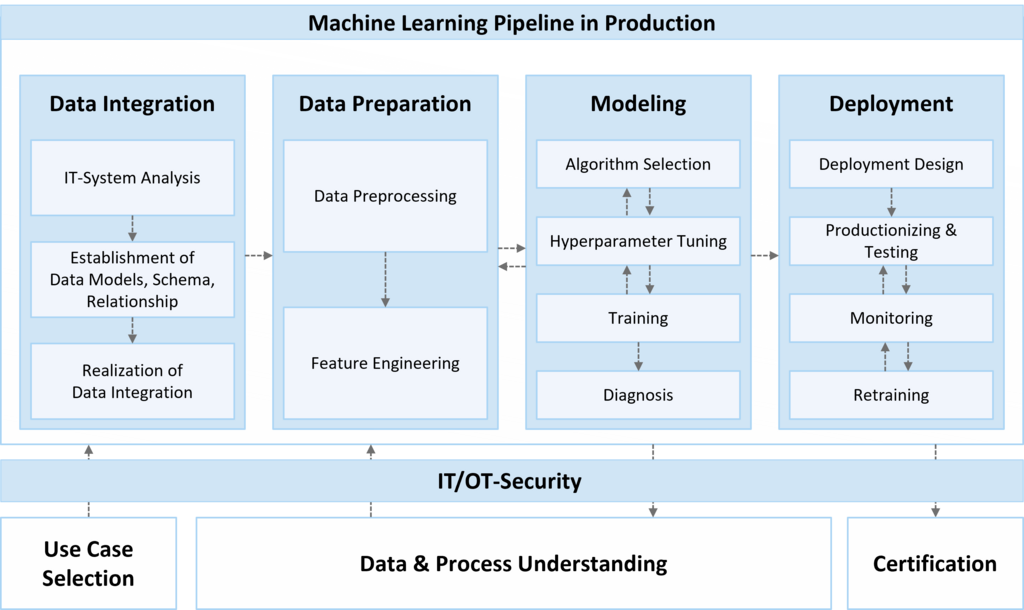
A data management system is responsible for the entire data lifecycle. This starts with data ingestion, the process of collecting raw data from various sources. Once collected, the data needs to be cleaned, formatted, and stored in a way that makes it easy to access. This is often handled by a data pipeline, an automated process that moves and transforms data from its source to a central repository, like a data lake or warehouse.
Think of a data pipeline as an automated factory assembly line. Raw materials (data) come in one end, go through various stages of processing and quality control, and emerge as finished products (training-ready datasets) at the other end. Effective data management ensures a steady supply of high-quality fuel to power the AI engine, making the entire system more efficient and reliable.
Let's test your understanding of these foundational concepts.
Why is AI infrastructure often compared to the foundation of a skyscraper?
What is the primary role of a Graphics Processing Unit (GPU) in an AI system?
Together, hardware, software, and data management form the three essential pillars of AI infrastructure. Understanding how they interrelate is the first step toward building and deploying powerful AI solutions.