AI in Software Development
Introduction to AI in Software Development
What Is AI Anyway?
At its core, Artificial Intelligence (AI) is about building machines that can think and learn like humans. It's a branch of computer science focused on creating systems that can perform tasks that typically require human intelligence, such as understanding language, recognizing patterns, and solving problems.
The idea isn't new. Philosophers have mused about intelligent machines for centuries. But the field of AI really kicked off in the 1950s, when scientists began to seriously explore the possibility of creating a “thinking machine.” Early efforts were based on rigid rules and logic, which worked for simple tasks but struggled with the complexities of the real world.
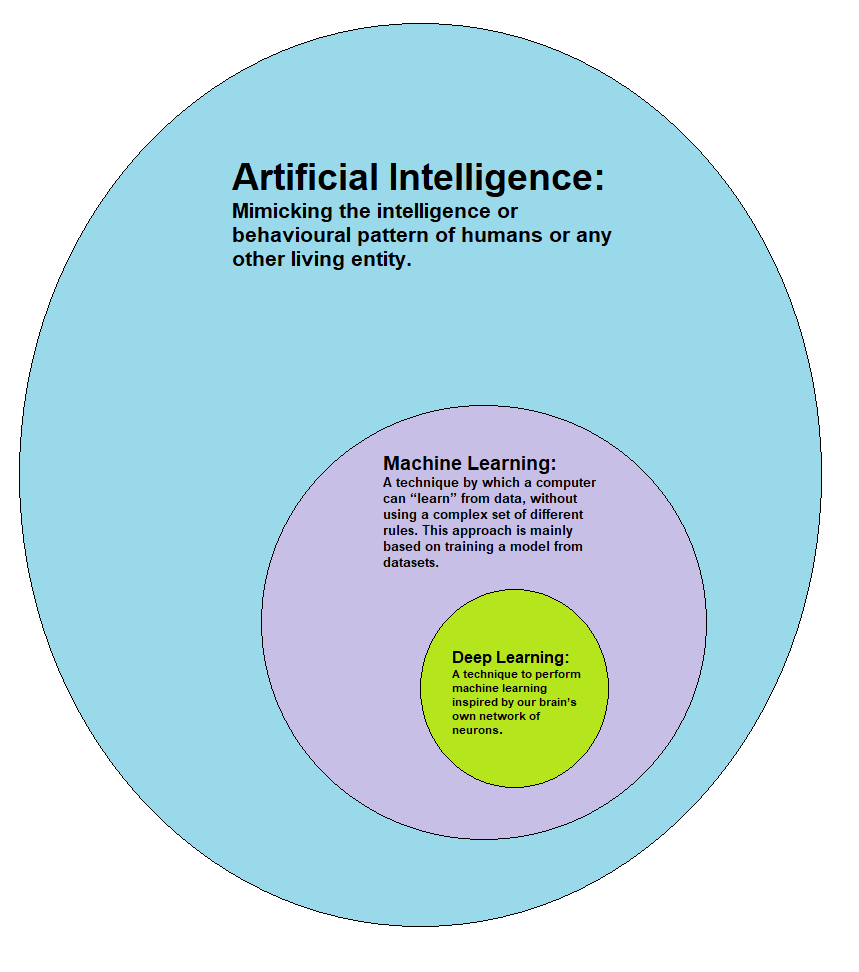
The big breakthrough came with a shift in approach. Instead of programming explicit rules for every possible situation, researchers developed ways for computers to learn from data. This is the essence of Machine Learning (ML), a major subset of AI. With ML, a system can analyze vast amounts of information, identify patterns, and make predictions without being explicitly told how.
Deep Learning is a further specialization of ML. It uses structures modeled after the human brain, called neural networks, to learn from even larger and more complex datasets. This is the technology behind many of today's most impressive AI feats, like image recognition and natural language processing.
Algorithm
noun
A set of step-by-step instructions or rules that a computer follows to complete a task or solve a problem.
AI in the Software Lifecycle
So, what does all this have to do with building software? Everything. AI is fundamentally changing the software development lifecycle (SDLC), which is the structured process used to design, develop, and test high-quality software.
From start to finish, AI acts as a powerful assistant to developers. Here's a brief look at its impact on each stage:
- Planning: AI tools can analyze market data and user feedback to help predict which features will be most valuable, making the planning phase more data-driven.
- Design: Instead of starting from scratch, developers can use AI to generate initial design mockups and user interface ideas, speeding up the creative process.
- Coding: This is where AI has had a huge impact. AI-powered tools can suggest lines of code, catch errors in real-time, and even write entire functions based on a simple description from the developer.
- Testing: Manually testing software for bugs is time-consuming. AI can automate much of this process, running tests, identifying potential issues, and even predicting where bugs are most likely to occur.
- Deployment & Maintenance: After software is released, AI can monitor its performance, flag potential problems, and help manage updates, ensuring the application runs smoothly for users.
A New Era for Developers
The integration of AI into software development isn't about replacing human developers. It's about augmenting their abilities.
By automating repetitive tasks and providing intelligent assistance, AI frees up developers to focus on the more complex, creative, and strategic aspects of their work. This leads to faster development cycles, higher-quality code, and more innovative software products. Understanding these fundamental concepts is the first step toward harnessing this transformative technology.
AI is a tool that enhances a developer's skills, much like a power drill is a tool that enhances a carpenter's.
Now, let's check your understanding of these core concepts.
What is the fundamental goal of Artificial Intelligence (AI) as described in the text?
Which statement accurately represents the relationship between AI, Machine Learning (ML), and Deep Learning?
With these fundamentals in place, you're ready to explore the specific ways AI is shaping the future of software.