AI in Software Design
Introduction to AI in Software Design
AI Meets Software Design
Software design has always been a blend of logic and creativity. Developers map out complex systems, solve puzzles, and build tools that shape our world. Now, a powerful new collaborator is joining the team: Artificial Intelligence. AI isn't just another feature to build into an app; it's becoming a fundamental tool in the design process itself, changing how we create software from the ground up.
Think of AI as an assistant that can handle tedious work, suggest new ideas, and spot patterns humans might miss. By integrating AI, developers can focus more on the creative and strategic parts of their job, leading to better, more innovative software built faster than ever before.
AI is revolutionizing product design by enhancing creativity, streamlining workflows, and enabling personalized user experiences through data-driven insights and automation.
What Is AI, Really?
Artificial Intelligence is a broad field of computer science focused on creating machines that can perform tasks that typically require human intelligence. This includes things like learning from experience, understanding language, and solving problems. But AI isn't one single thing; it's a collection of different technologies and approaches.
Two of the most important concepts within AI are machine learning and deep learning. They're often used interchangeably, but they represent different layers of intelligence.
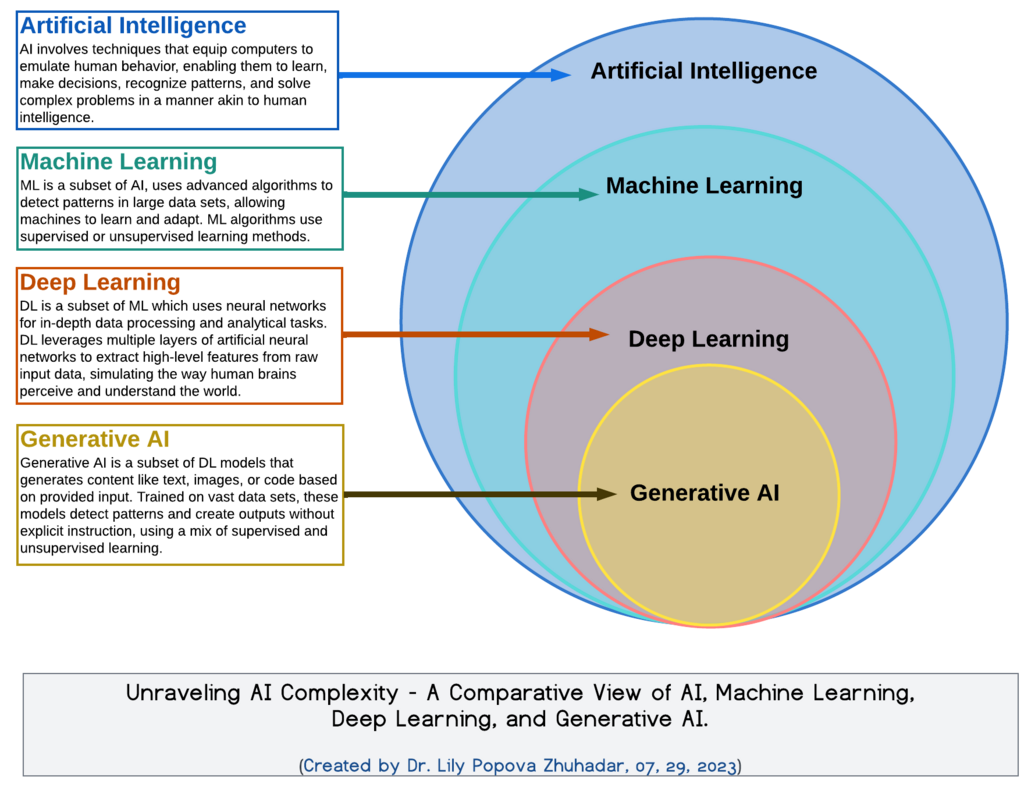
Machine learning (ML) is a subset of AI where systems learn directly from data without being explicitly programmed. Instead of writing step-by-step instructions, developers feed an algorithm huge amounts of data. The algorithm then learns to recognize patterns and make predictions. For example, an ML model can learn to identify spam emails by analyzing thousands of examples of spam and legitimate messages.
Deep learning (DL) is a more advanced subset of machine learning. It uses complex structures called neural networks, which are inspired by the human brain. These networks have many layers, allowing them to learn incredibly subtle and complex patterns from vast amounts of data. Deep learning powers many of the most impressive AI achievements, like voice assistants and self-driving cars.
AI's Role in Building Software
So how does this technology actually help in the software design process? AI is being applied across the entire development lifecycle, bringing some major benefits.
One of the biggest advantages is automation. Software development involves many repetitive tasks, like writing boilerplate code, running tests, or searching for bugs. AI can automate much of this work, freeing developers to concentrate on more complex and creative problems. It's like having a tireless assistant who handles the grunt work.
Another powerful application is code generation. AI tools can now write entire functions or code blocks based on a simple description in plain English. This not only speeds up development but also helps developers learn new languages or frameworks. Instead of getting stuck on syntax, they can focus on the logic and structure of their application.
AI's ability to automate and generate code allows developers to shift their focus from writing lines of code to designing elegant and effective systems.
Finally, AI is a game-changer for design optimization. An AI can analyze user behavior data to suggest improvements to an app's interface, making it more intuitive and user-friendly. It can also analyze system performance to recommend more efficient architectures, helping software run faster and use fewer resources. This data-driven approach removes much of the guesswork from design.
Challenges and Ethical Questions
Despite the incredible potential, integrating AI into software design comes with its own set of challenges. It's not a magic wand that solves every problem, and using it responsibly requires careful thought.
A major concern is bias. AI models learn from the data they are trained on. If that data contains historical biases—related to race, gender, or anything else—the AI will learn and even amplify those biases. An AI-powered hiring tool, for instance, might unfairly penalize certain groups if it was trained on biased historical hiring data.
There's also the question of accountability. If an AI generates faulty code that causes a major security breach, who is responsible? The developer who used the tool? The company that created the AI? Establishing clear lines of responsibility is a complex legal and ethical puzzle.
Properly incorporating AI into development requires an engineer-in-the-loop approach: balancing automation with continuous human oversight, securing sensitive data, and reducing potential risks like AI hallucinations and prompt injections.
Finally, there's a risk of over-reliance. As AI tools become more capable, developers might lose some of their fundamental skills. It's crucial that AI is used as a collaborator that enhances human expertise, not a crutch that replaces it. The goal is to combine the best of human and machine intelligence.
Ready to check your understanding?
What is the primary characteristic of Machine Learning (ML)?
Which of the following is a key benefit of using AI in the software design process?
AI offers powerful new ways to design and build software, but its integration requires a thoughtful approach that balances innovation with responsibility.