AI in Research Applications
Introduction to AI
What Is Artificial Intelligence?
At its core, artificial intelligence is the science of making machines smart. It's a field of computer science focused on building systems that can perform tasks that typically require human intelligence. This includes things like learning from experience, understanding language, recognizing objects, solving problems, and making decisions.
Think of it this way: we don't program an AI with every possible answer. Instead, we create a system that can learn how to find the answers on its own, much like a person does.
This ability to learn and adapt is what separates AI from a simple calculator or a standard computer program. A calculator follows a fixed set of rules to give you an answer. An AI, on the other hand, can analyze new information and adjust its approach. It's the difference between a tool that follows instructions and one that develops its own strategies.
The Journey of AI
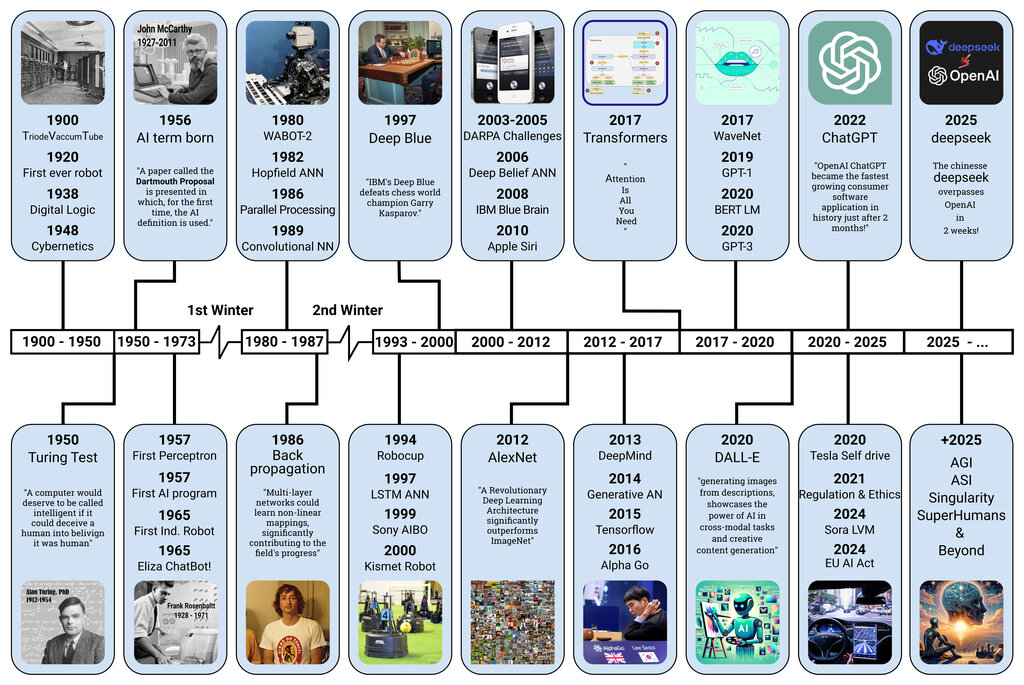
The idea of intelligent machines has been around for centuries, but the formal field of AI research began in the summer of 1956 at a workshop at Dartmouth College. There, a group of scientists coined the term "artificial intelligence" and kicked off decades of exploration.
The path wasn't always smooth. Early excitement led to ambitious promises that were hard to deliver, resulting in periods known as "AI winters" where funding and interest cooled. Early AI systems were mostly rule-based; programmers tried to write explicit instructions for every possible situation. This worked for simple games like checkers, but it failed at complex, real-world problems.
The game changed with the rise of machine learning in the 1980s and 90s. Instead of being fed rules, these new systems were fed data. By analyzing vast numbers of examples, they could learn patterns on their own. This shift, combined with the explosion of the internet and massive increases in computing power, has fueled the AI boom we see today.
Core Principles and Tools
Modern AI is built on a few key concepts and technologies. While the field is vast, understanding these foundational pieces is essential.
At the highest level, you have Artificial Intelligence (AI), the overall concept of intelligent machines.
Within AI, there is Machine Learning (ML). This is the most common approach to AI today. ML algorithms use statistical techniques to learn from data without being explicitly programmed. For example, an ML model can learn to identify spam emails by analyzing thousands of messages you've already marked as spam.
A popular subset of machine learning is Deep Learning. Deep learning uses structures called neural networks, which are inspired by the human brain. These networks have many layers, allowing them to learn very complex patterns from enormous datasets. Deep learning is the technology behind self-driving cars recognizing pedestrians and voice assistants understanding your commands.
Essentially, deep learning is a more powerful and complex form of machine learning, which in turn is the most prominent way we currently create artificial intelligence.
Other key areas include Natural Language Processing (NLP), which gives machines the ability to understand and generate human language, and Computer Vision, which allows them to interpret and process information from images and videos. These technologies are what enable tools like chatbots, language translators, and facial recognition systems.
Let's check your understanding of these foundational ideas.
What is the fundamental difference between an AI system and a standard computer program, like a simple calculator?
What was the primary limitation of early, rule-based AI systems?
Understanding these basic building blocks—the definition, history, and core methodologies—provides the necessary foundation for exploring the incredible things AI can do.