AI in Quantitative Stock Trading
Introduction to Quantitative Trading
What Is Quantitative Trading?
At its core, quantitative trading is about making financial decisions based on math and data, not gut feelings. Instead of a human trader reading the news and deciding to buy a stock, a computer program runs the show. These programs are built on statistical models that analyze huge amounts of historical data to find patterns and predict future price movements.
Quantitative trading involves the use of advanced mathematical models and algorithms to identify trading opportunities.
Think of it as the scientific method applied to financial markets. A quantitative analyst, or "quant," will form a hypothesis, like "stocks that go down on Monday tend to go up on Tuesday." They then test this idea against years of market data. If the pattern holds up, they build an automated system to trade on it. The goal is to find small, repeatable advantages that add up over thousands of trades.
Why Go Quant?
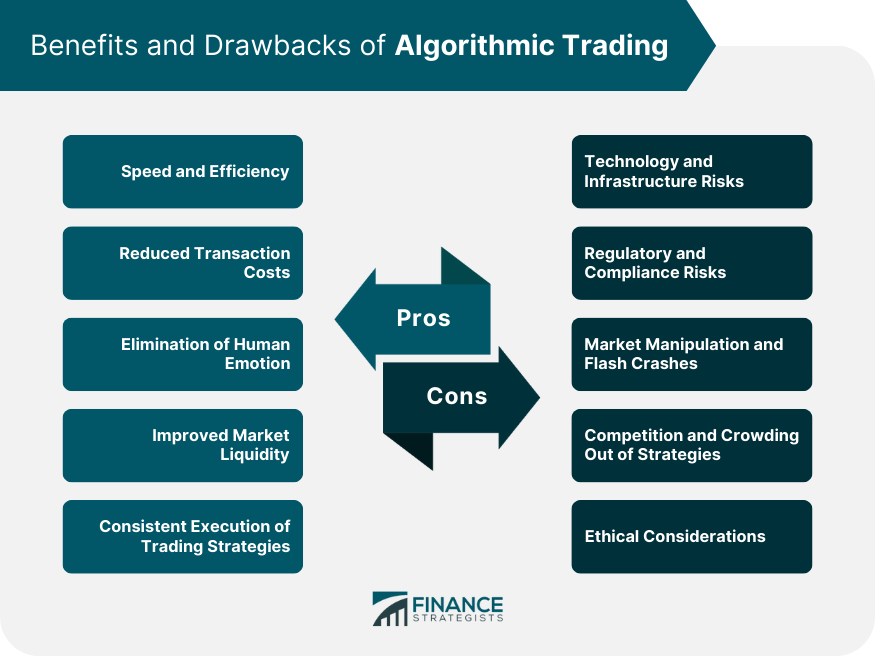
The biggest advantage of quantitative trading is its ability to remove human emotion from the equation. Fear and greed are powerful forces that can lead even experienced traders to make costly mistakes. Algorithms, on the other hand, follow their instructions perfectly every time.
A computer doesn't get nervous during a market crash or overly optimistic during a bull run. It just executes the strategy.
This disciplined approach is paired with incredible speed and scale. A quant system can monitor thousands of stocks simultaneously and execute trades in fractions of a second, far faster than any human. It can also process decades of data to uncover subtle patterns that would be impossible for a person to spot.
The Core Components
Every quantitative trading strategy is built on three pillars: data, models, and algorithms.
| Component | Role | Example |
|---|---|---|
| Data | The raw material | Historical stock prices, trading volumes, economic reports |
| Model | The insight or theory | A mathematical formula that predicts price changes |
| Algorithm | The execution engine | A program that buys or sells based on the model's signals |
First, you need clean, reliable historical data. This is the foundation everything else is built on. Without good data, any patterns you find are likely just noise.
Next, a statistical model is developed to find predictive signals within that data. This is where the quant's hypothesis is turned into a set of mathematical rules.
Finally, an algorithm is coded to translate the model's signals into actual buy and sell orders. This computer program is what interacts with the market, running automatically to execute the strategy.
Common Strategies
While there are countless complex strategies, many are built on a few fundamental ideas. Here are three of the most common.
Mean Reversion
noun
A strategy based on the idea that asset prices tend to return to their long-term average over time.
If a stock's price drops significantly below its historical average for no clear reason, a mean reversion strategy would buy it, betting it will eventually bounce back. Conversely, if a stock shoots up far above its average, the strategy might sell it, expecting it to fall back to the mean.
The core idea is simple: what goes up must come down, and what goes down must come up.
Trend Following is the opposite of mean reversion. This strategy is based on the idea that prices that have been moving in one direction will continue to do so. A trend-following algorithm will buy assets that are rising in price and sell assets that are falling. It's an attempt to ride the wave of market momentum for as long as possible.
Statistical Arbitrage is a bit more complex. It involves finding two stocks whose prices have historically moved together. For example, Coke and Pepsi. If one stock's price suddenly drops while the other's stays the same, the historical relationship is broken. An arbitrage strategy would buy the cheaper stock and sell the more expensive one, betting that their prices will eventually converge again.
What is the fundamental principle of quantitative trading?
Which of the following is considered a primary advantage of quantitative trading over traditional methods?
These foundational concepts are the starting point for understanding how data and algorithms are transforming the world of finance.