AI in Marketing
Introduction to Artificial Intelligence
What Is Artificial Intelligence?
Artificial Intelligence, or AI, is the science of making machines that can think and learn like humans. It's about creating computer systems that can perform tasks that normally require human intelligence, such as recognizing speech, making decisions, and identifying images.
Think of it this way: instead of programming a computer with a rigid set of instructions for every possible scenario, AI allows the computer to learn from experience and adapt to new inputs on its own.
Artificial Intelligence
noun
The theory and development of computer systems able to perform tasks that normally require human intelligence, such as visual perception, speech recognition, decision-making, and translation between languages.
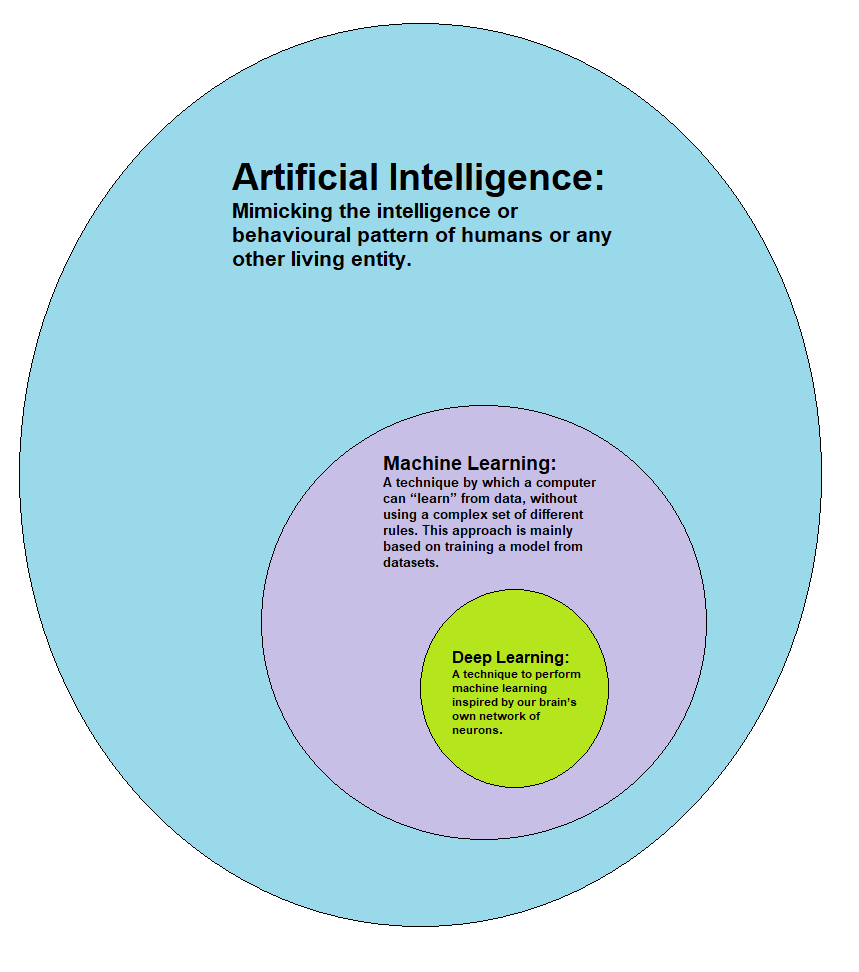
AI isn't one single technology. It's a broad field that contains many subfields and techniques. Three of the most important ones are machine learning, deep learning, and neural networks, which are all related to each other.
A Brief History
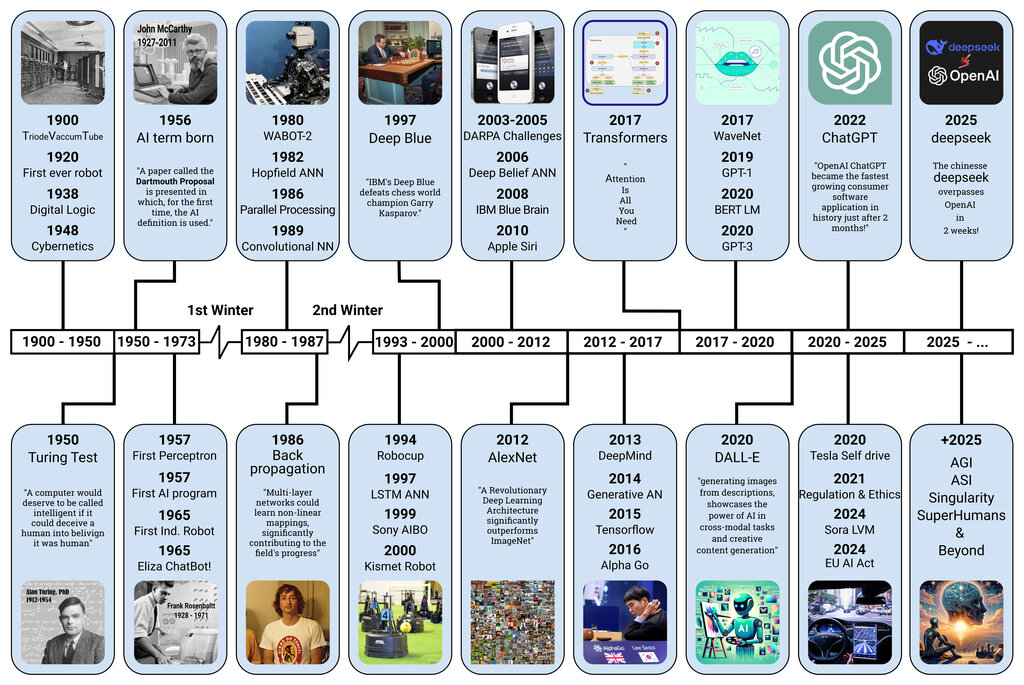
The dream of creating intelligent machines has been around for centuries, but the modern field of AI officially began in the summer of 1956 at a conference at Dartmouth College. It was there that the term "artificial intelligence" was coined.
The early years were filled with excitement and bold predictions. Researchers developed programs that could solve algebra problems, prove theorems, and speak simple English. However, progress stalled in the 1970s and 80s due to limited computing power and a lack of data. These periods are often called "AI winters."
A new spring for AI arrived in the late 1990s and has been accelerating ever since. The explosion of the internet provided massive amounts of data, and advancements in computer hardware made it possible to process that data at incredible speeds. This combination of big data and powerful computers fueled the breakthroughs we see today.
The Core Components
AI systems are built using several key components that allow them to perceive, reason, and act. Three of the most fundamental areas are machine learning, natural language processing, and computer vision.
Machine Learning
noun
A subset of AI where systems automatically learn and improve from experience without being explicitly programmed. The system is trained on large amounts of data to find patterns.
Machine Learning (ML) is the engine that powers much of modern AI. Instead of writing code to tell a machine how to do something, you give it a large dataset and let it figure out the patterns for itself. For example, to build a system that can identify pictures of cats, you would show it millions of pictures, some with cats and some without, until it learns the visual characteristics of a cat.
Natural Language Processing
noun
A field of AI that gives computers the ability to understand, interpret, and generate human language, both spoken and written.
Natural Language Processing (NLP) is all about communication. It's the technology that allows you to talk to your phone, translate a webpage from Spanish to English, or have a chatbot understand your customer service question. NLP bridges the gap between human language and computer understanding.
Computer Vision
noun
A field of AI that trains computers to interpret and understand the visual world. It allows machines to "see" and analyze images, videos, and other visual inputs.
Computer Vision gives machines the sense of sight. This technology enables computers to extract meaningful information from digital images and videos. It's the magic behind facial recognition on your phone, automated checkout at the grocery store, and systems that can diagnose medical conditions from X-rays.
These three components often work together. An AI system might use computer vision to see a product, NLP to read its label, and machine learning to decide what it is.
What is the fundamental goal of Artificial Intelligence?
The periods in the 1970s and 80s when AI research progress stalled due to lack of funding and limited computing power are known as what?
Understanding these foundational ideas is the first step. They are the building blocks for the more complex and powerful AI applications that are changing our world.