AI in Litigation Practice
Advanced eDiscovery Workflows
Beyond Keyword Search
In litigation, finding the critical documents—the 'smoking guns'—used to rely on exhaustive keyword searches. An army of attorneys would spend countless hours sifting through mountains of Electronically Stored Information (ESI), hoping to catch relevant terms. But this approach is both expensive and surprisingly fallible. Keywords miss context, fail to account for synonyms or misspellings, and are easily sidestepped by clever communication.
Modern eDiscovery has moved beyond this brute-force method. Instead of just matching words, advanced systems use AI to understand concepts and context. The cornerstone of this evolution is Predictive Coding. It's a form of supervised machine learning where the system learns to identify responsive documents based on examples, not just predefined terms.
Predictive Coding doesn't just look for words; it learns what makes a document relevant and then finds other documents that share those characteristics, even if they don't contain the exact same keywords.
Smarter Review with TAR
Technology-Assisted Review, or TAR, is the workflow that implements predictive coding. It has evolved significantly, leading to two main versions: TAR 1.0 and TAR 2.0.
TAR 1.0, the first generation, uses a static training model. The process begins with senior attorneys reviewing a carefully selected sample of documents called a to train the AI. They code each document as 'relevant' or 'not relevant'. Once this training is complete, the algorithm is locked. It then scores the entire document collection, ranking everything from most likely to least likely to be relevant. While a major leap from keyword searching, this static approach has a key limitation: the AI's learning stops after the initial training. If the seed set wasn't perfectly representative, the results could be skewed.
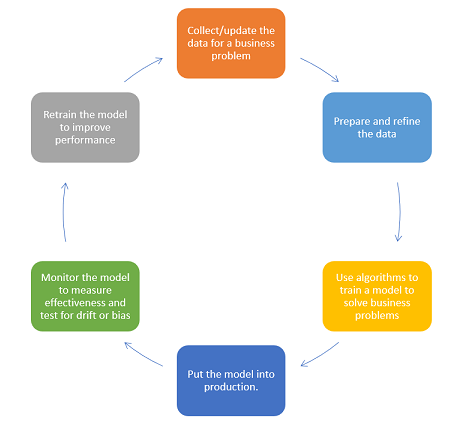
This led to the development of TAR 2.0, which uses a model called Continuous Active Learning (CAL). In a CAL system, the AI never stops learning. Every single document review decision made by an attorney—at any stage of the project—is fed back into the model in real-time. The algorithm continuously refines its understanding of relevance, re-prioritizing the document queue to surface the most likely relevant documents for the very next review.
With CAL, the review process itself becomes the training process. The system gets smarter with every click, ensuring that attorney time is always focused on the most promising ESI.
Measuring What Matters
To be defensible in court, an eDiscovery process must be transparent and its effectiveness measurable. You can't just tell a judge you 'used AI'. You need to prove the process worked. This is done using two key statistical metrics: precision and recall.
Recall
noun
The percentage of all relevant documents in the collection that the system successfully identified.
Precision
noun
The percentage of documents identified by the system that were actually relevant.
There is an inherent tension between precision and recall. If you tune your system to maximize recall and find every possible relevant document, you will likely pull in more irrelevant ones, lowering your precision. If you tune for maximum precision, you risk being too narrow and missing important documents, lowering your recall.
To balance this trade-off, legal teams often use the F1 Score. It's the harmonic mean of precision and recall, providing a single metric to assess the overall performance of the TAR workflow.
By leveraging a CAL workflow and carefully tracking these metrics, legal teams can build a highly efficient, demonstrably effective, and judicially accepted process for navigating the complexities of modern eDiscovery. This approach not only saves immense amounts of time and money but also increases the likelihood of finding the crucial evidence that decides cases.