AI in Higher Ed Accreditation
Introduction to AI
What Is AI?
Artificial intelligence, or AI, is the science of making machines that can think and learn like humans. It’s about creating computer systems that can perform tasks that typically require human intelligence, such as understanding language, recognizing images, and making decisions.
Think of it this way: a simple calculator can do math faster than any person, but it can't learn. An AI, on the other hand, can be trained to recognize a cat in a photo, something a simple calculator could never do.
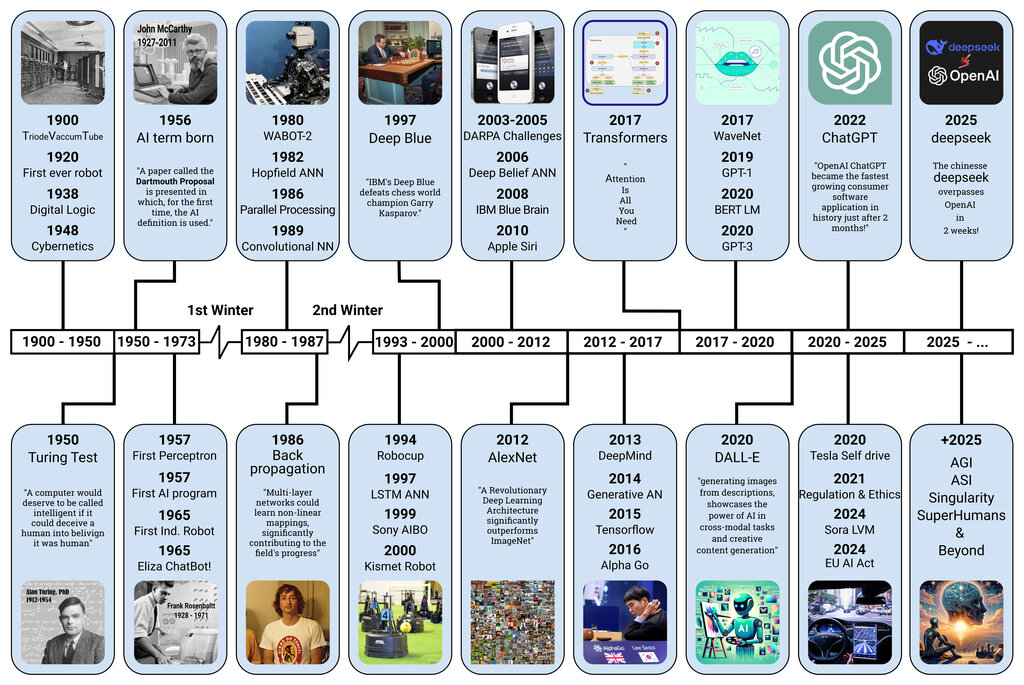
The goal isn't just to mimic human intelligence, but to create tools that can solve complex problems and extend our own capabilities. The field has a long history, with roots going back decades.
Two Kinds of AI
When people talk about AI, they are usually referring to one of two types: Artificial Narrow Intelligence (ANI) or Artificial General Intelligence (AGI). The distinction is important.
Artificial Narrow Intelligence (ANI)
noun
AI that is designed and trained for one specific task. It operates within a limited context and cannot perform tasks beyond its designated purpose.
Almost all AI we interact with today is ANI. Your navigation app, a chess-playing computer, and a spam filter are all examples of narrow AI. They are incredibly good at their one job, but you can't ask your GPS to write a poem.
Artificial General Intelligence (AGI)
noun
A theoretical form of AI where a machine has the ability to understand, learn, and apply its intelligence to solve any problem a human being can.
AGI is the stuff of science fiction for now. It represents a level of machine intelligence that can generalize learning across different domains, much like a human. We aren't there yet.
| Feature | Artificial Narrow Intelligence (ANI) | Artificial General Intelligence (AGI) |
|---|---|---|
| Scope | Performs a single task | Can handle any intellectual task a human can |
| Example | Spam filters, recommendation engines | Does not yet exist |
| Learning | Cannot transfer knowledge to other domains | Can generalize knowledge across domains |
How AI Learns
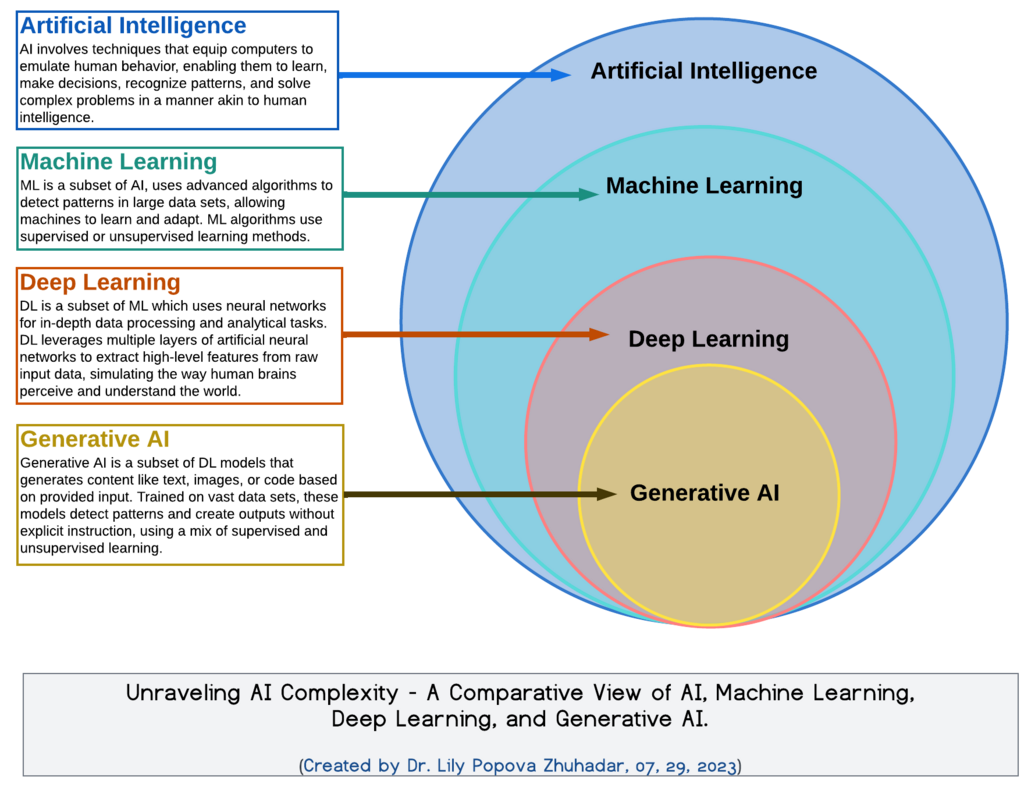
So how does a machine learn to do these things? The answer lies in a subfield of AI called machine learning.
Before diving deep, it's essential to grasp the fundamental concepts of AI, including machine learning, deep learning, and neural networks.
Machine Learning (ML) is a technique where you give a computer access to a lot of data and let it learn for itself. Instead of writing explicit rules, programmers create algorithms that allow the computer to find patterns in data. A spam filter learns to identify junk mail by analyzing thousands of examples of spam and non-spam emails.
Deep Learning is a specialized type of machine learning that uses structures inspired by the human brain, called artificial neural networks. These networks have layers of interconnected nodes. Each layer builds upon the output of the previous one, allowing the AI to learn complex patterns. This is how AI can recognize faces in photos or understand spoken commands.
AI in the Wild
AI is no longer just in research labs. It’s a part of our daily lives and is transforming industries.
- Entertainment: AI powers the recommendation engines on services like Netflix and Spotify, suggesting what you might want to watch or listen to next.
- Healthcare: Doctors use AI to analyze medical images like X-rays and MRIs, helping them spot diseases earlier and more accurately.
- Finance: Banks use AI to detect fraudulent transactions in real-time, protecting customers from theft.
- Transportation: AI is the brain behind navigation apps that find the fastest route and is a key technology for developing self-driving cars.
Now, let's review the core concepts we've covered.
Time to check your understanding.
What is the primary goal of Artificial Intelligence (AI)?
The AI in your navigation app, which is excellent at finding the fastest route but cannot write a poem, is an example of:
Understanding these fundamentals provides a solid base for exploring the more advanced and specific ways AI is being used.