AI in Financial Advisory
Introduction to AI in Finance
AI and Your Money
Artificial Intelligence, or AI, is about creating computer systems that can perform tasks that normally require human intelligence. This includes things like learning from experience, understanding language, recognizing patterns, and making decisions. Think of it not as a single technology, but as a broad field of computer science dedicated to building smart machines.
At its core, AI gives a computer the ability to think and learn, rather than just follow a rigid set of pre-programmed instructions.
In the world of finance, this ability to learn and adapt is a game-changer. Financial institutions handle massive amounts of data every second. AI provides the tools to analyze that data quickly and accurately, leading to smarter, faster, and more secure financial services. Two key areas of AI are making this possible: Machine Learning and Natural Language Processing.
The Brains of the Operation
Machine Learning (ML) is a subset of AI where computers learn from data without being explicitly programmed. Instead of writing code for every possible scenario, developers feed an ML model vast amounts of information and let it discover patterns and relationships on its own. For example, to build a system that detects fraudulent credit card transactions, you would show it millions of examples of both legitimate and fraudulent purchases. The model learns the subtle signs of fraud and can then flag suspicious activity in real-time.
Natural Language Processing (NLP) is another branch of AI that focuses on enabling computers to understand, interpret, and generate human language. If you've ever used a chatbot to ask your bank about your account balance or received an automated summary of a financial report, you've interacted with NLP. It’s the technology that bridges the gap between human communication and computer understanding.
AI in Action
So how do these technologies actually work in finance? They're already integrated into many services you might use every day.
Risk Assessment
noun
The process of identifying, analyzing, and evaluating potential risks.
When you apply for a loan, banks need to assess the risk that you might not pay it back. In the past, this involved looking at a limited set of factors like your credit score and income. Today, AI models can analyze thousands of data points—from transaction history to market trends—to create a much more nuanced and accurate picture of risk. This helps lenders make better decisions and can even help more people get approved for loans.
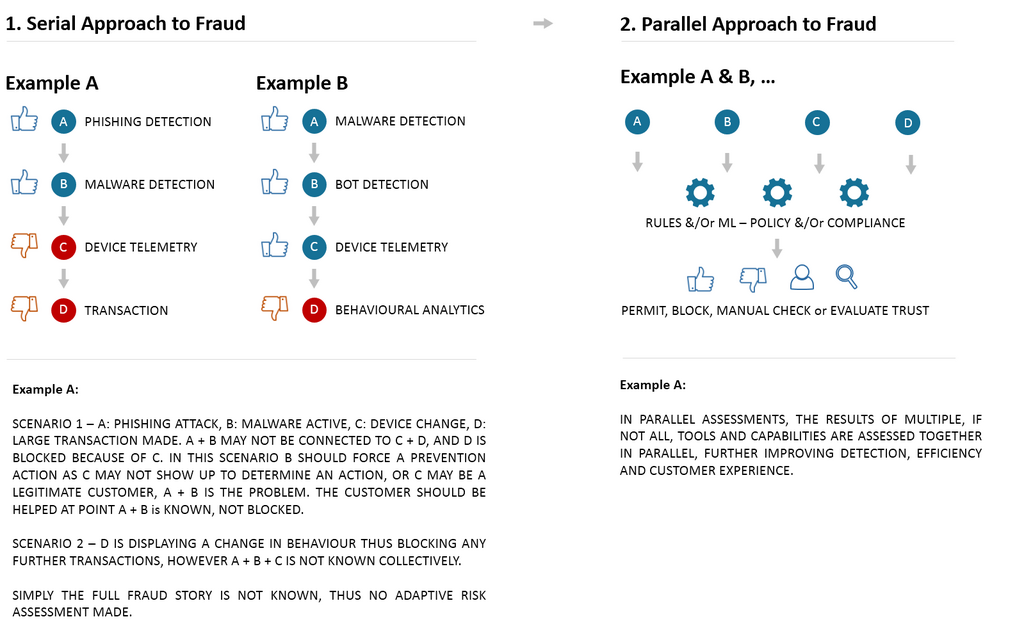
Fraud detection is another area where AI excels. An AI system can monitor millions of transactions in real time, looking for patterns that suggest fraudulent activity. It can spot things a human analyst would likely miss, like a small purchase being made in one country moments before a large one is attempted in another. When the system flags a transaction as suspicious, it can automatically block it and alert you, protecting your account from theft.
Finally, AI is transforming customer service. Many banks and financial companies now use AI-powered chatbots to provide 24/7 support. These bots can answer common questions, help you check your balance, or even guide you through simple transactions. This frees up human agents to handle more complex issues, leading to faster service for everyone.
The Bottom Line
The integration of AI into finance brings several key benefits that improve how institutions operate and how customers are served. These advantages generally fall into three main categories: efficiency, accuracy, and better decision-making.
| Benefit | How AI Delivers It |
|---|---|
| Enhanced Efficiency | Automates repetitive tasks like data entry and analysis, freeing up employees for higher-value work. |
| Improved Accuracy | Reduces human error in calculations and data analysis, leading to more reliable outcomes. |
| Smarter Decisions | Analyzes vast datasets to uncover insights and predict trends that inform better business strategies. |
| Greater Security | Identifies and stops fraudulent activity in real time, protecting both the institution and its customers. |
Now, let's check your understanding of these core concepts.
What is the primary goal of Artificial Intelligence (AI)?
A bank uses a chatbot to answer customer questions about their account balance. Which specific area of AI makes this possible?
From spotting fraud to approving loans, AI is becoming an indispensable tool in the financial world, working behind the scenes to make services faster, smarter, and more secure.