AI in Education
Introduction to Artificial Intelligence
What Is Artificial Intelligence?
Artificial intelligence is the science of making machines that can think like humans. The goal is to create systems that can perform tasks that normally require human intelligence, like recognizing speech, making decisions, and identifying patterns.
Artificial Intelligence
noun
A field of computer science dedicated to creating systems capable of performing tasks that typically require human intelligence.
Think of it less as creating a conscious robot and more as building specialized tools. An AI that can diagnose diseases doesn't need to know how to drive a car. It just needs to be very, very good at spotting anomalies in medical scans. The core idea is simple: feed a computer a vast amount of information, and it can learn to make connections and predictions based on that data.
From Theory to Reality
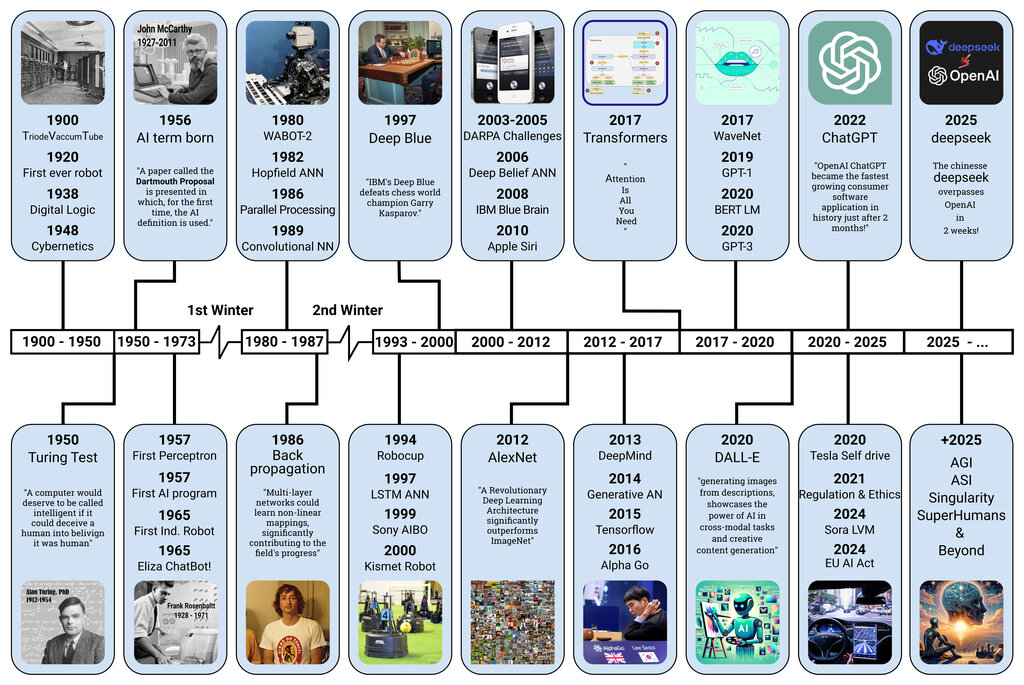
The dream of intelligent machines is an old one, but the actual field of AI began in the 1950s. Early pioneers believed that a machine with human-like intelligence was just a few decades away. This optimism was fueled by early successes, like programs that could play checkers better than amateur players.
However, progress was slow. The computers of the time were not powerful enough, and the amount of data needed was immense. For decades, AI remained a niche academic field. It wasn't until the 21st century, with the explosion of big data and powerful computing, that AI truly began to take off.
The AI Family
AI isn't a single technology; it's a broad category that includes many different approaches and subfields. You can think of it as an umbrella term. Underneath this umbrella, we find some of the most powerful technologies in the modern world.
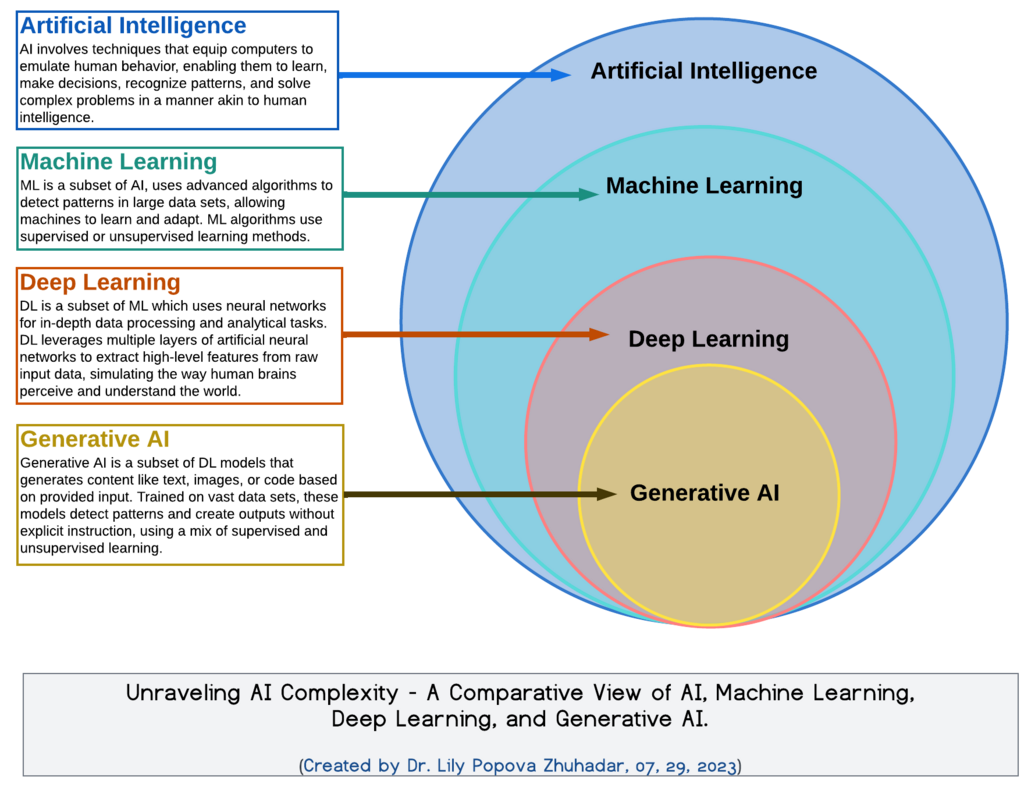
One of the most important subfields is Machine Learning (ML). Instead of being explicitly programmed with rules, a machine learning model is trained on a large dataset. It learns to recognize patterns on its own. For example, to build an ML model that identifies cats in photos, you would show it millions of pictures, some with cats and some without. Eventually, it learns the features that define a "cat" without any human writing specific rules like "has pointy ears" or "has whiskers."
A key principle of ML is that performance improves with more data. The more examples the model sees, the more accurate its predictions become.
Neural Networks are a type of machine learning model inspired by the structure of the human brain. They are made of layers of interconnected "neurons" that process information. When data is fed into the network, each neuron passes a signal to the next, with each connection having a different strength or "weight." As the network is trained, it adjusts these weights to produce the correct output. Deep Learning is simply the use of neural networks with many layers (hence, "deep").
Natural Language Processing (NLP) is another branch of AI focused on enabling computers to understand, interpret, and generate human language. When you use a voice assistant or a translation app, you're interacting with an NLP system. It combines machine learning and linguistics to turn unstructured text or speech into data a computer can work with.
AI in the Wild
AI is no longer just a concept in a research lab. It's integrated into countless industries, often in ways we don't even notice. In finance, AI algorithms detect fraudulent transactions by spotting unusual spending patterns. In healthcare, AI helps doctors analyze complex medical images like MRIs and X-rays to identify diseases earlier and more accurately.
Transportation is being transformed by AI, from navigation apps that predict traffic in real-time to the development of self-driving cars. In manufacturing, AI-powered robots handle complex assembly tasks with precision, and predictive maintenance systems analyze sensor data to fix equipment before it breaks down. These systems are designed for specific tasks, making processes more efficient and reliable.
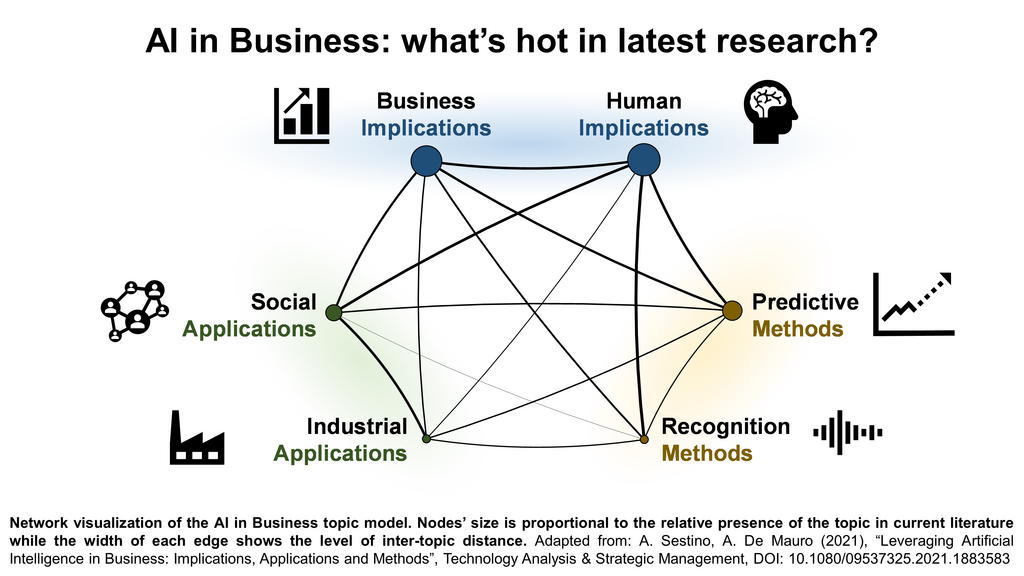
The technology that was once a theoretical dream is now a practical tool, fundamentally changing how businesses operate and how we interact with the world.