AI in Digital Business
Introduction to Digital Business
What Is a Digital Business?
A digital business isn't just a company with a website. It's an organization that uses digital technology to reinvent its core operations, from how it creates products to how it connects with customers. Think of it as weaving technology into the very fabric of the business.
Digital business means using technology not just to support existing processes, but to create entirely new business models and customer experiences.
Traditionally, a company might use a computer for accounting. A digital business, however, uses interconnected systems to automate supply chains, gather real-time customer feedback, and deliver services instantly online. This shift fundamentally changes how value is created and delivered.
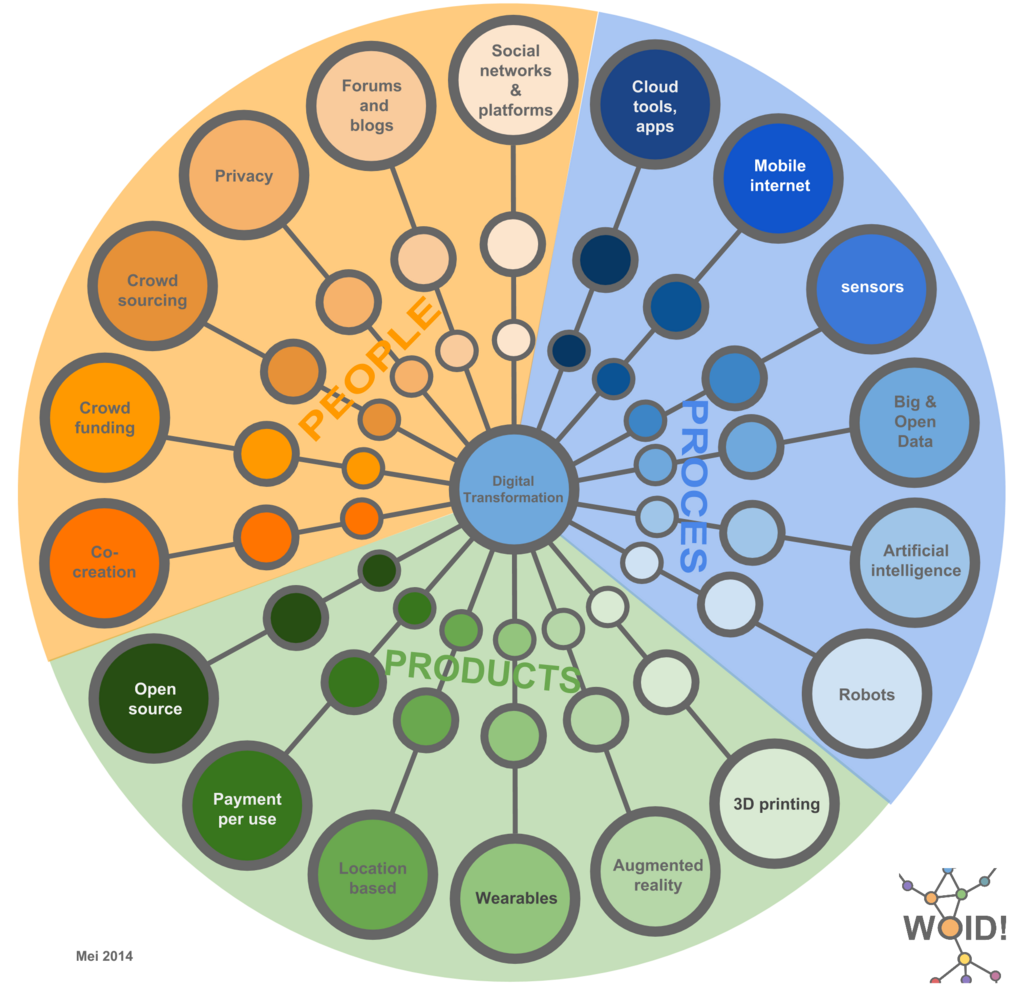
The Evolution of the Digital Firm
The journey to today's digital businesses started decades ago. Early firms used technology in isolated ways, like using a mainframe for payroll. The arrival of personal computers brought computing to individual desks, but departments often still worked in silos.
The real game-changer was the internet. It connected everything. Suddenly, a small business could reach a global market. Internal processes could be linked, allowing for seamless communication between sales, inventory, and shipping. This connectivity gave rise to firms that were "born digital," like Amazon and Google, whose entire business models wouldn't be possible without the internet.
The Role of ICT
Information and Communication Technologies (ICT) are the tools that power digital business. This broad term includes everything from the physical hardware like servers and smartphones to the software and networks that connect them.
ICT
noun
Stands for Information and Communication Technologies. It refers to all technology that handles information and aids in communication, including computers, software, networks, and the internet.
The primary role of ICT is to boost productivity and enable new ways of working. By implementing robust ICT systems, businesses can:
- Automate Repetitive Tasks: Software can handle tasks like invoicing or data entry, freeing up employees for more strategic work.
- Improve Communication: Tools like email, video conferencing, and instant messaging make collaboration faster and easier, regardless of location.
- Enhance Data Management: Databases and cloud storage allow companies to store, access, and analyze vast amounts of information quickly and securely.
- Create New Business Models: ICT is the foundation for business models like subscription services (Netflix), sharing economies (Uber), and e-commerce platforms (Shopify).
| Traditional Business Operation | Digital Business Equivalent |
|---|---|
| In-person meetings | Video conferencing, shared documents |
| Paper-based record keeping | Cloud storage, databases |
| Physical storefront | E-commerce website, mobile app |
| Manual inventory checks | Automated supply chain management system |
By integrating these technologies, businesses not only become more efficient but also more agile. They can respond to market changes faster, understand their customers better, and scale their operations with much less friction than a traditional company.
What is the primary characteristic that distinguishes a digital business from a traditional one?
Which technological development was the most critical "game-changer" enabling the rise of modern digital businesses like Amazon and Google?
This foundational shift toward digital operations has reshaped entire industries, setting a new standard for how businesses function in the modern economy.