AI in Creative Workflows
Understanding AI Fundamentals
What Is Artificial Intelligence?
Artificial intelligence is about making computers smart. The goal is to create machines that can perform tasks that typically require human intelligence, like learning, reasoning, problem-solving, and understanding language.
Artificial Intelligence
noun
A field of computer science dedicated to creating systems that can perform tasks that normally require human intelligence.
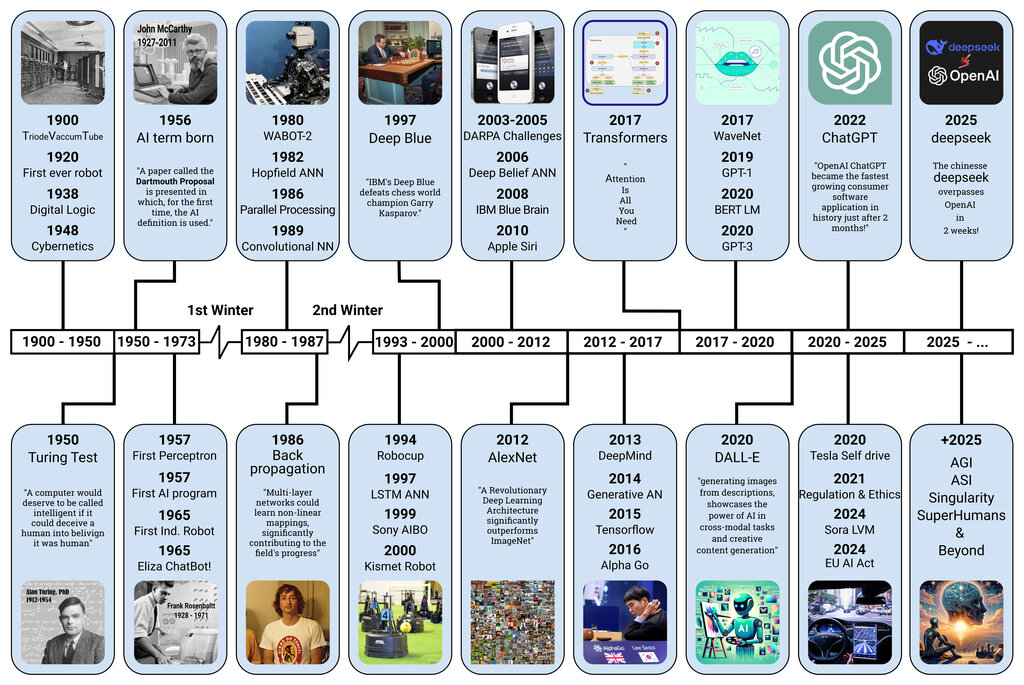
The idea isn't new. Thinkers have dreamed of intelligent machines for centuries. But the modern field of AI really began in the 1950s. Early researchers were optimistic, believing that a machine as intelligent as a human could be built within a few decades. The journey turned out to be much more complex.
The AI Family Tree
AI is a broad field with many branches. The most important relationship to understand is between AI, machine learning, and deep learning. Think of them as nested concepts, where each is a subset of the one before it.
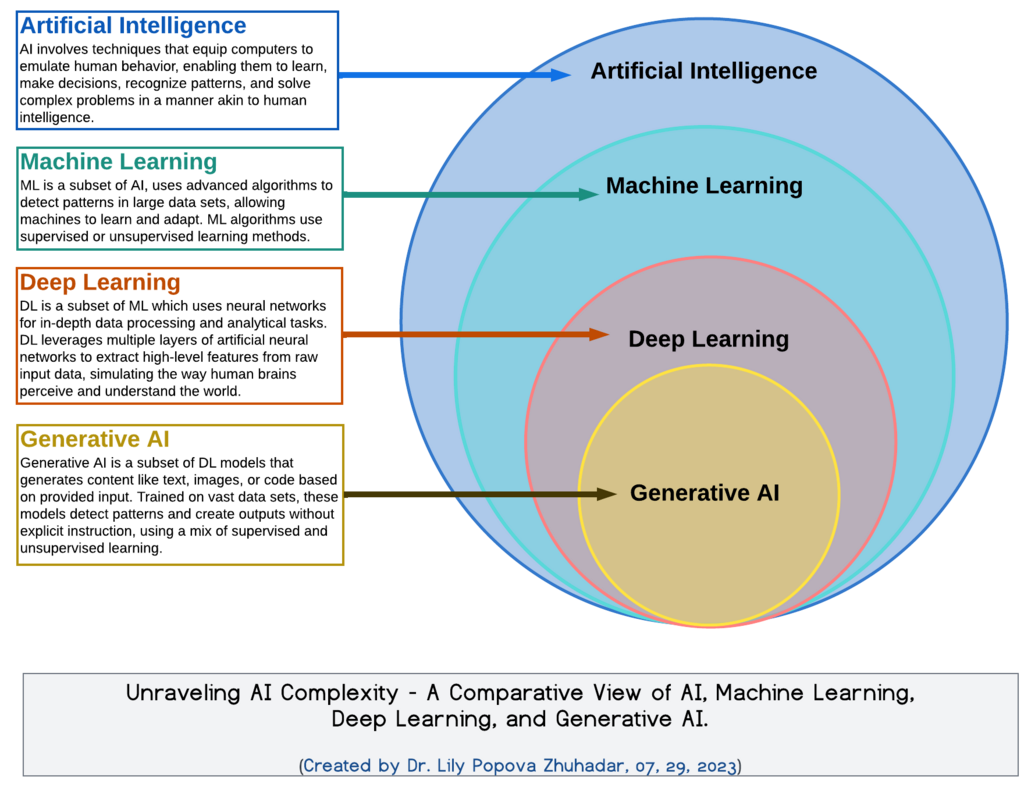
Machine Learning (ML) is a type of AI where systems learn directly from data. Instead of being explicitly programmed with rules, a machine learning model is “trained” on vast amounts of information. It identifies patterns in the data and uses them to make predictions or decisions. For example, an email service learns to spot spam by analyzing millions of emails that users have marked as junk.
Deep Learning is a specialized type of machine learning. It uses complex structures called neural networks, which are inspired by the human brain. These networks have many layers, allowing them to learn from data in a more sophisticated way. Deep learning is the powerhouse behind many recent AI breakthroughs, from self-driving cars to accurate medical diagnoses.
Natural Language Processing (NLP) is another key area of AI. It focuses on giving computers the ability to understand, interpret, and generate human language. Every time you use a voice assistant, a translation app, or see text suggestions as you type, you're using NLP.
How AI 'Thinks'
At its core, AI runs on algorithms. An algorithm is simply a set of rules or instructions that a computer follows to solve a problem. In traditional programming, a human writes these rules. With machine learning, the algorithm's job is to find the rules on its own by analyzing data.
Imagine you want to teach an AI to recognize a cat. You wouldn't write code that says, “If it has pointy ears, whiskers, and a tail, it's a cat.” That would be too brittle and would fail often.
Instead, you would use a machine learning algorithm and feed it thousands of labeled images, some with cats and some without. The algorithm adjusts itself over time, learning the features that consistently appear in the “cat” photos. It builds its own internal model for what a cat looks like. After enough training, it can accurately identify cats in new images it has never seen before.
This process of learning from data, rather than being explicitly programmed, is the fundamental principle that makes modern AI so powerful.
Current Trends
The most significant recent trend in AI is the rise of Generative AI. These are models, usually built with deep learning, that can create brand new content. They can write essays, compose music, create stunningly realistic images, and write computer code.
This technology has evolved at a dizzying pace. Just a few years ago, AI-generated images were blurry and strange. Now, they can be indistinguishable from photographs.
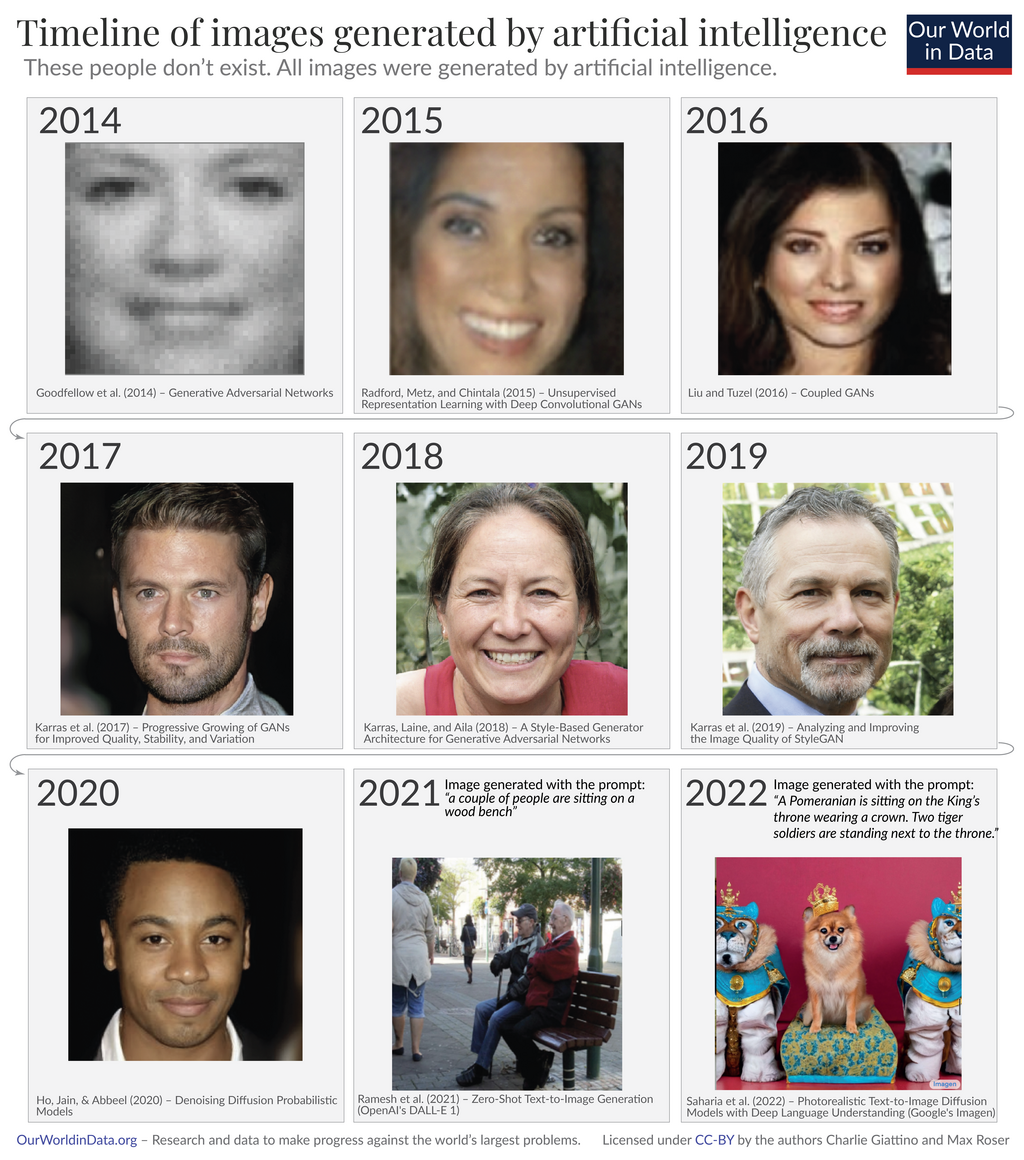
This rapid advancement is changing many industries. As these models become more capable, they are transforming how people work, create, and communicate. Understanding the basic principles of AI is the first step to navigating this new landscape.
Ready to check your understanding?
Which statement best describes the relationship between Artificial Intelligence (AI), Machine Learning (ML), and Deep Learning?
In the context of machine learning, what is the primary role of an algorithm?
Now that you've got the fundamentals down, you're ready to explore how AI is applied in the real world.