AI Implementation for HR Professionals
AI Talent Acquisition
Beyond Keyword Matching
Traditional Applicant Tracking Systems (ATS) are good at one thing: matching keywords. If a resume has the right terms, it passes. If not, it's often overlooked. This rigid approach misses talented people who describe their skills differently. AI-driven talent acquisition moves beyond this by integrating directly with your ATS to upgrade its capabilities.
The key is semantic search, which understands the meaning and context behind words, not just the words themselves. Instead of just looking for "Project Manager," it looks for candidates whose experience demonstrates leadership, timeline management, and stakeholder communication, even if they used different titles. This allows recruiters to find candidates based on true competency rather than their ability to game the system with keywords.
An AI might identify a 'Lead Coordinator' or 'Scrum Master' as a strong fit for a 'Project Manager' role by analysing the substance of their accomplishments, not just their job title.
Implementing this involves connecting an AI engine to your existing ATS database. The engine then re-indexes your entire talent pool, enriching it with contextual understanding. The result is a system that surfaces stronger, more relevant candidates from the applications you already have.
Finding the Hidden Talent Pool
The best candidates are often not actively looking for a new job. These passive candidates won't be applying on job boards, but AI is exceptionally good at finding them. It scans public data from professional networks, portfolio sites, and publications for 'ready-to-move' signals.
These signals can be subtle: a sudden increase in professional connections, updates to a profile's skills section, or completion of a relevant online certification. By analysing these patterns over time, the AI can predict which individuals are likely receptive to a new opportunity. It builds a dynamic list of potential hires who fit your ideal candidate persona but haven't raised their hand yet.
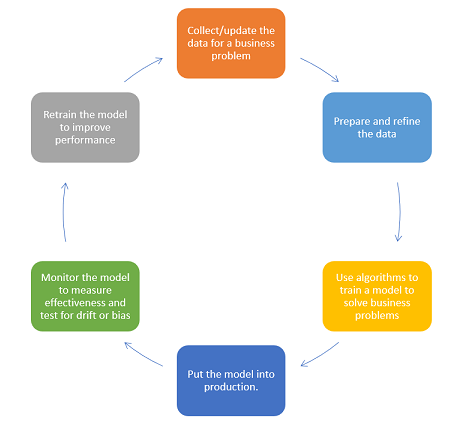
This predictive matching is a step beyond simple sourcing. It’s about understanding the career trajectory and online behaviour of professionals in your field. By building and refining candidate personas, the AI learns what a top performer looks like for your specific company and proactively identifies them.
Automating the First Touchpoint
Once a potential candidate is identified, the initial outreach and screening can be time-consuming. This is where AI-powered chatbots and automated email sequences make a significant impact. Integrated into your careers page or sent to sourced candidates, chatbots can handle initial screening 24/7.
They ask baseline qualifying questions about experience, location, and salary expectations, instantly filtering candidates and providing immediate feedback. This improves the candidate experience by eliminating the 'black hole' of applying and never hearing back. For the recruitment team, it means they only spend time on conversations with pre-qualified, interested individuals, drastically reducing the time-to-hire.
Use AI where it works best: To automate the tedious parts—like resume screening and interview scheduling—so your team can spend more time actually connecting with candidates.
Calibrating for Culture and Fit
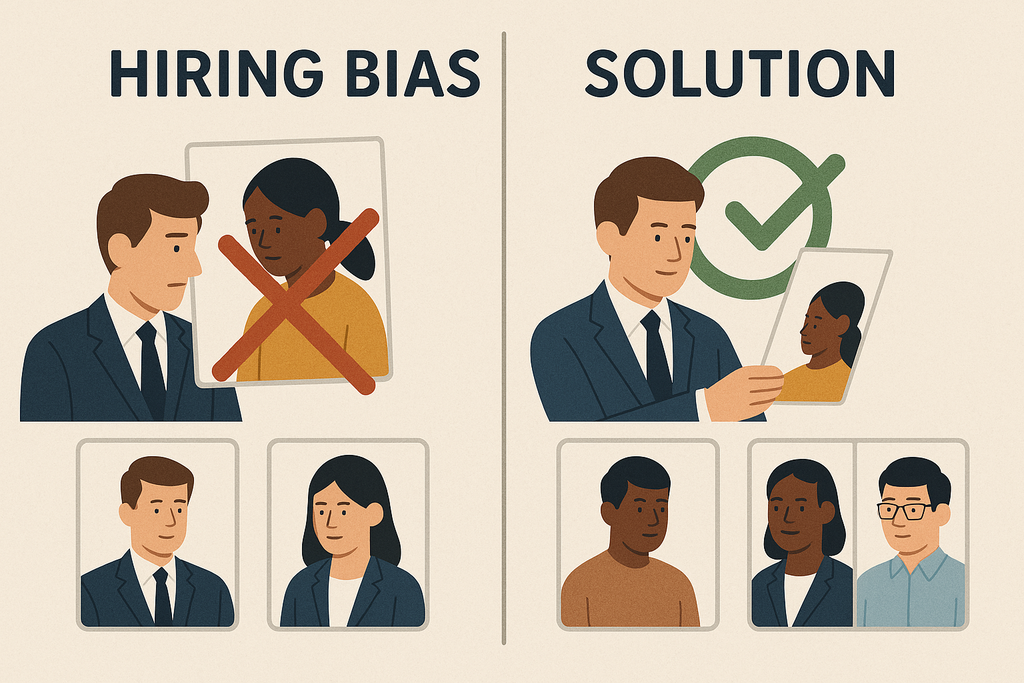
An AI tool is only as good as the data and instructions it's given. Without careful calibration, it can amplify existing human biases. To ensure fairness and alignment, you must train your AI on what success truly looks like at your organisation, focusing on skills and competencies rather than proxies like university names or previous employers.
For example, if your company values collaboration, you can calibrate the AI to look for language related to teamwork, shared projects, and cross-functional achievements. For technical roles, it can be taught to differentiate between nuanced skills, understanding that a candidate with experience in 'data visualisation' is not the same as one with experience in 'data engineering'. This customisation ensures the AI sources candidates who not only have the right technical skills but are also likely to thrive in your specific work environment.
| Search Type | Query | Top Results Might Include | Flaws |
|---|---|---|---|
| Traditional Keyword | "Senior Marketing Manager" | Resumes with the exact title | Misses 'Marketing Lead', 'Head of Growth' |
| Calibrated AI | Persona: 5+ years in B2B SaaS marketing, experience with SEO/SEM, team leadership | Profiles demonstrating B2B growth metrics and team management, regardless of title. | Requires initial setup and training |
Now, let's test your knowledge on AI-driven talent acquisition.
What is the primary advantage of using semantic search in an AI-driven talent acquisition system compared to a traditional ATS?
An AI-powered system can detect 'ready-to-move' signals to identify passive candidates. Which of the following is NOT typically considered such a signal?
By moving beyond simple keywords and automating initial outreach, you can build a more efficient, effective, and fair recruitment process.