AI Image Generation
Introduction to AI Image Generation
Creating Images from Words
AI image generation is the process of using artificial intelligence to create new images from scratch. Think of it like teaching a computer to be an artist. Instead of giving it a paintbrush, you give it vast amounts of data—millions of images and the text descriptions that go with them. The AI studies these examples to learn what things look like and how they relate to each other. It learns that a “dog” has fur, four legs, and a tail, and that a “beach” has sand and water.
After this training, you can give the AI a text description, called a prompt, and it will generate a brand new image based on your words. This isn't just copying and pasting from its memory. It's synthesizing its knowledge to create something entirely original, much like a human artist who has studied thousands of paintings to develop their own style.
The core idea is simple: AI learns from existing visual data to generate new, unique images.
This technology has come a long way in a very short time. Early AI-generated images from less than a decade ago were often blurry, abstract, or distorted. They were interesting experiments but hardly mistakable for real photos. Today, the results can be stunningly realistic and detailed, thanks to rapid advances in the underlying technology.
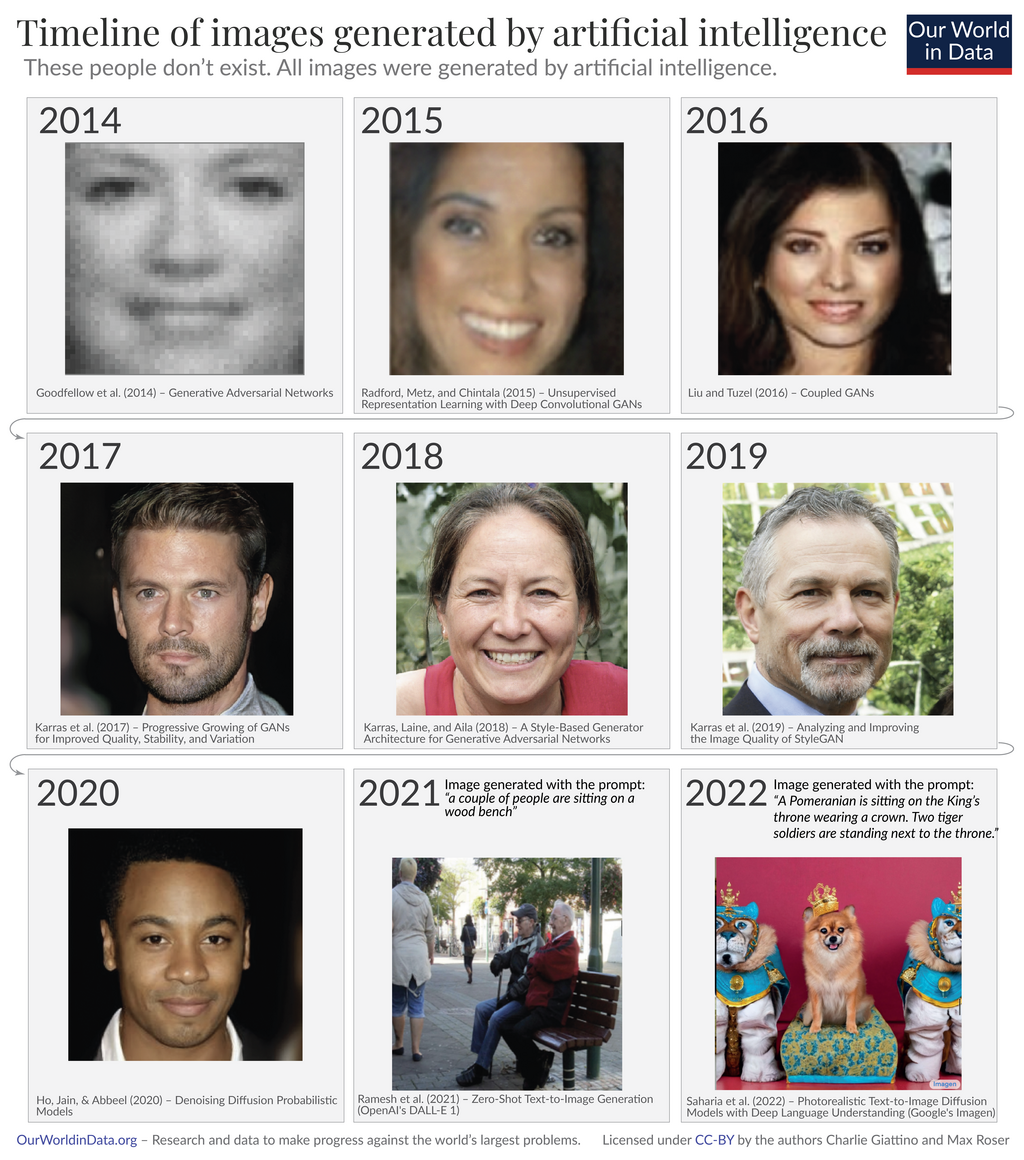
How Generative Models Work
The technology behind this magic is a category of AI called generative models. Unlike other types of AI that might classify information (like identifying spam emails) or make predictions (like forecasting the weather), generative models are all about creation.
These models are trained on massive datasets. By analyzing countless images, they learn patterns, textures, colors, shapes, and the complex relationships between objects. For example, a model learns not just what a “cat” and a “sofa” are, but also that a cat might realistically be sitting on a sofa. When you provide a prompt like “a photorealistic image of a cat sleeping on a red sofa,” the model uses this learned knowledge to construct a new image pixel by pixel.
This process allows for nearly infinite creative possibilities. You can request images in specific styles, like “a painting of a futuristic city in the style of Van Gogh,” or combine unrelated concepts in a way that would be difficult to stage in real life.
Applications Across Industries
AI image generation is more than just a novelty; it's a powerful tool with practical applications that are transforming creative fields. Businesses and individuals are using this technology to create high-quality visuals faster and more affordably than ever before.
| Industry | Application |
|---|---|
| Advertising | Creating unique product mockups and ad campaign visuals without costly photoshoots. |
| Entertainment | Generating concept art for movies, video games, and characters to quickly visualize ideas. |
| Design | Prototyping website layouts, product designs, or architectural concepts in seconds. |
| E-commerce | Producing clean, consistent product photos on various backgrounds for online stores. |
| Content Creation | Making custom thumbnails, illustrations, and social media posts to engage audiences. |
As these tools become more accessible, they are democratizing creativity, allowing anyone with an idea to bring their vision to life visually. Now that you understand the basics, you're ready to explore how these models are built and used.
Let's test your understanding of these core concepts.
What is the primary function of the AI models used for image generation?
The training process for an AI image generator involves feeding it millions of images and their corresponding text descriptions.
Before we move on, let's review the key terms from this section.
Understanding these fundamentals is the first step. AI image generation is a rapidly evolving field, but its core principles—learning from data to create something new—remain the same.