AI Governance Through Design
Introduction to AI and Behavioral Science
Beyond the Robots
When you hear “Artificial Intelligence,” you might picture a scene from a sci-fi movie. But AI is more than just talking robots. At its core, AI is about creating systems that can perform tasks that normally require human intelligence. This includes things like learning, reasoning, problem-solving, and understanding language.
Artificial Intelligence
noun
The theory and development of computer systems able to perform tasks that normally require human intelligence, such as visual perception, speech recognition, decision-making, and translation between languages.
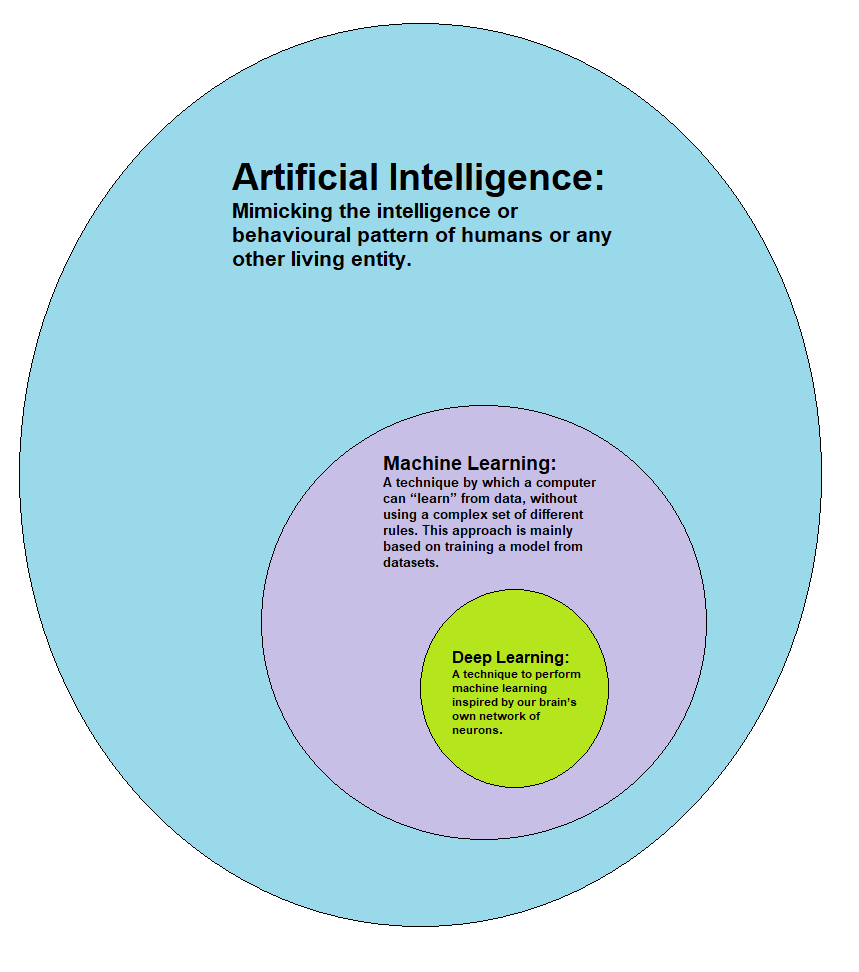
AI isn't a single thing. It’s a broad field with many subfields. You've likely heard of machine learning and deep learning, which are subsets of AI. Machine learning gives computers the ability to learn from data without being explicitly programmed. Deep learning is a specialized type of machine learning that uses complex structures called neural networks, loosely inspired by the human brain.
But what can AI actually do? It can recommend your next favorite song, detect fraudulent credit card transactions, and help doctors diagnose diseases earlier. Its capabilities are growing fast.
However, AI has its limits. It often struggles with common sense and genuine understanding. An AI can beat a grandmaster at chess, but it doesn't know it's playing a game. It lacks consciousness, emotions, and the rich context that humans use to navigate the world. It's a powerful tool, but it’s not a mind.
The Human Element
AI systems don't operate in a vacuum. They are designed by people, for people. This is where behavioral science comes in. Behavioral science is the study of how humans make decisions and act. It combines insights from psychology, economics, and sociology to understand why we do the things we do.
If AI is the tool, behavioral science is the instruction manual for how that tool will be used by—and affect—its human users.
Understanding human behavior is crucial for building AI that works well. Why do people click certain ads but ignore others? How can a fitness app motivate someone to exercise consistently? Why do we trust some AI recommendations but not others? The answers lie in our cognitive wiring.
How We Decide
Our brains are masters of efficiency. To navigate a complex world, we rely on mental shortcuts, or heuristics. These help us make quick decisions without having to analyze every single detail. Most of the time, this works great. You don't need to do a cost-benefit analysis to decide what to eat for breakfast.
This fast, intuitive thinking is often called "System 1." It's automatic and emotional. In contrast, "System 2" thinking is slow, deliberate, and logical. It’s what you use when solving a tough math problem or carefully weighing the pros and cons of a big decision.
Because we often rely on System 1, we are susceptible to cognitive biases, which are systematic patterns of deviation from rational judgment. For example, the availability heuristic makes us overestimate the importance of information that is easily recalled. This is why we might worry more about a plane crash we saw on the news than the more common risk of a car accident.
AI systems can interact with these biases. A news feed algorithm might repeatedly show you dramatic content because it grabs your attention, reinforcing the availability heuristic. On the other hand, an AI tool could be designed to counteract biases by presenting balanced information and encouraging more thoughtful, System 2 thinking.
By understanding these fundamental principles of decision-making, we can better analyze how AI influences our trust, attention, and choices in everything from online shopping to medical advice.
Ready to check your understanding?
What is the core concept of Artificial Intelligence (AI)?
Which of the following best describes the relationship between AI, machine learning, and deep learning?
Now that we have a shared language for AI and human decision-making, we can explore how they interact in the real world.