AI Fundamentals Unlocked
AI Foundations
What Is AI, Really?
Artificial Intelligence is a broad field of computer science focused on creating systems that can perform tasks that typically require human intelligence. This includes abilities like learning from experience, recognizing patterns, understanding language, and making decisions. Think of it less as building a synthetic brain and more as designing software that can perceive its environment, reason about what it perceives, and act on its conclusions to achieve a goal.
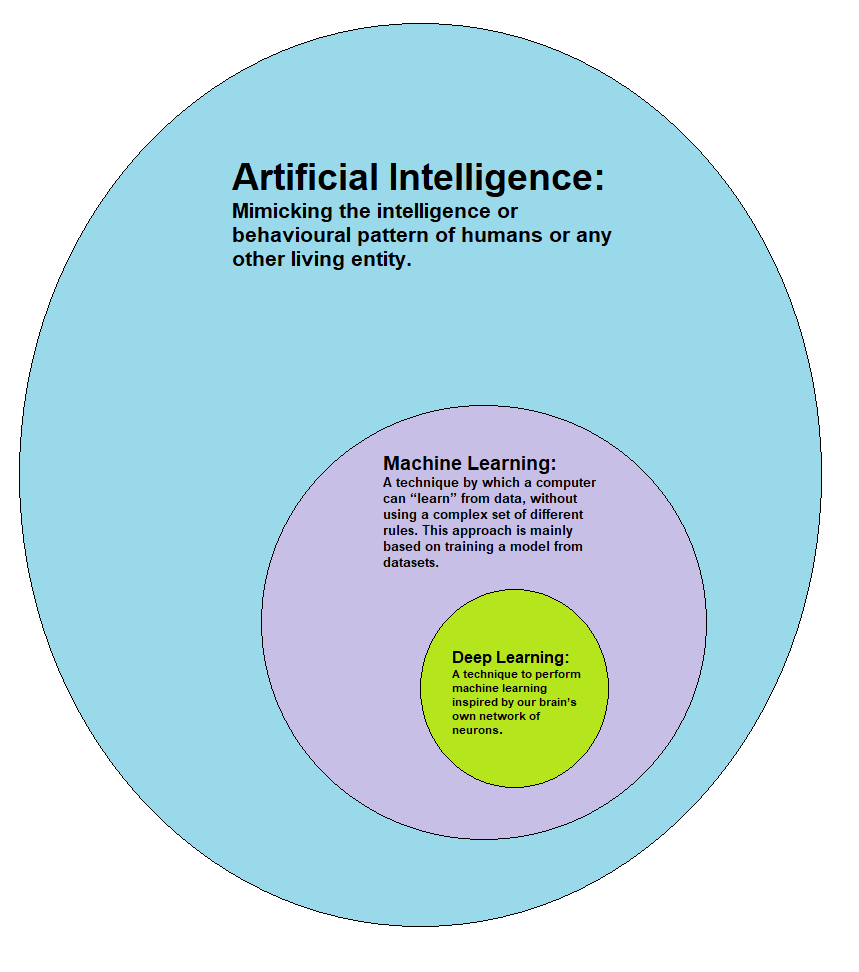
At its core, AI encompasses several subfields. Two of the most important are machine learning and deep learning, which represent progressively more specialized ways for machines to learn. Machine learning is a subset of AI, and deep learning is a further subset of machine learning.
A Brief History
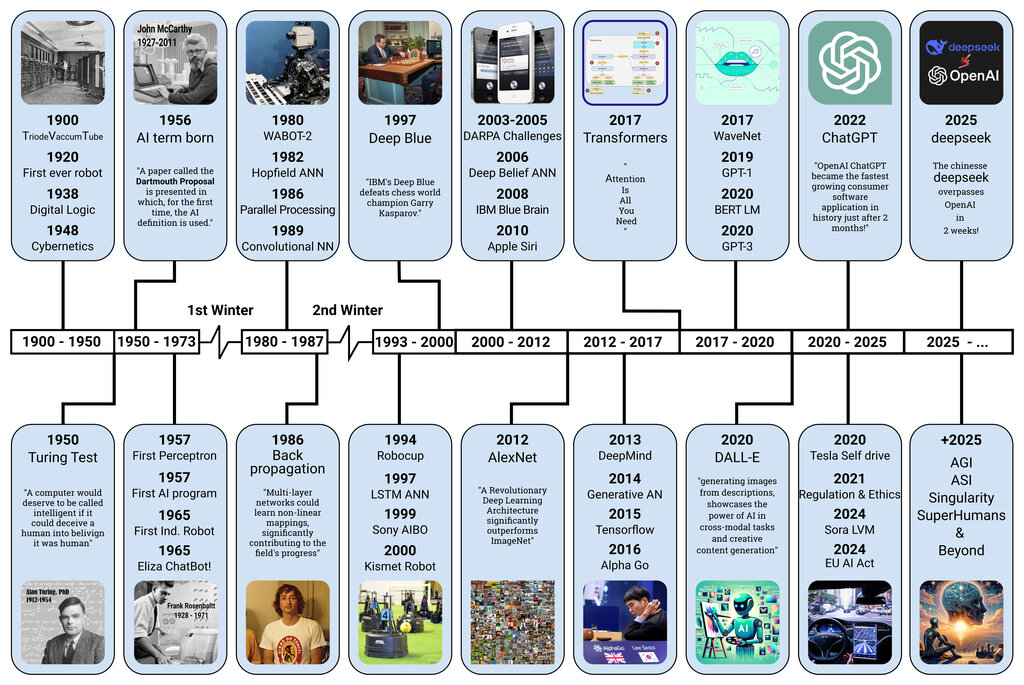
The dream of intelligent machines is ancient, but the formal field of AI research began in the summer of 1956 at a workshop at Dartmouth College. Early researchers were optimistic, predicting that machines with human-like intelligence were just a few decades away. They focused on rule-based systems, where human experts would painstakingly program a computer with all the logic it needed to solve a problem, like playing chess or diagnosing diseases.
However, this approach had its limits. The real world is messy and complex, and it's impossible to write a rule for every situation. This led to periods known as "AI winters," when progress stalled, and funding dried up. The initial hype gave way to the hard reality that creating true intelligence was far more difficult than anticipated.
The tide began to turn in the late 1990s and 2000s with two key developments: the availability of massive amounts of data (thanks to the internet) and significant increases in computing power. These ingredients created the perfect environment for a different approach to AI to flourish: machine learning.
Machine Learning and Deep Learning
Instead of being explicitly programmed with rules, a machine learning system learns directly from data. It identifies patterns and makes decisions with minimal human intervention. You can think of it as showing a computer thousands of pictures of cats and letting it figure out for itself what a cat looks like. This is fundamentally different from trying to write a set of rules that define "catness."
Machine Learning
noun
A subfield of artificial intelligence that gives computers the ability to learn from data without being explicitly programmed.
Deep learning takes this a step further. It's a specialized type of machine learning that uses structures called artificial neural networks, which are loosely inspired by the human brain. These networks consist of many layers of interconnected nodes. By processing data through these layers, a deep learning model can learn incredibly complex patterns and hierarchies of features.
For example, when analyzing an image, the first layer of a neural network might learn to recognize simple edges and colors. Subsequent layers might combine these to recognize shapes like eyes and noses, and a final layer might combine those to recognize a face.
This ability to learn from vast amounts of unstructured data is what powers many of today's most impressive AI applications, from voice assistants like Siri and Alexa to self-driving cars and advanced medical diagnostics. It represents a shift from telling computers exactly how to solve a problem to giving them the tools to figure it out on their own.
Now, let's test your understanding of these foundational concepts.
Which statement best describes the primary goal of Artificial Intelligence?
What is the correct hierarchical relationship between Artificial Intelligence (AI), Machine Learning (ML), and Deep Learning (DL)?
Understanding these core concepts—AI as the overall field, machine learning as a method of learning from data, and deep learning as a powerful technique using neural networks—provides the foundation for exploring the more advanced applications and implications of artificial intelligence.