AI Fundamentals for Professional Advancement
Introduction to Artificial Intelligence
What Is Artificial Intelligence?
Artificial Intelligence, or AI, is about creating machines that can think, learn, and solve problems like a human. It's a broad field in computer science focused on simulating intelligent behavior in computers. This can range from simple tasks, like understanding a spoken command, to complex ones, like driving a car or diagnosing a disease.
At its core, AI is the science of making things smart. The goal is to build systems that can perform tasks that typically require human intelligence.
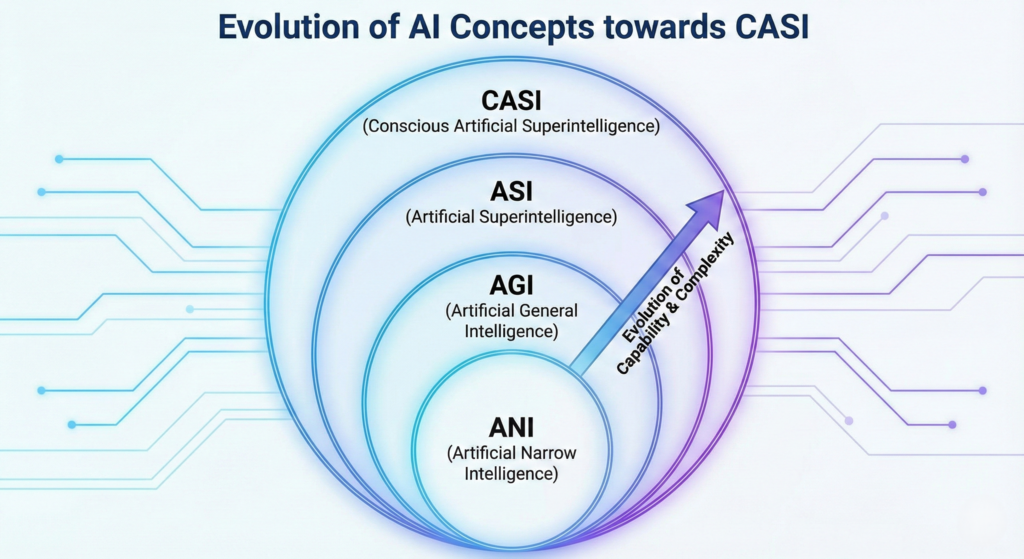
Most AI today is what's known as Artificial Narrow Intelligence (ANI). This type of AI is designed for a specific task, like playing chess, recognizing faces, or recommending music. It can perform its designated task incredibly well, often better than a human, but it can't operate outside of that narrow domain.
The long-term dream for many researchers is Artificial General Intelligence (AGI). An AGI would possess the ability to understand, learn, and apply its intelligence to solve any problem, much like a human being. We're not there yet, but the field is advancing rapidly.
A Quick Trip Through Time
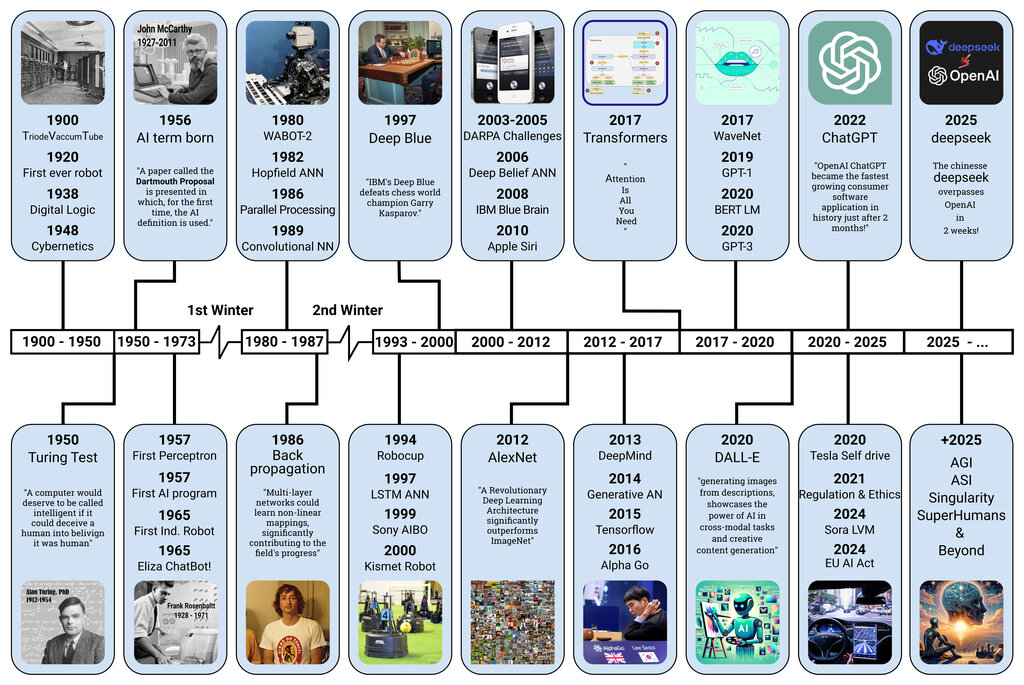
The concept of intelligent machines has been around for centuries in myths and stories, but the scientific field of AI is much younger. The term "Artificial Intelligence" was first coined in 1956 at a workshop at Dartmouth College. This event brought together a small group of researchers who believed that a machine could be made to simulate every aspect of learning and intelligence.
Early excitement led to significant funding and lofty predictions. However, the complexity of the task and the limitations of computers at the time led to a period of reduced funding and interest, often called the "AI winter." But the ideas never went away. With the rise of the internet, the explosion of digital data, and massive increases in computing power, AI came roaring back to life in the late 1990s and early 2000s.
The Different Flavors of AI
AI isn't a single technology. It's an umbrella term that covers several specialized subfields. Understanding these areas helps to see how AI is applied in the world around us.
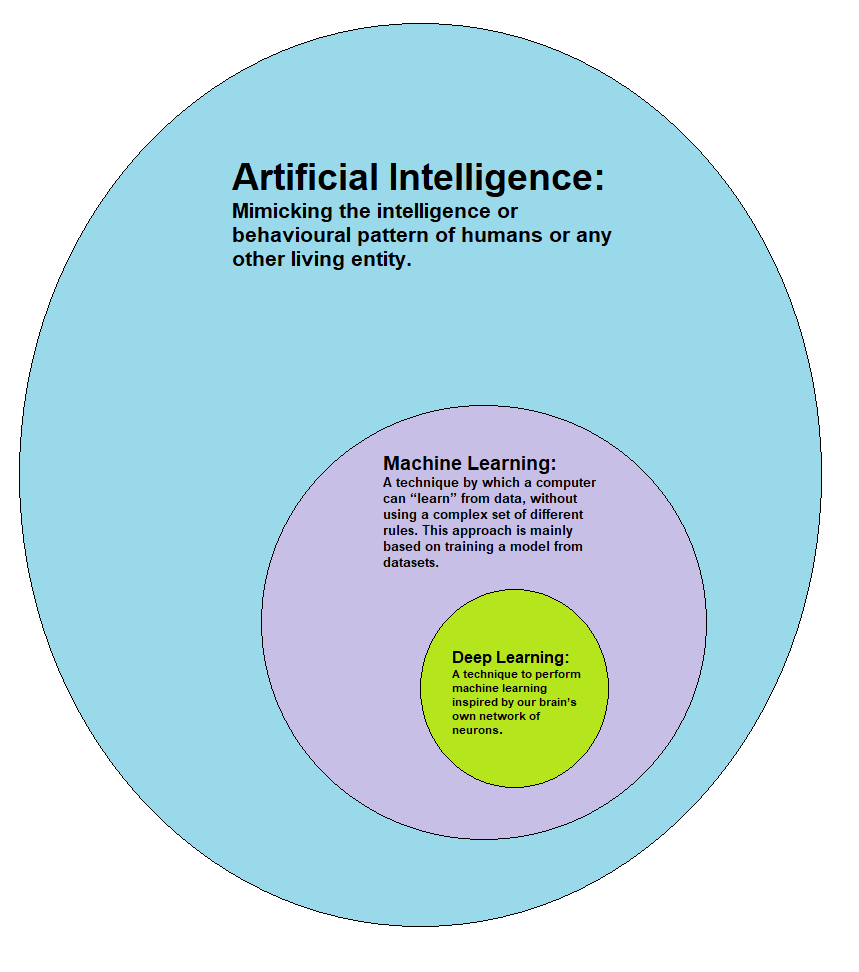
One of the most important subfields is Machine Learning (ML). Instead of being programmed with explicit rules, an ML system learns directly from data. It identifies patterns and makes decisions with minimal human intervention. Think of it like teaching a child to recognize a cat. You don't list out rules like "has pointy ears, whiskers, and a tail." Instead, you show them many pictures of cats, and eventually, they learn to identify one on their own.
Natural Language Processing (NLP) is another key area. This is what allows machines to understand, interpret, and generate human language. Every time you use a translation app, talk to a voice assistant like Siri or Alexa, or see your email service suggest a reply, you're interacting with NLP.
Finally, there's Computer Vision, which gives machines the ability to "see." It works to interpret and understand the visual world from images and videos. Computer vision is the technology behind facial recognition on your phone, self-driving cars navigating roads, and systems that can spot defects on a manufacturing line.
Thinking About Thinking Machines
As AI becomes more integrated into our lives, it's crucial to consider its ethical and societal implications. These aren't just abstract philosophical questions; they have real-world consequences.
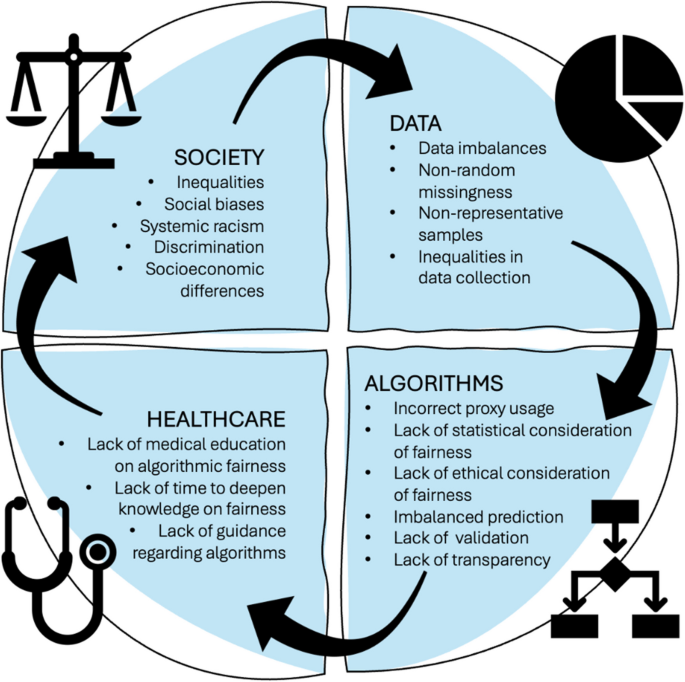
One of the biggest ethical challenges is bias. If an AI system is trained on data that reflects existing societal biases, the AI will learn and even amplify those biases. For example, if a hiring tool is trained on historical data where men were hired more often for technical roles, it might unfairly penalize female candidates.
Privacy is another major concern. Many AI systems require vast amounts of data to function, raising questions about how that data is collected, stored, and used. Ensuring transparency and accountability in AI systems is essential so that we can understand and contest their decisions.
On the societal level, AI is transforming industries and the job market. While some jobs may be automated, AI is also creating new roles and augmenting human capabilities, allowing people to focus on more creative and strategic tasks. It's driving breakthroughs in medicine, helping scientists tackle climate change, and making daily life more convenient. The challenge lies in managing this transition thoughtfully to ensure the benefits are shared broadly.
Understanding these foundational ideas is the first step in navigating the world of AI. It's a powerful technology with the potential to solve some of our biggest challenges, but it requires careful and responsible development.
Time to test what you've learned about the basics of AI.
What is the primary characteristic of Artificial Narrow Intelligence (ANI), which represents most AI systems in use today?
The technology that allows a self-driving car to identify pedestrians and road signs falls under which subfield of AI?