AI Fundamentals for Policy Makers
Introduction to Artificial Intelligence
What Is Artificial Intelligence?
At its core, artificial intelligence is about creating machines that can think and learn like humans. It's a broad field of computer science dedicated to building smart systems that can perform tasks that typically require human intelligence. This includes things like recognising speech, making decisions, translating languages, and identifying images.
Think of it as teaching a computer to see the world, understand it, and act on that understanding, rather than just following pre-written instructions.
AI isn't a single technology. It's an umbrella term for a range of methods and tools. The goal is to enable machines to reason, plan, learn from experience, and even show creativity. While the idea might sound like science fiction, you already interact with simple forms of AI every day.
A Brief History
The dream of creating intelligent machines is ancient, but the scientific pursuit of AI began in the 1950s. Early researchers were incredibly optimistic, believing that a machine with human-like intelligence was just a few decades away. The term "artificial intelligence" itself was coined at a workshop at Dartmouth College in 1956, marking the official birth of the field.
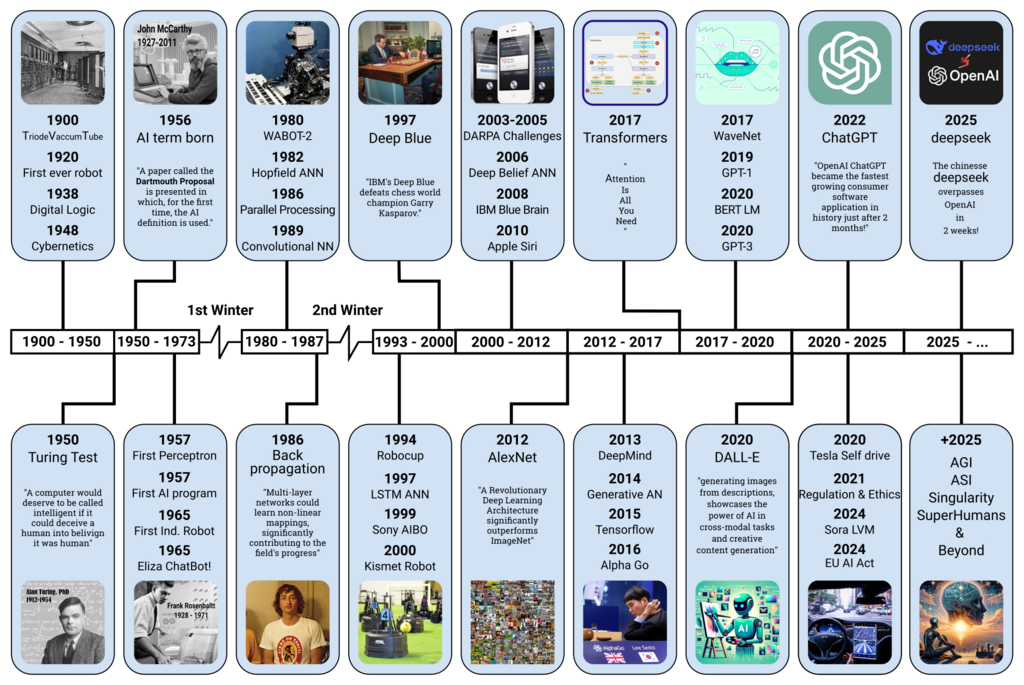
Progress wasn't a straight line. The initial excitement was followed by periods known as "AI winters," when funding and interest dwindled due to slow progress and unmet promises. However, the last few decades have seen a massive resurgence. This boom is fuelled by two key ingredients: the availability of huge amounts of data and the development of powerful, affordable computers.
The Three Types of AI
To understand AI's capabilities, it's helpful to categorise it based on its level of intelligence. Scientists generally talk about three stages or types of AI, two of which are still theoretical.
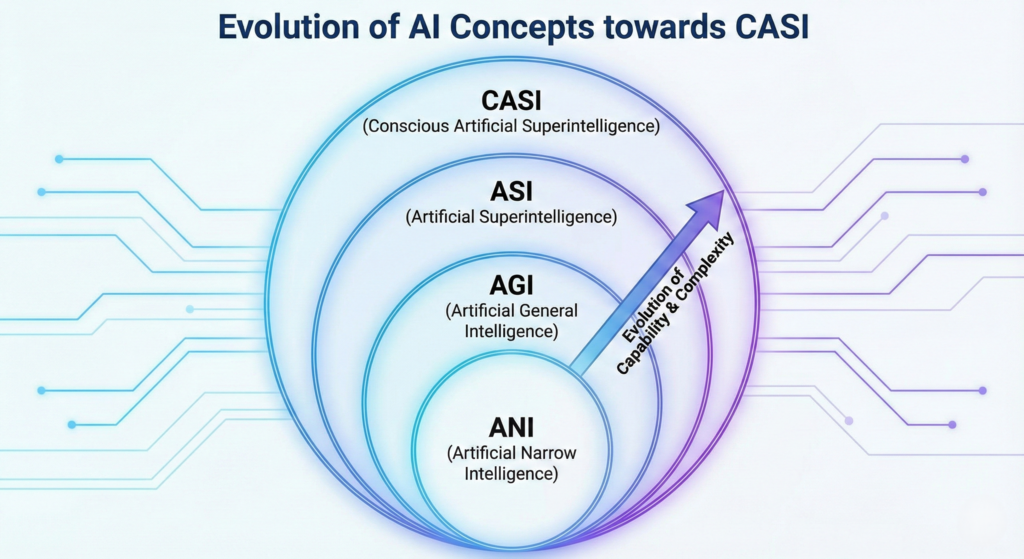
The first is Artificial Narrow Intelligence (ANI), sometimes called Weak AI. This is the only type of AI that exists today. ANI is designed and trained to perform a specific task. It can be incredibly good at that one job, often better than humans, but it has no awareness or ability outside its designated function.
Your phone's voice assistant, the software that recommends what to watch next, and the system that filters spam from your inbox are all examples of ANI. They are powerful tools, but they can't suddenly decide to learn philosophy or compose a symphony.
An ANI that plays chess can beat any grandmaster, but it doesn't know what a chessboard is, what winning means, or even that it's playing a game.
Next is Artificial General Intelligence (AGI), or Strong AI. This is the level of AI often depicted in movies: a machine with the ability to understand, learn, and apply its intelligence to solve any problem, just like a human being. An AGI could switch seamlessly between tasks, from writing an essay to driving a car to comforting a friend, without being reprogrammed.
We are not there yet. Creating AGI is the ultimate goal for many AI researchers, but it remains a monumental challenge. It would require a machine to have consciousness, self-awareness, and genuine understanding, which we are still far from achieving.
Finally, there is Artificial Superintelligence (ASI). This hypothetical form of AI wouldn't just match human intelligence; it would vastly surpass it in every domain. An ASI would be smarter than the most brilliant human minds combined, capable of scientific creativity, social skills, and general wisdom far beyond our comprehension. The capabilities and consequences of ASI are subjects of intense debate among scientists and philosophers.
AI's Real-World Impact
Even though we only have Narrow AI, its impact is already transforming our world. It's not just about convenience; it's driving major changes across critical sectors.
| Industry | AI Application | Impact |
|---|---|---|
| Healthcare | Analysing medical scans (X-rays, MRIs) | Faster, more accurate diagnosis of diseases like cancer. |
| Finance | Detecting fraudulent transactions | Protecting consumers and financial institutions from theft. |
| Transportation | Powering self-driving cars and optimising traffic | Increasing road safety and reducing congestion. |
| Entertainment | Personalising content recommendations | Curating music, films, and news based on user preferences. |
| Retail | Managing inventory and predicting demand | Ensuring products are available when needed, reducing waste. |
These applications highlight AI's core strength: processing vast amounts of data to find patterns and make predictions far more efficiently than humans ever could. As the technology continues to evolve, its role in our daily lives and global economy will only grow.
What is the primary goal of the field of artificial intelligence?
The term "artificial intelligence" was officially coined at a workshop in 1956. Where was this workshop held?