AI Fundamentals Explained Visually
Introduction to Artificial Intelligence
What Is Artificial Intelligence?
Artificial intelligence, or AI, is about making computers think and learn like humans. It's the science of creating machines that can perform tasks that typically require human intelligence, like recognizing speech, making decisions, and identifying images.
Think of it like teaching a child. At first, a child learns by seeing examples. You point to a dog and say "dog." After seeing many different dogs, the child learns to recognize a dog, even one they've never seen before. AI works in a similar way, but with massive amounts of data instead of a parent's guidance.
The core idea of AI is to build systems that can interpret data, learn from it, and use that knowledge to adapt and achieve specific goals.
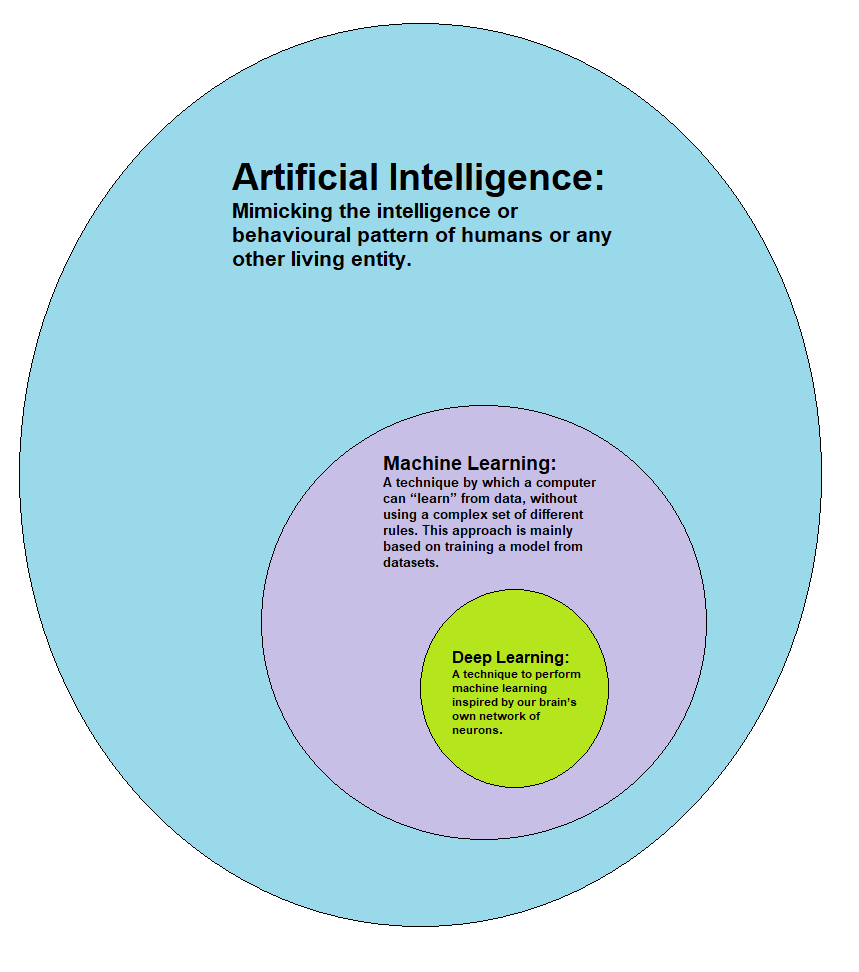
AI isn't just one single technology. It's a broad field with many subfields. Three of the most important concepts that power modern AI are Machine Learning, Neural Networks, and Natural Language Processing.
-
Machine Learning (ML) is a subset of AI. Instead of being explicitly programmed with rules, a machine learning system learns patterns directly from data. It's the engine that allows an email service to filter spam or a streaming service to recommend what you should watch next.
-
Neural Networks are a type of machine learning model inspired by the structure of the human brain. They consist of layers of interconnected "neurons" that process information. When a neural network has many layers, it's often called "deep learning." This is the technology behind more complex tasks, like self-driving cars recognizing pedestrians.
-
Natural Language Processing (NLP) gives machines the ability to understand, interpret, and generate human language. Every time you talk to a voice assistant or use a translation app, you're interacting with NLP.
A Brief History of AI
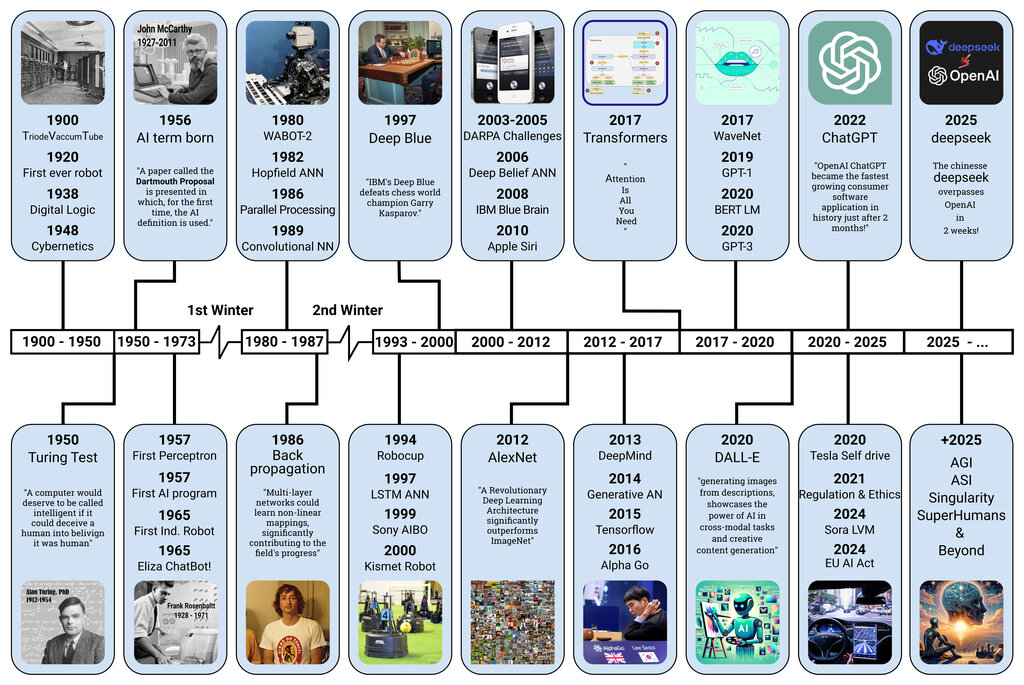
The dream of intelligent machines has been around for centuries, but the scientific field of AI is relatively new. The journey began officially in 1956 at the Dartmouth Workshop, where the term "artificial intelligence" was first coined.
Early AI research was full of optimism. Scientists developed programs that could solve algebra problems and prove logical theorems. But progress stalled in the 1970s and 80s, a period known as the "AI winter," when funding dried up due to slow progress and limited computing power.
The field saw a revival in the 1990s and has exploded in the 21st century. This boom is fueled by two things: the availability of huge amounts of data (the internet) and the development of powerful, affordable computers.
Two Types of AI
When people talk about AI, they are usually referring to one of two distinct categories: Narrow AI and General AI.
Artificial Narrow Intelligence (ANI), sometimes called Weak AI, is designed to perform a specific, narrow task. This is the AI we see all around us today. A chess program, a spam filter, or a facial recognition system are all examples of ANI. They can be incredibly good at their one job, but they can't operate outside of it. A chess-playing AI can't write an email or recognize a cat in a photo.
Artificial General Intelligence (AGI), or Strong AI, is the kind of AI you see in science fiction. It refers to a machine with the ability to understand, learn, and apply knowledge across a wide range of tasks at a human level. An AGI would be able to do anything a human can do, from cooking a meal to composing music to conducting scientific research. We have not achieved AGI yet; it remains a theoretical goal for researchers.
| Feature | Narrow AI (ANI) | General AI (AGI) |
|---|---|---|
| Scope | Performs a single, specific task | Can perform any intellectual task a human can |
| Capability | Specialized intelligence | Generalized, human-like intelligence |
| Current Status | Widely used today | Theoretical, not yet developed |
| Example | Voice assistants, recommendation engines | A thinking, conscious robot from a movie |
AI's Impact and Ethics
As AI becomes more integrated into our lives, it's crucial to consider its impact on society. AI offers incredible potential to solve major global challenges in medicine, climate change, and education. It can automate tedious jobs, create new forms of art, and make our lives more efficient.
However, it also raises important ethical questions. AI systems learn from data, and if that data reflects human biases, the AI can perpetuate and even amplify them. This can lead to unfair outcomes in areas like hiring or loan applications. Other concerns include job displacement due to automation, the potential for misuse in surveillance, and ensuring privacy in a world where data is constantly being collected.
We recommend that introductory AI courses should (1) highlight ethical challenges of AI to present a more balanced perspective, (2) raise ethical issues explicitly relevant to the technical concepts discussed and (3) nurture a sense of accountability in future AI developers.
Navigating this new landscape requires careful thought and a commitment to developing AI that is fair, transparent, and beneficial for everyone. Now, let's test your understanding of these foundational concepts.
What is the fundamental goal of Artificial Intelligence?
The technology that powers voice assistants like Siri and Alexa to understand your commands falls under which subfield of AI?
Understanding these core ideas is the first step in appreciating the power and complexity of artificial intelligence. It's a field that is constantly evolving, built on these fundamental principles.