AI Fundamentals Explained
Introduction to Artificial Intelligence
What Is Artificial Intelligence?
At its heart, artificial intelligence is about making machines smart. The goal is to build computer systems that can perform tasks that usually require human intelligence. This includes things like learning from experience, solving problems, understanding language, and recognizing objects in an image.
Think of AI as a broad field of computer science, much like biology or physics. It's not one single technology, but a collection of different approaches and tools.
Artificial Intelligence
noun
The theory and development of computer systems able to perform tasks that normally require human intelligence, such as visual perception, speech recognition, decision-making, and translation between languages.
Instead of being explicitly programmed for every possible scenario, an AI system learns patterns from large amounts of data. This allows it to make predictions or decisions on its own when faced with new information.
A Brief History
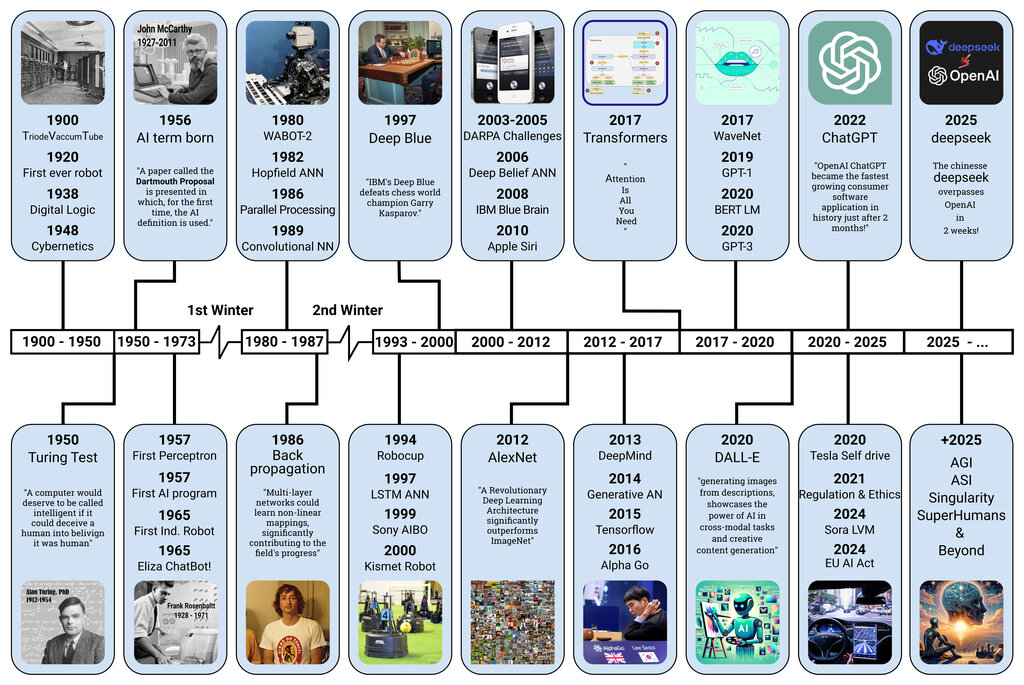
The idea of intelligent machines has been around for centuries in stories and philosophy, but the scientific pursuit of AI began in the 1950s. A pivotal moment was the Dartmouth Workshop in 1956, where the term "artificial intelligence" was first coined. Early researchers were optimistic, believing that a machine as intelligent as a human being was just a few decades away.
Progress came in waves. There were periods of excitement and funding, followed by "AI winters" when progress stalled and interest waned. However, breakthroughs in computing power and the availability of massive datasets in the 21st century have fueled the rapid advancements we see today.
The Branches of AI
Artificial Intelligence is an umbrella term that covers several specialized subfields. Think of AI as the main trunk of a tree, with different branches representing specific areas of focus. Understanding these branches helps clarify what people mean when they talk about AI.
Here are a few of the most important subfields:
-
Machine Learning (ML): This is the most common type of AI today. Instead of being programmed with rules, ML systems are trained on data. They learn to recognize patterns and make predictions. For example, your email's spam filter is a classic example of machine learning.
-
Natural Language Processing (NLP): This branch focuses on the interaction between computers and human language. NLP powers everything from translation apps to chatbots and voice assistants like Siri and Alexa. It helps machines understand what we say and write, and respond in a way that makes sense.
-
Computer Vision: This field enables machines to "see" and interpret the visual world. Computer vision is used in self-driving cars to identify pedestrians and traffic signs, in medical imaging to spot diseases, and on your phone to recognize faces for unlocking it.
These fields often overlap and work together to create sophisticated AI applications. As technology continues to evolve, the capabilities and applications of these AI branches will only expand.
What is the fundamental goal of artificial intelligence?
The term "artificial intelligence" was first coined at which pivotal event?
This introduction provides a starting point for understanding what AI is and where it came from. By grasping these core concepts, you're better equipped to explore the more advanced topics ahead.