AI Fundamentals Explained
AI Foundations
Defining Intelligence
Artificial intelligence is a broad field of computer science focused on creating systems that can perform tasks that typically require human intelligence. This includes abilities like learning from experience, understanding language, recognizing patterns, and making decisions.
At its core, AI is about building machines that can think and act rationally. This doesn't mean they have consciousness or feelings. Instead, it means they can perceive their environment, reason about that information, and take actions to achieve specific goals. The scope is vast, ranging from a spam filter in your email to complex systems that can diagnose diseases or drive cars.
The goal isn't to replicate the human mind, but to solve complex problems in a way that mimics intelligent behavior.
A Brief History
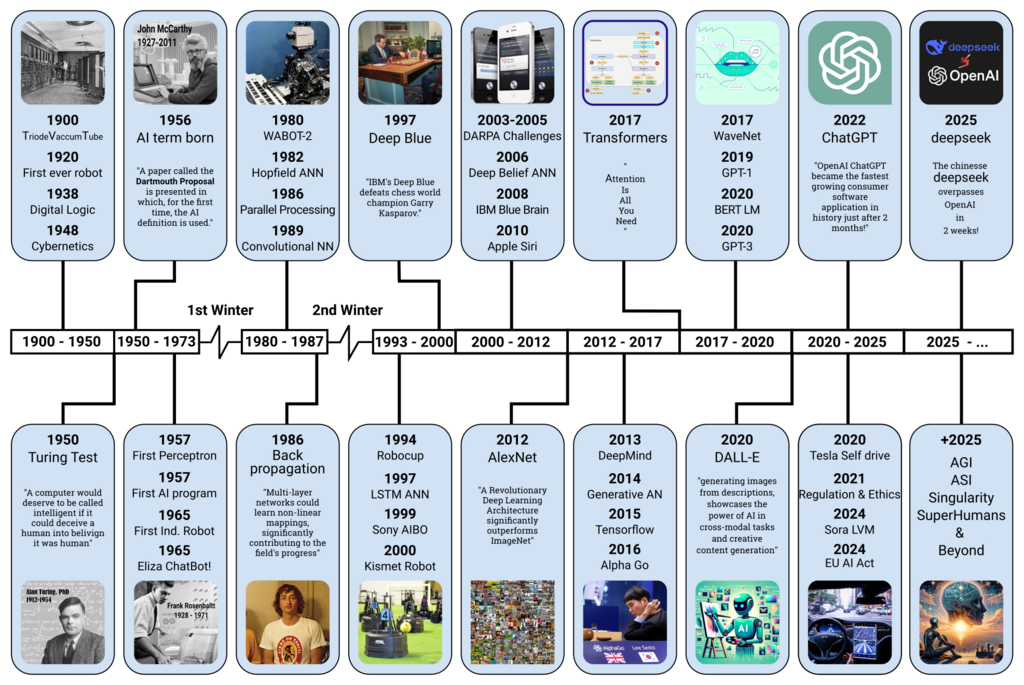
The dream of intelligent machines is ancient, but the formal field of AI research began in the mid-20th century. A pivotal moment was the Dartmouth Workshop in 1956, where the term "artificial intelligence" was officially coined.
The early years were filled with optimism. Researchers developed programs that could solve algebra problems and prove logical theorems. However, the initial excitement outpaced the available computing power and data, leading to periods known as "AI winters." During these times, funding dried up, and progress slowed.
The last few decades have seen a massive resurgence. The explosion of big data, combined with powerful and affordable computer hardware, has enabled breakthroughs that were previously unimaginable.
The Core Components
Modern AI is built on a few key concepts that work together. You've likely heard of them, but their relationship is what's most important.
Think of AI as the entire field of study. Within that field, Machine Learning (ML) is a specific approach. Instead of being explicitly programmed with rules, an ML system learns patterns directly from data. It improves its performance on a task as it's exposed to more examples.
Neural Networks are a type of ML model inspired by the structure of the human brain. They consist of interconnected layers of nodes, or "neurons," that process information. When a neural network has many layers, it's referred to as Deep Learning. This depth allows it to learn incredibly complex patterns from vast amounts of data, making it the engine behind many of today's most advanced AI applications, like image recognition and natural language processing.
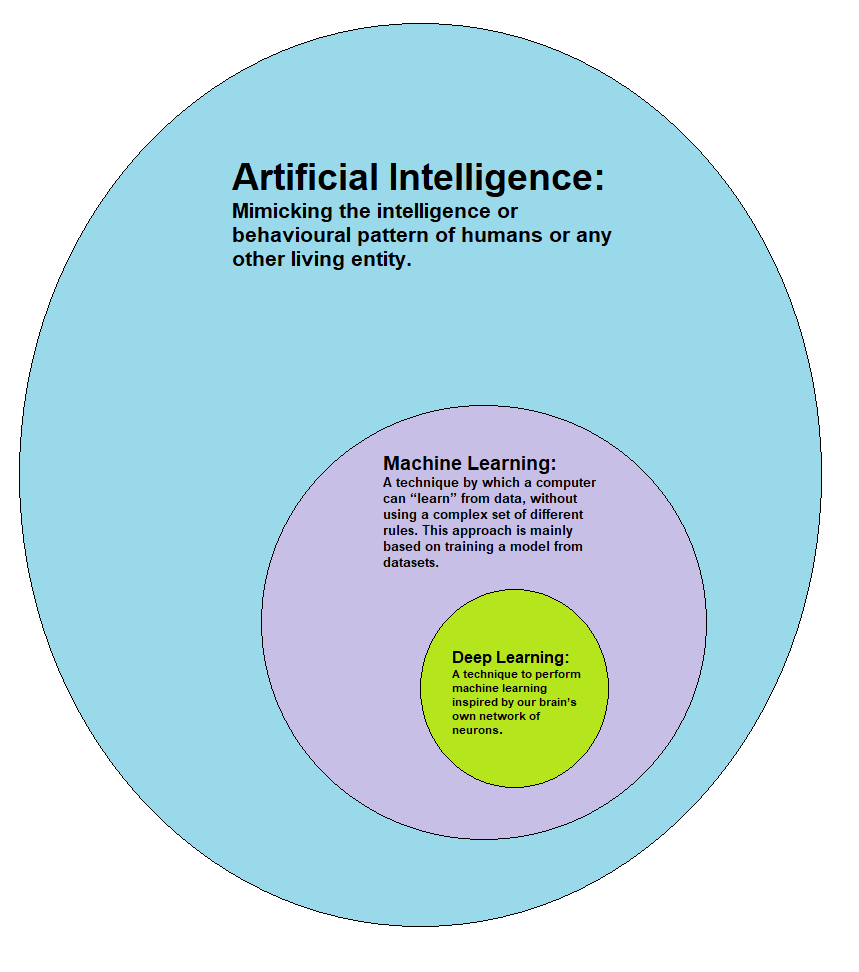
These concepts are not separate technologies but nested layers of innovation. Deep Learning is a powerful technique within Machine Learning, which in turn is a fundamental component of the broader pursuit of Artificial Intelligence. Understanding this hierarchy is key to grasping how modern AI systems are built.
What is the primary goal of Artificial Intelligence as a field of computer science?
The periods in AI history characterized by reduced funding and slower progress due to a gap between hype and reality are known as...