AI Fundamentals Explained
Introduction to Artificial Intelligence
What Is Artificial Intelligence?
Artificial intelligence, or AI, is about creating computer systems that can perform tasks that normally require human intelligence. This includes things like learning from experience, solving tricky problems, understanding language, and making decisions.
Think of it this way: instead of programming a computer with a rigid set of instructions for every single possibility, we build systems that can figure things out on their own.
Artificial Intelligence
noun
A field of computer science dedicated to creating systems capable of performing tasks that typically require human intelligence, such as learning, reasoning, and problem-solving.
The goal isn't necessarily to replicate a human mind perfectly. It's about simulating intelligent behavior to solve practical problems. Some AI is designed to think like humans (approaching tasks with human-like reasoning), while other AI is designed to act rationally (doing the "right" thing to achieve a goal, regardless of the thought process).
A Quick Trip Through Time
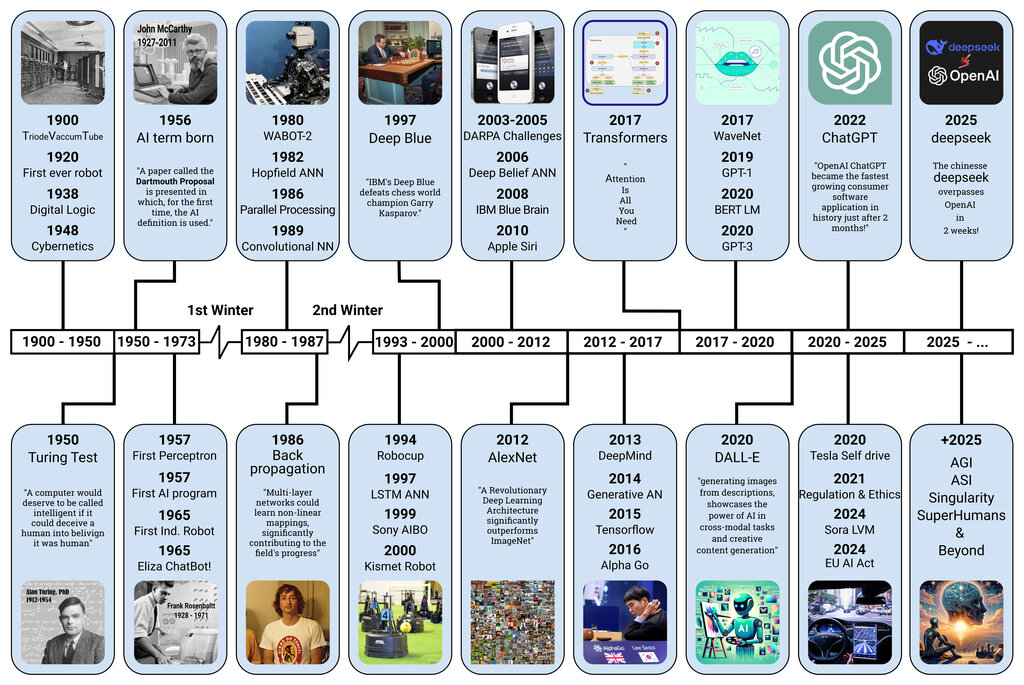
The idea of intelligent machines has been around for centuries, but the modern field of AI officially kicked off in the summer of 1956. A group of researchers gathered at Dartmouth College for a workshop where they coined the term "artificial intelligence" and laid out the field's ambitious goals.
The early years were full of excitement. Researchers developed programs that could solve algebra problems and play checkers. But the initial hype outpaced the technology. When progress slowed, funding dried up, leading to periods known as "AI winters."
Things started to heat up again in the 1990s. In 1997, IBM's Deep Blue supercomputer famously defeated world chess champion Garry Kasparov. This was a huge milestone, showing that machines could master complex, strategic tasks. The real game-changer, however, was the explosion of big data and the development of much more powerful computers in the 2000s. This combination fueled the AI boom we're experiencing today.
The Different Flavors of AI
AI isn't just one thing; it's a broad field with several specialized areas. Think of it like biology, which has subfields like genetics, ecology, and marine biology. Let's look at a few of the most important branches of AI.
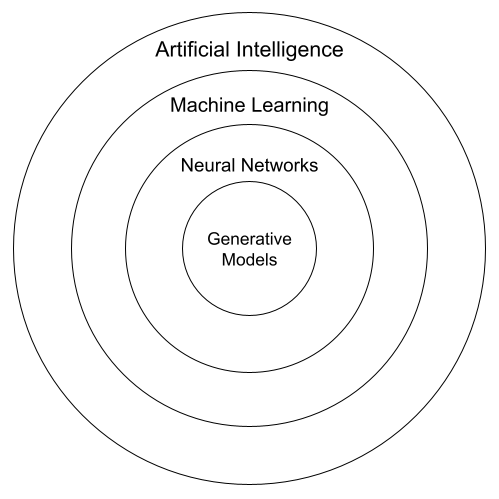
Machine Learning (ML) is a core part of modern AI. Instead of being programmed with rules, an ML system learns patterns directly from data. You could feed a machine learning model thousands of pictures of cats, and it would eventually learn to recognize a cat on its own.
Neural Networks are a type of machine learning model inspired by the structure of the human brain. They're made of interconnected layers of
nodes," or artificial neurons, that process information. When a neural network has many layers, it's often called "deep learning." This is the technology behind many of today's most advanced AI systems, from image recognition to self-driving cars.
Natural Language Processing (NLP) focuses on the interaction between computers and human language. NLP makes it possible for machines to read, understand, and generate text and speech. Every time you use a voice assistant like Siri or see an email automatically sorted into a spam folder, you're interacting with NLP.
AI in the Wild
AI is no longer just a concept in a research lab; it's woven into our daily lives and transforming industries. Your favorite streaming service uses AI to recommend movies you might like. Banks use it to detect fraudulent transactions in real time.
In healthcare, AI helps doctors diagnose diseases earlier and more accurately by analyzing medical images like X-rays and MRIs. In transportation, companies are using AI to develop safer and more efficient self-driving vehicles. And in manufacturing, AI-powered robots work alongside humans to assemble complex products with precision.
From personalized marketing to complex scientific research, AI is a powerful tool that helps us find patterns and make smarter decisions in a world filled with data.
Now that you have a handle on the basics of AI, let's test your knowledge.
What is the primary goal of artificial intelligence (AI)?
The modern field of AI is considered to have officially begun at a 1956 workshop held at which institution?
This introduction covers the essential concepts of what AI is, where it came from, and how its different branches are applied in the world today. This foundation will help you understand the more advanced topics ahead.