AI Fundamentals Explained
Introduction to Artificial Intelligence
What Is Artificial Intelligence?
At its core, Artificial Intelligence (AI) is the science of making machines smart. It's a broad field of computer science focused on building systems that can perform tasks that typically require human intelligence. This includes things like learning from experience, solving problems, understanding language, and recognizing patterns.
Think of it this way: traditional programming tells a computer exactly what to do with a rigid set of rules. AI gives a computer the ability to learn how to do things on its own.
This introduction to this special issue discusses artificial intelligence (AI), commonly defined as “a system’s ability to interpret external data correctly, to learn from such data, and to use those learnings to achieve specific goals and tasks through flexible adaptation.”
A Quick Trip Through Time
The idea of intelligent machines has been around for centuries, but the formal field of AI research began in the mid-1950s. The journey has been a series of booms and busts, with periods of great excitement followed by "AI winters" when progress slowed and funding dried up.
Early AI focused on solving puzzles and playing games like chess. While impressive, these systems were often limited. The real breakthrough came with the rise of the internet, which generated massive amounts of data, and the development of more powerful computers. This combination fueled the growth of machine learning, a key subset of AI, and led to the rapid advances we see today.
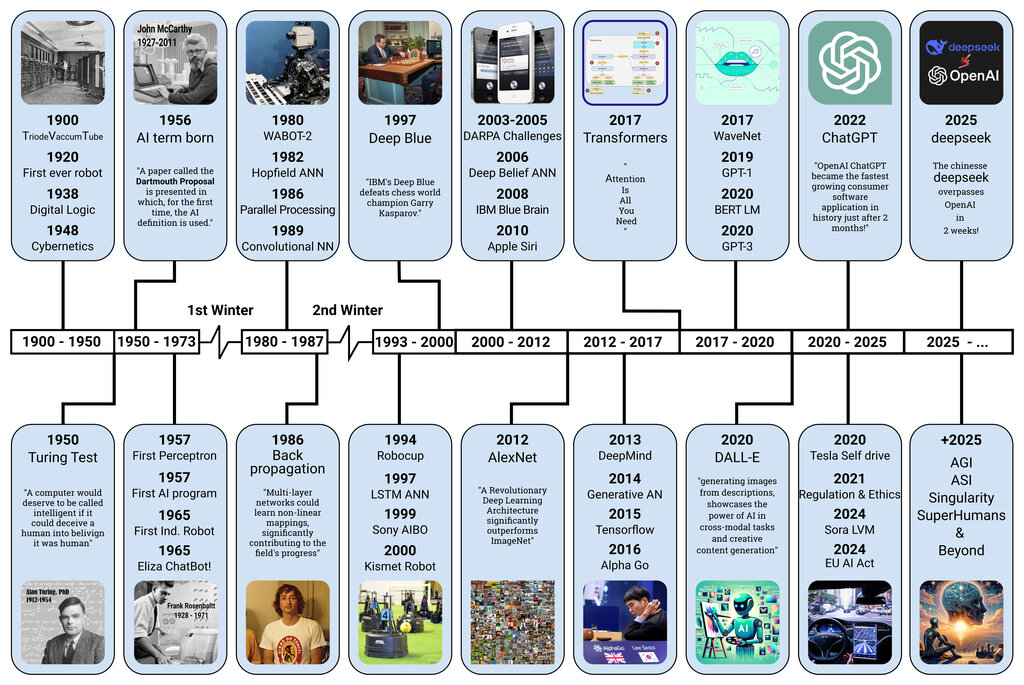
The Two Main Flavors of AI
AI isn't a single entity. It's helpful to think of it in two main categories: Narrow AI and General AI.
Narrow AI
noun
Also known as Weak AI, this is the type of AI we interact with every day. It's designed and trained for one specific task. A spam filter in your email, a music recommendation engine, or a voice assistant on your phone are all examples of Narrow AI. They are incredibly good at their single job but can't operate outside of it.
Artificial General Intelligence (AGI), or Strong AI, is different. This is the more futuristic concept of a machine with the ability to understand, learn, and apply its intelligence to solve any problem, much like a human being. AGI would be able to perform any intellectual task that a person can. It's the kind of AI often seen in science fiction, and while it's a major goal for many researchers, it doesn't exist yet.
More Than Just Code
Creating artificial intelligence requires more than just programming. It's a truly interdisciplinary field that pulls from many areas of human knowledge.
- Computer Science provides the fundamental programming and algorithms.
- Neuroscience inspires AI models by studying the structure and function of the human brain. The concept of "neural networks" in AI is directly borrowed from biology.
- Psychology offers insights into how humans learn, reason, and perceive the world, which helps researchers design more effective AI systems.
- Linguistics, the scientific study of language, is essential for building machines that can understand and generate human speech.
- Philosophy tackles the big questions about intelligence, consciousness, and ethics that arise as AI becomes more powerful.
This blend of disciplines is what makes AI such a rich and rapidly evolving area of study.