AI Fundamentals Explained
Introduction to AI
What Is Artificial Intelligence?
Artificial intelligence, or AI, is the science of making machines that can think like humans. It's about creating systems that can learn from experience, reason through problems, and make decisions. Think of it less like a sci-fi robot and more like a very sophisticated tool designed to extend our own capabilities.
When we talk about mimicking human intelligence, we're focusing on a few key abilities. First is learning. Just as you learn from reading a book or trying something new, AI systems learn by processing vast amounts of data. They spot patterns, make connections, and adjust their own logic without being explicitly programmed for every single task.
Next comes reasoning and problem-solving. This is the ability to take in information, understand the context, and figure out the best course of action. For an AI, this could mean anything from finding the quickest route through city traffic to diagnosing a rare disease from a patient's symptoms.
Finally, there's perception. This involves understanding the world through senses, like sight and sound. AI powers the technology that lets your phone recognize your face and allows voice assistants to understand your commands.
The core goal of AI is not to replace human intelligence, but to augment it, helping us tackle complex challenges more effectively.
A Brief History
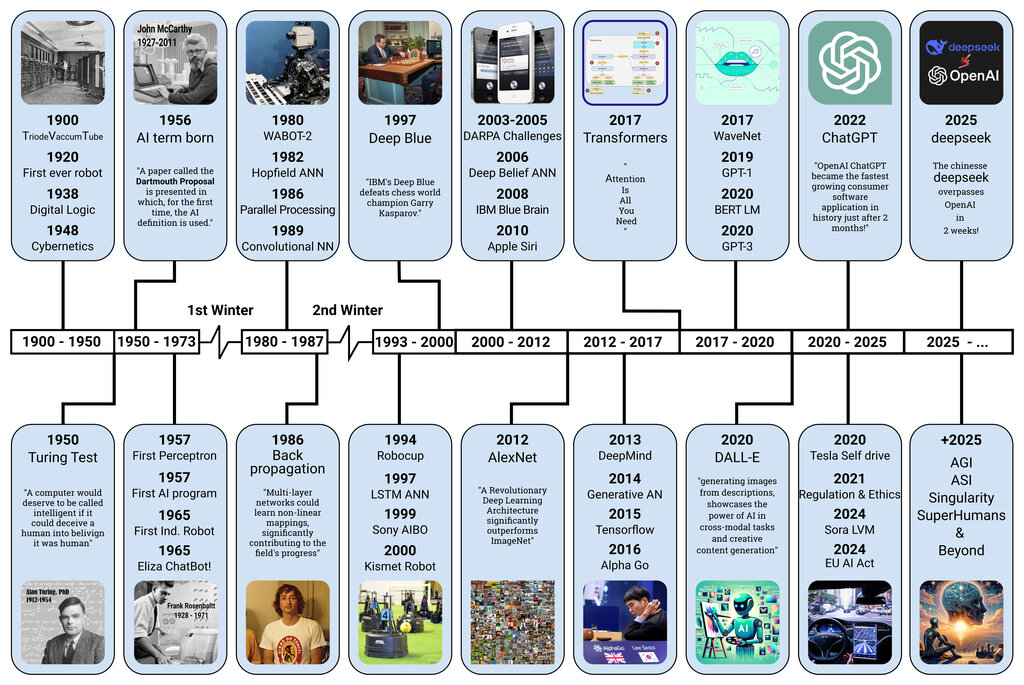
The dream of intelligent machines is ancient, but the formal field of AI research began in the summer of 1956 at a workshop at Dartmouth College. It was there that the term "artificial intelligence" was coined. Early researchers were incredibly optimistic, predicting that machines with human-level intelligence were just a few decades away.
Progress wasn't a straight line. The initial excitement was followed by periods known as "AI winters," when funding dried up and progress stalled. The complexity of creating true intelligence was far greater than first imagined. But these quiet periods laid the groundwork for future breakthroughs.
The modern AI boom is powered by two main forces: immense computing power and the availability of massive datasets. The internet gave us the data, and advancements in computer hardware gave us the ability to process it at incredible speeds. This combination has allowed theories that were once just on paper to become powerful, real-world applications.
AI in the Real World
AI is no longer just a laboratory experiment; it's woven into the fabric of our daily lives and industries.
In healthcare, AI helps doctors analyze medical images like X-rays and MRIs, often spotting signs of disease earlier and with greater accuracy than the human eye. It can also sift through millions of research papers to help scientists find new drug candidates.
In finance, AI algorithms are constantly at work protecting you from fraud. They analyze your spending patterns and can instantly flag a transaction that seems out of character, stopping theft before it happens. Banks also use AI to assess loan risk and automate trading.
Transportation is being transformed by AI. The development of self-driving cars relies on AI systems that can perceive the environment, predict the behavior of other drivers, and navigate complex road conditions safely. In logistics, AI optimizes shipping routes, saving fuel and time.
The Ethical Tightrope
As AI becomes more powerful, we must carefully consider its ethical implications. These systems are tools built by people, and they can reflect our own biases and flaws.
One of the biggest challenges is algorithmic bias. If an AI is trained on historical data that contains biases, the AI will learn and even amplify them. For example, if an AI hiring tool is trained on a company's past hiring decisions and that company historically favored male candidates, the AI may learn to discriminate against women, even if it's not explicitly told to.
Privacy is another major concern. AI systems often require huge amounts of personal data to function. This raises important questions about how that data is collected, stored, and used. Who has access to it, and what are the safeguards against its misuse?
Finally, there's the need for transparency and accountability. When an AI makes a critical decision, like denying someone a loan or being involved in a car accident, we need to understand how it reached that conclusion. If we can't look inside the "black box" of the AI, it's impossible to hold anyone accountable when things go wrong.
Navigating these issues is one of the most important tasks for developers, policymakers, and society as a whole as we continue to build our future with AI.
Ready to check your understanding of these core concepts?
According to the text, what is the fundamental goal of artificial intelligence?
The modern AI boom is primarily driven by which two factors?
Understanding these foundational ideas is the first step in grasping the power and potential of artificial intelligence.