AI Fundamentals Explained
Introduction to Artificial Intelligence
What Is AI Anyway?
Artificial intelligence, or AI, is about creating machines or computer programs that can think and learn. The goal is to build systems that can perform tasks that normally require human intelligence. This includes things like understanding language, recognizing images, making decisions, and solving problems.
This introduction to this special issue discusses artificial intelligence (AI), commonly defined as “a system’s ability to interpret external data correctly, to learn from such data, and to use those learnings to achieve specific goals and tasks through flexible adaptation.”
Think of it this way: when you learn to ride a bike, you don't just follow a set of rigid instructions. You get a feel for the balance, you adjust to bumps in the road, and you get better with practice. AI aims to give computers that same ability to learn from experience and adapt to new situations. The core objectives are to build systems that can reason, represent knowledge, plan, learn, communicate, and perceive the world around them. Ultimately, the aim is to combine these skills to achieve more complex goals.
Two Flavors of AI
When people talk about AI, they're usually referring to one of two different types: Narrow AI or General AI. Understanding the difference is key to understanding what AI can and can't do today.
Artificial Narrow Intelligence (ANI)
noun
Also known as Weak AI, this is a type of artificial intelligence that is trained to perform a specific, limited task.
Every AI application you use today is a form of Narrow AI. Your phone's voice assistant, the recommendation engine on a streaming service, and even self-driving cars are all designed for specific jobs. They can perform their designated tasks incredibly well, often better than humans. But they can't operate outside of those predefined functions. You can't ask your smart speaker to diagnose a medical condition, and a spam filter can't write a poem.
Artificial General Intelligence (AGI)
noun
Also known as Strong AI, this is a theoretical form of AI where a machine would have an intellect equal to a human's and could perform any intellectual task that a human can.
AGI is the kind of AI you see in movies—a machine with consciousness, self-awareness, and the ability to learn and apply its intelligence to solve any problem. It could understand context, nuance, and emotion just like a person. Right now, AGI is purely hypothetical. We have not yet created a machine with this level of general cognitive ability.
For now, all progress in AI is happening within the realm of Narrow AI. But these specialized systems are becoming more powerful and interconnected every day, and they're already transforming the world.
AI in Action
Artificial intelligence isn't just a futuristic concept; it's a technology that powers many of the tools and services we use daily. Its applications span nearly every industry, solving problems and creating new efficiencies.
| Industry | Application of AI |
|---|---|
| Healthcare | Analyzing medical images to detect diseases early. |
| Finance | Detecting fraudulent transactions in real-time. |
| Retail | Recommending products based on past purchases. |
| Transport | Optimizing routes for delivery trucks to save fuel. |
| Entertainment | Curating personalized playlists and movie suggestions. |
| Agriculture | Using drones to monitor crop health and optimize water. |
| Manufacturing | Predicting when machinery needs maintenance. |
Each of these examples uses Narrow AI to perform a highly specialized task. By processing vast amounts of data and identifying patterns, these systems help people make better, faster decisions.
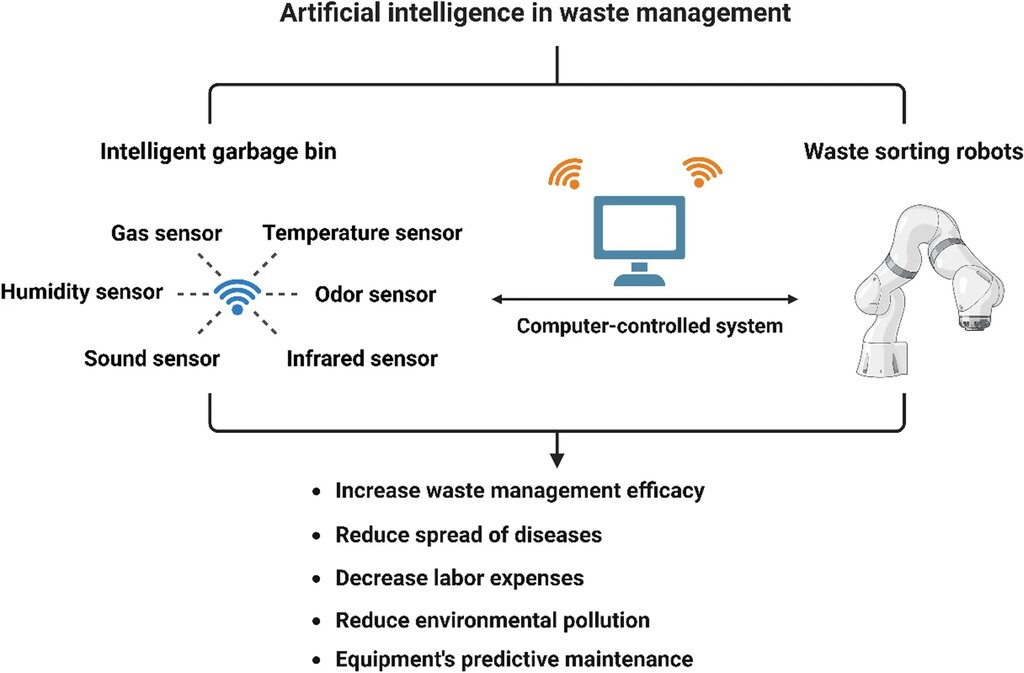
As you can see, AI is a broad and powerful field. While the idea of a thinking machine might seem like science fiction, the reality is that specialized AI is already an essential part of modern technology. Now you're ready to test your understanding.
What is the primary goal of Artificial Intelligence?
A spam filter in your email is a good example of which type of AI?