AI Fundamentals Demystified
Introduction to Artificial Intelligence
What Is Artificial Intelligence?
Artificial intelligence, or AI, is about creating computer systems that can perform tasks that typically require human intelligence. This isn't about robots that look and act exactly like people. Instead, it's about the ability of a program to sense its environment, reason through information, learn from experience, and make decisions to achieve a specific goal.
Think about how you learn to play a new game. At first, you just know the rules. But as you play, you start to recognize patterns, develop strategies, and get better over time. AI works in a similar way. It's not just following a rigid set of instructions; it's adapting based on new data.
This introduction to this special issue discusses artificial intelligence (AI), commonly defined as “a system’s ability to interpret external data correctly, to learn from such data, and to use those learnings to achieve specific goals and tasks through flexible adaptation.”
This ability to learn and adapt is the key difference between AI and traditional computer programs. Let's look at that more closely.
AI vs. Traditional Programs
A traditional computer program is like a very obedient cook following a recipe. It does exactly what it's told, step by step. If you write a program to add two numbers, it will always add those two numbers in the exact same way. It can't learn to multiply on its own, and it won't get faster or more efficient unless a human programmer rewrites its code.
The logic is explicit and fixed. The programmer must anticipate every possible scenario and write a rule for it.
Traditional Program: If the user clicks 'buy', then add the item to the cart. The rule is defined by a person.
An AI system, on the other hand, is like a chef who learns by tasting. Instead of a fixed recipe, you give it lots of data—thousands of customer orders, for example. The AI analyzes this data to find patterns. It might learn that people who buy coffee in the morning also tend to buy a pastry. It creates its own rules based on these observed patterns.
This allows AI to handle new, unseen situations. It can make predictions and decisions on its own, without a programmer writing a specific rule for every single possibility.
AI System: Based on an analysis of millions of purchases, users who buy product X have a 75% chance of also being interested in product Y. The rule is derived from data.
| Feature | Traditional Programming | Artificial Intelligence |
|---|---|---|
| Logic | Explicitly coded by humans | Learns rules from data |
| Data Use | Processes data according to rules | Finds patterns and rules in data |
| Adaptability | Static, requires manual updates | Adapts to new data automatically |
| Task | Follows instructions | Makes predictions or decisions |
The Impact of AI
The ability to learn from data is why AI has become so important. It's not just a futuristic concept from science fiction; it's already a part of our daily lives. When your email service automatically filters out spam, that's AI at work. It has learned to recognize the characteristics of junk mail based on millions of examples.
When a streaming service recommends a new show you might like, it's using AI to analyze your viewing habits and compare them to those of millions of other users. This helps it predict what you'll enjoy next. AI powers everything from language translation apps and voice assistants like Siri and Alexa to more complex systems that help doctors diagnose diseases or enable cars to drive themselves.
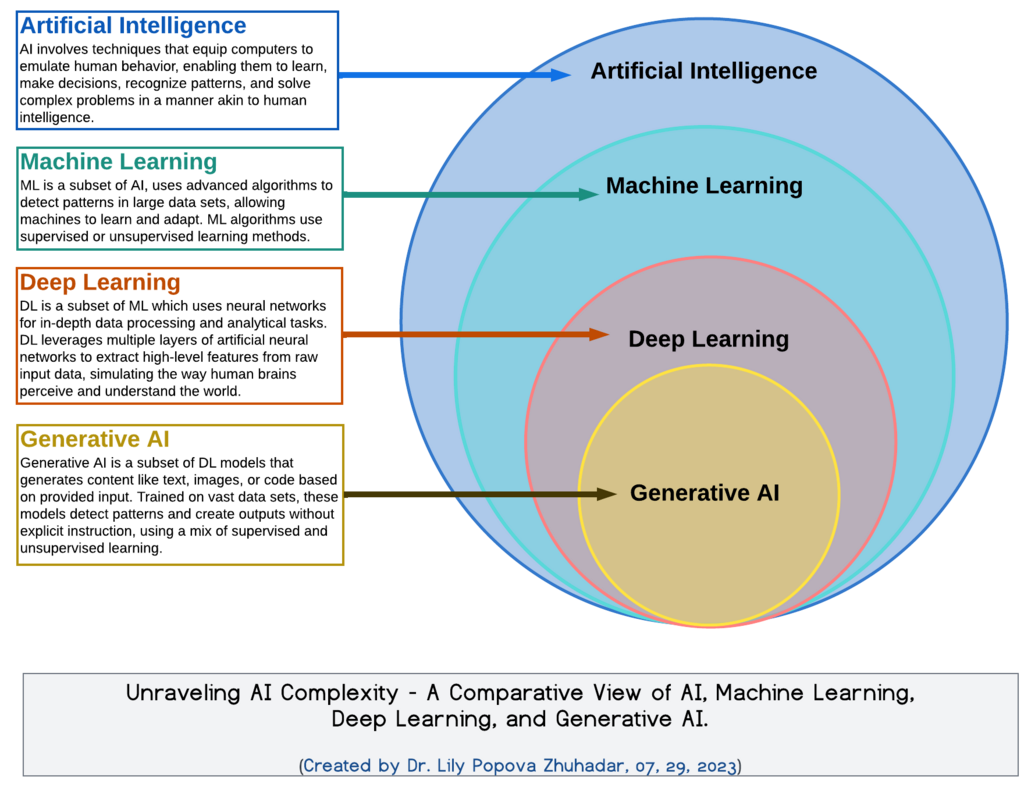
By finding patterns in vast amounts of data, AI helps us solve problems that would be too complex or time-consuming for the human brain alone. It's a tool for augmenting our own intelligence, allowing us to make better decisions, automate tedious tasks, and unlock new possibilities in nearly every industry.
Core Principles
At its heart, AI operates on a few basic principles. These are the fundamental ideas that allow a machine to exhibit intelligent behavior.
Learning
noun
The process of acquiring knowledge or skills through experience, study, or by being taught. In AI, this means improving performance on a task by processing more data.
This is the most critical principle. AI systems are not static; they improve. This is achieved through algorithms that allow the system to identify patterns in data and adjust its internal model accordingly.
Another core principle is reasoning. This involves using the patterns it has learned to draw conclusions or make decisions. For example, an AI designed for medical imaging might reason that a specific pattern of pixels in an X-ray corresponds to a particular condition because it has seen that pattern in thousands of confirmed cases.
Finally, there is perception. This is the ability to take in information from the world. For a human, this means using our senses: sight, hearing, touch. For an AI, this could mean processing text from an email, recognizing speech from a microphone, or identifying objects in a photo from a camera.
These three principles—Perception, Reasoning, and Learning—work together in a continuous cycle. The AI perceives the world, reasons about what it sees, takes an action, and then learns from the outcome of that action to improve its future performance.
What is the primary characteristic that distinguishes an AI system from a traditional computer program?
When a streaming service suggests a new movie for you to watch, which core AI principle is it primarily demonstrating?
This foundation gives you a starting point for understanding how AI works and why it's changing the world around us.