AI Fundamentals
Introduction to Artificial Intelligence
What Is Artificial Intelligence?
At its core, artificial intelligence is the science of making machines that can think or act like humans. Think of it like teaching a computer to learn from experience, recognize patterns, and make decisions, much like we do every day. Instead of being explicitly programmed for every single task, an AI system learns and adapts.
Artificial Intelligence
noun
A field of computer science dedicated to creating systems that can perform tasks that typically require human intelligence, such as learning, reasoning, and problem-solving.
This isn't a new idea. For centuries, people have imagined creating intelligent machines. But it wasn't until the mid-20th century that the dream started to become a reality, thanks to the invention of the computer. The journey from then to now has been full of breakthroughs, setbacks, and fascinating discoveries.
A Brief History of AI
The field of artificial intelligence was officially born in the summer of 1956 at a conference at Dartmouth College. It was there that the term "artificial intelligence" was first used. The early pioneers were incredibly optimistic, believing that a machine as intelligent as a human being was just a few decades away. They created programs that could solve algebra problems, prove logical theorems, and speak simple English.
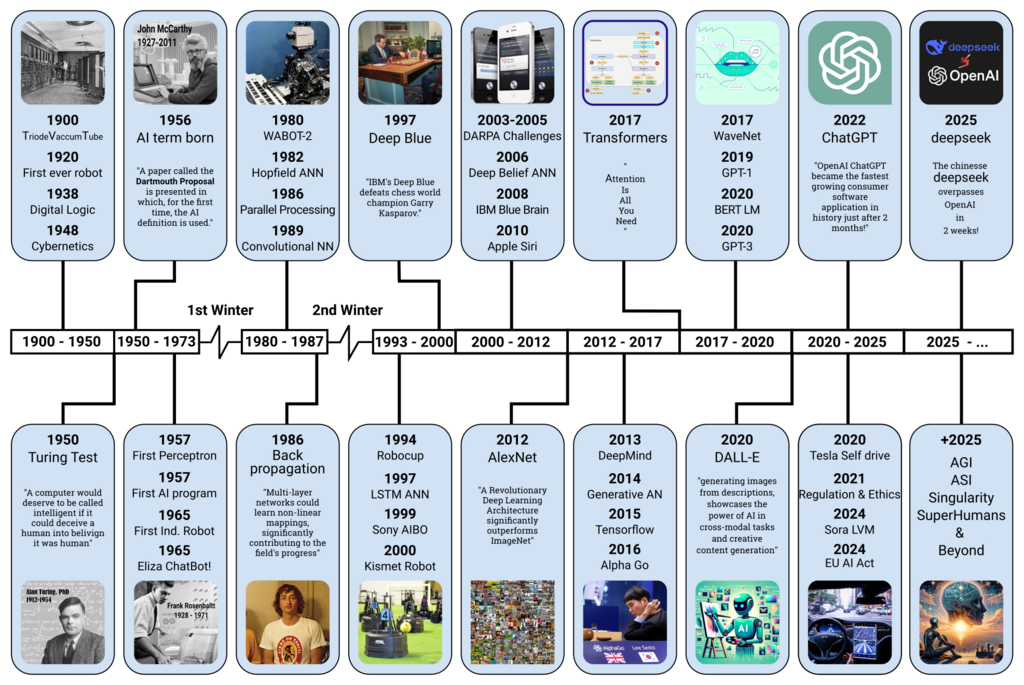
But progress was slower than expected. The initial excitement was followed by periods known as "AI winters," when funding dried up and interest faded. The problems were just too difficult, and computers weren't powerful enough yet.
Everything changed in the last couple of decades. A massive increase in computing power and the availability of huge amounts of data created the perfect conditions for a new boom in AI. This led to the development of machine learning and deep learning, which are the driving forces behind most of the AI we see today.
AI's journey has been a mix of big dreams, quiet periods, and sudden, world-changing breakthroughs.
Why AI Matters Today
Today, AI is no longer just a subject of science fiction. It's woven into the fabric of our daily lives, from the recommendation algorithms that suggest what to watch next to the navigation apps that guide us through traffic. It's helping scientists tackle some of the world's most complex challenges, like developing new medicines and understanding climate change.
The rapid growth of AI brings enormous potential for progress. It's changing how we work, communicate, and interact with the world around us. At the same time, it raises important questions about ethics, privacy, and what it means to be human. Understanding the basics of AI is the first step toward navigating this new landscape thoughtfully.
What is the core concept of artificial intelligence?
The term "artificial intelligence" was first coined at a conference held at which institution in 1956?
With this foundation, you're ready to explore the specific technologies that make AI possible.