AI Fundamentals and Types
Introduction to AI
What Is Artificial Intelligence?
Artificial intelligence, or AI, is about making computers smart. It's the science of creating machines that can perform tasks that typically require human intelligence. This includes things like learning from experience, understanding language, recognizing objects, solving problems, and making decisions.
Think of it like teaching a robot to play chess. You don't just program every possible move. Instead, you give it the rules and strategies, and it learns to think for itself by analyzing thousands of games. Over time, it can learn to play better than any human.
The broad term “artificial intelligence” refers to the simulation of human-level intelligence and thinking through the use of machines.
AI isn't a single technology. It's a broad field with many subfields, including machine learning, where systems learn from data, and natural language processing, which helps computers understand human language. At its core, AI aims to create systems that can operate intelligently and independently.
A Quick Trip Through Time
The dream of intelligent machines has been around for centuries, but the formal field of AI research began in the 1950s. The term "artificial intelligence" was first coined at a conference at Dartmouth College in 1956. Early researchers were incredibly optimistic, believing that a machine as intelligent as a human being was only a generation away.
Progress was slower than expected. The first wave of AI focused on symbolic logic and problem-solving, which worked for well-defined tasks but struggled with the messiness of the real world. This led to periods known as "AI winters," when funding dried up and public interest faded.
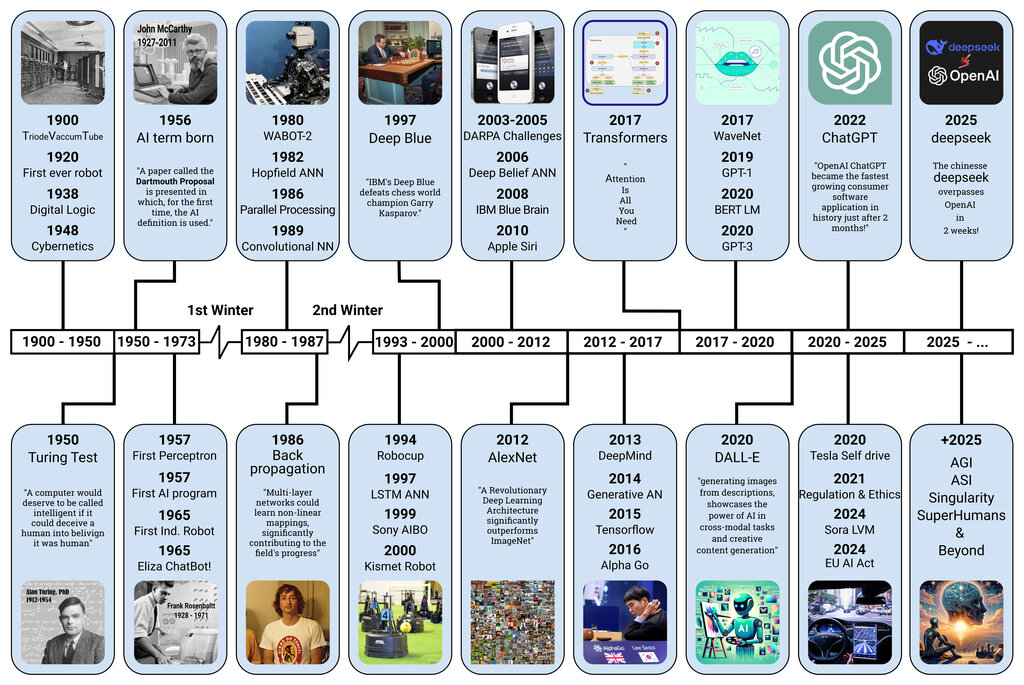
Things started to change in the late 20th century with the rise of machine learning. Instead of programming explicit rules, researchers created algorithms that could learn patterns directly from data. This shift, combined with massive increases in computing power and the availability of huge datasets, fueled the AI revolution we see today.
AI in the Real World
AI is no longer just a concept from science fiction; it's a part of our daily lives. From the moment you unlock your phone with your face to the movie recommendations you get on a streaming service, AI is working behind the scenes. Its impact spans nearly every industry.
| Field | Application |
|---|---|
| Healthcare | Analyzing medical images to detect diseases. |
| Finance | Identifying fraudulent credit card transactions. |
| Entertainment | Recommending songs, movies, and shows. |
| Transportation | Powering navigation apps and self-driving cars. |
| Retail | Personalizing shopping experiences online. |
| Manufacturing | Optimizing factory production lines with robots. |
The significance of AI lies in its ability to process vast amounts of information and recognize patterns that are beyond human capability. This allows us to solve complex problems more efficiently, automate tedious tasks, and unlock new possibilities for innovation and discovery.
Now, let's test your understanding of these core concepts.
Which statement best defines the core goal of artificial intelligence?
The term "artificial intelligence" was first coined at a conference in what decade?