AI Fundamentals and Prompt Engineering
Introduction to AI
What Is Artificial Intelligence?
Artificial intelligence is the science of making computers do things that require intelligence when done by humans. Think of it as teaching a machine to learn, reason, and solve problems. Instead of just following a strict set of pre-programmed instructions, an AI system can analyze information, identify patterns, and make decisions on its own.
Artificial Intelligence
noun
The theory and development of computer systems able to perform tasks that normally require human intelligence, such as visual perception, speech recognition, decision-making, and translation between languages.
At its core, AI is about creating systems that can perceive their environment, think about what they perceive, and then act to achieve a goal. This could be as simple as a thermostat learning your temperature preferences or as complex as a car navigating city streets by itself.
A Brief History
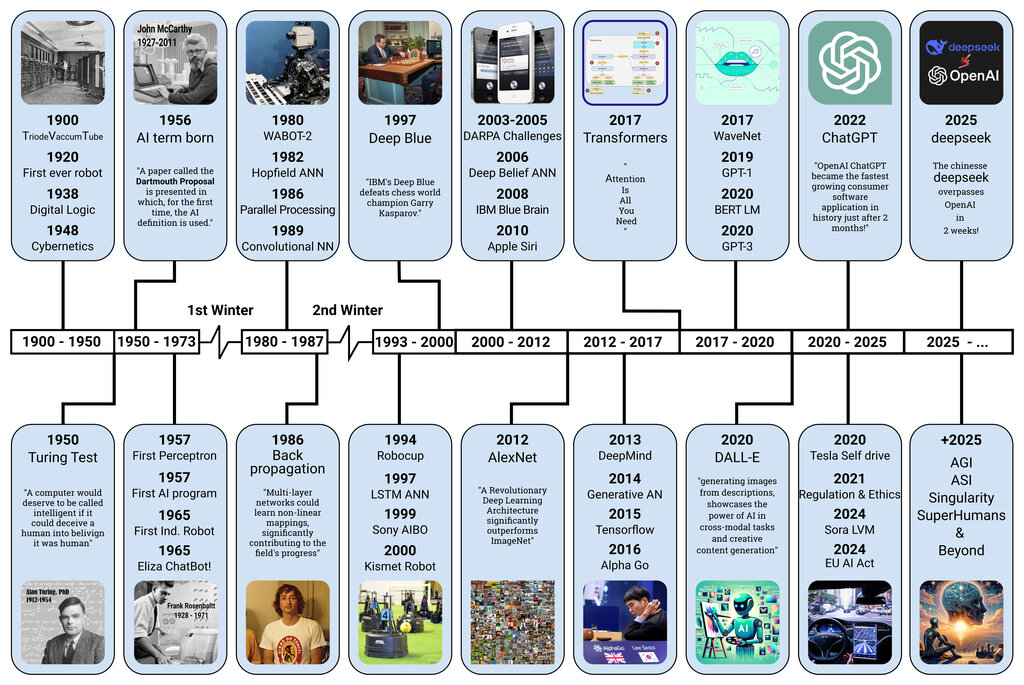
The dream of intelligent machines has been around for centuries, but the modern field of AI officially began in the summer of 1956. A group of researchers gathered at Dartmouth College for a workshop where they coined the term "artificial intelligence" and laid out the field's foundational goals.
The early years were filled with excitement. Scientists predicted that machines with human-level intelligence were just a few decades away. But progress was slower than expected. The complexity of the problem led to periods known as "AI winters," when funding dried up and public interest waned.
Things started to heat up again in the 21st century. The explosion of available data from the internet, combined with huge increases in computing power, created the perfect conditions for a breakthrough. Machine learning, a subfield of AI, began to flourish, leading to the powerful systems we see today.
Two Flavors of AI
When people talk about AI, they are usually referring to one of two types: Narrow AI or General AI. Understanding the difference is key.
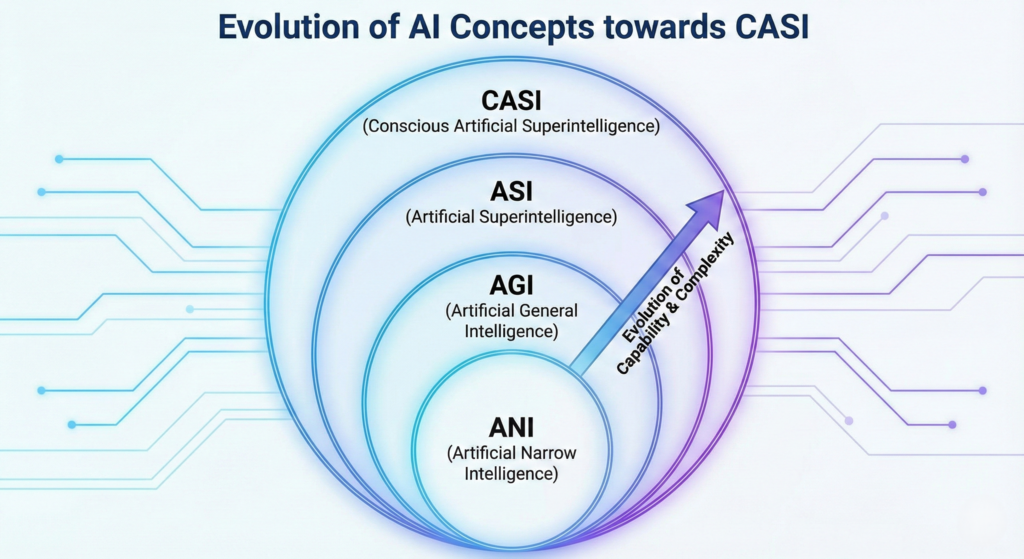
Artificial Narrow Intelligence (ANI) is what we have right now. It's an AI that is designed and trained for one specific task. It can be incredibly good at that task, often better than humans, but it can't operate outside its designated area. A spam filter in your email, a facial recognition system, or a virtual assistant like Siri are all examples of Narrow AI. They're specialists, not generalists.
Artificial General Intelligence (AGI) is the stuff of science fiction, for now. This is a theoretical type of AI that possesses the ability to understand, learn, and apply its intelligence to solve any problem a human can. An AGI would be able to switch contexts, be creative, and understand the world with the same breadth and depth that we do. We are not there yet, and building AGI remains one of the most ambitious goals in computer science.
| Feature | Narrow AI (ANI) | General AI (AGI) |
|---|---|---|
| Scope | Performs a single, specific task. | Can handle any intellectual task a human can. |
| Status | Exists today and is widely used. | Theoretical; does not yet exist. |
| Example | Spam filters, recommendation engines. | A machine with human-like consciousness. |
AI in the Real World
AI is no longer just a laboratory experiment. It's a powerful tool that's reshaping industries and changing how we live and work.
- Healthcare: AI helps doctors diagnose diseases earlier and more accurately by analyzing medical images like X-rays and MRIs. It can also personalize treatment plans based on a patient's genetic makeup and lifestyle.
- Finance: Banks use AI to detect fraudulent transactions in real time, saving customers billions of dollars. Algorithmic trading systems use AI to make split-second decisions in the stock market.
- Transportation: The most visible application is in self-driving cars, which use AI to perceive the world around them and navigate safely. AI also optimizes traffic flow in cities and manages logistics for shipping companies.
- Entertainment: Streaming services use AI to recommend movies and shows you might like based on your viewing history. In video games, AI controls non-player characters, making them behave in realistic and challenging ways.
Thinking About Ethics
As AI becomes more powerful and widespread, it's crucial to consider the ethical questions it raises. These aren't just technical problems; they are societal challenges that require careful thought and public conversation.
Key ethical concerns include bias in AI systems, job displacement due to automation, privacy issues related to data collection, and the question of accountability when an AI makes a mistake.
For example, if an AI is trained on biased data, it can learn to make unfair decisions, perpetuating and even amplifying existing social inequalities. Think of a hiring algorithm that learns to favor candidates from a certain demographic because of historical hiring patterns. Ensuring fairness is a major focus for AI researchers and policymakers.
We also need to think about accountability. If a self-driving car causes an accident, who is responsible? The owner, the manufacturer, or the software engineer who wrote the code? As AI systems become more autonomous, we need to establish clear frameworks for who is liable when things go wrong.
These are complex issues without easy answers. Building AI responsibly means tackling these challenges head-on to ensure that the technology benefits everyone in society.

Let's test your understanding of these foundational concepts.
What is the primary goal of artificial intelligence?
The type of AI that can recommend a movie to you based on your viewing history, but cannot drive a car, is known as:
Artificial intelligence is a rapidly evolving field with the power to change our world. Understanding its basic concepts is the first step toward navigating the future it will help create.