AI Fundamentals
Introduction to Artificial Intelligence
What Is AI?
Artificial Intelligence is the science of making machines that can think or act intelligently. It's a broad field aimed at creating systems that can perform tasks that typically require human intelligence, like learning, reasoning, problem-solving, and understanding language.
Artificial Intelligence
noun
The theory and development of computer systems able to perform tasks that normally require human intelligence.
You probably interact with AI every day. When a streaming service suggests a new show you might like, that's AI. When your phone's navigation app reroutes you around traffic, that's also AI. It's not a single technology, but a collection of different methods and subfields.
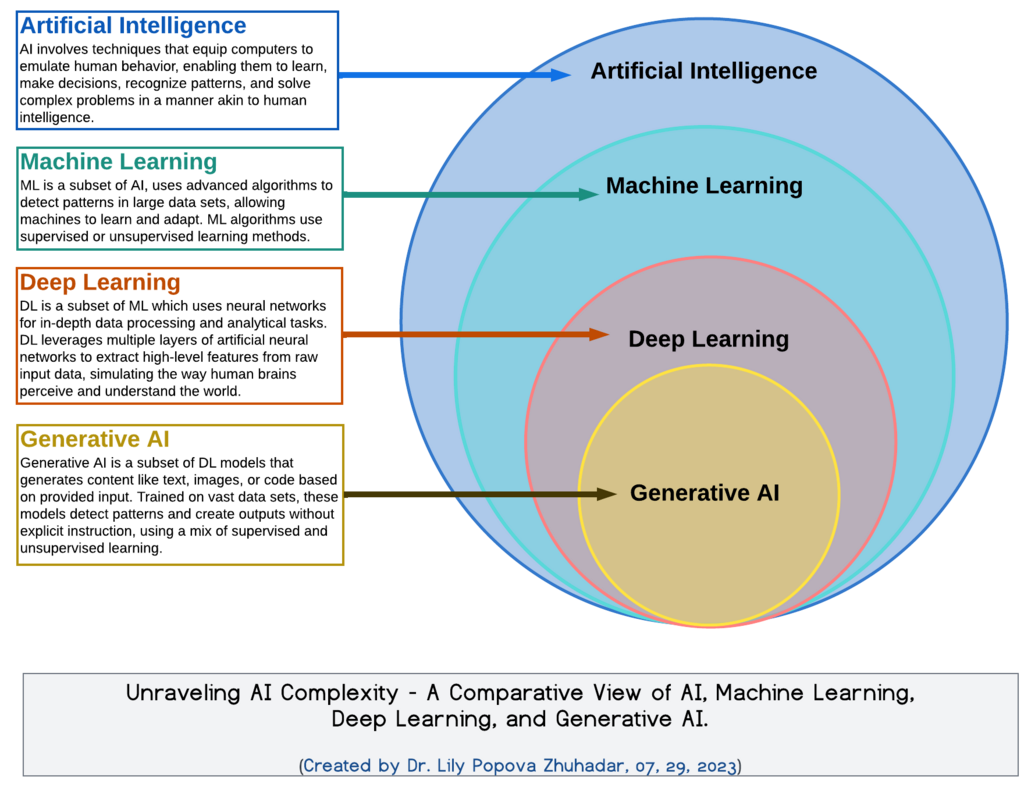
Think of AI as the overall goal of creating intelligent machines. Within that large goal are more specific areas of study, like machine learning, which focuses on getting computers to learn from data. We'll explore these different branches soon.
A Quick History
The idea of intelligent machines has been around for centuries, but the formal field of AI research began in the 1950s. Since then, its progress has come in waves, marked by periods of great excitement and funding, followed by
The development of AI has seen cycles of rapid progress followed by periods of reduced funding and interest, known as 'AI winters.'
Early research focused on solving logic problems and playing games like chess. A major milestone was the development of the Turing Test, a way to gauge a machine's ability to exhibit intelligent behavior indistinguishable from that of a human. In 1997, IBM's Deep Blue computer famously defeated world chess champion Garry Kasparov, a landmark achievement.

The last two decades have seen an explosion in AI progress. This boom is largely thanks to two things: the availability of massive amounts of data and the development of much more powerful computers. These ingredients have allowed modern AI techniques to flourish, leading to the powerful tools we see today.
The Flavors of AI
AI isn't just one thing; it's a family of related technologies. Let's look at three major subfields.
Machine Learning (ML) is a core part of modern AI. Instead of writing step-by-step instructions for a task, developers build systems that can learn patterns directly from data. For example, a spam filter learns to identify junk email by analyzing thousands of examples of spam and legitimate messages.
Natural Language Processing (NLP) focuses on the interaction between computers and human language. NLP makes it possible for machines to read text, hear speech, interpret it, measure sentiment, and determine which parts are important. Virtual assistants like Siri and Alexa, as well as language translation apps, are powered by NLP.
Robotics is the branch of AI that deals with designing, building, and operating robots. It combines computer science, engineering, and other disciplines to create machines that can move and interact with the physical world. This ranges from robots that assemble cars in a factory to rovers exploring the surface of Mars.
These fields often overlap. A robot, for instance, might use machine learning to navigate a room and NLP to understand voice commands. Together, they form the foundation of artificial intelligence.